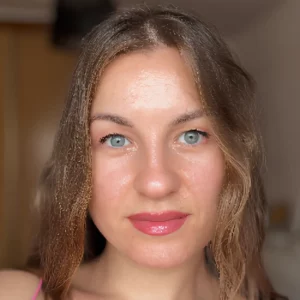
The Jellyfish Pixie, the Italian Pixie, the Winged Pixie—suddenly every salon chair has a different short-hair conversation happening. Florence Pugh’s bleached buzz-to-pixie grow-out proved the awkward stage could be the most stylish phase. TikTok’s ‘Chewed-Up’ Pixie trend cracked 40% more searches than last year. Something shifted from “short hair or nothing” to “which short hair am I today.”
This year’s modern summer pixie haircuts 2026 range from barely-there buzz crops with bleached fringes to textured, air-dried shapes with serious movement—cuts built for oval faces and round faces, fine hair and thick hair, the five-minute-dry crowd and the I-actually-like-styling-it crowd. These aren’t your Pinterest fantasies. They’re cuts that actually grow out.
I went from collarbone to pixie in March and spent two weeks convinced I’d made a terrible mistake. By month three, I understood why everyone was asking: the cut itself is the easy part—it’s the color, the texture, and knowing which version actually works for your face that changes everything.
Mushroom Bronze Pixie
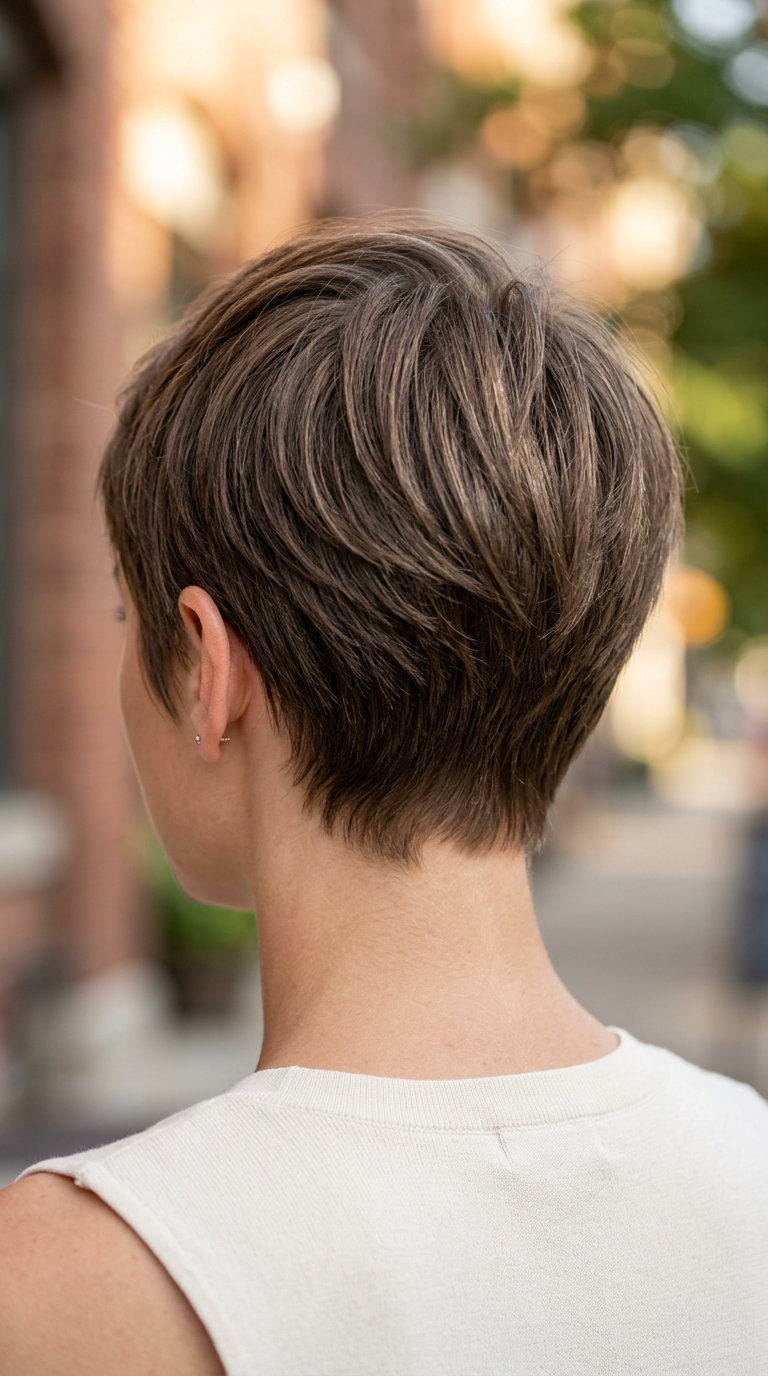
Soft texture and warm color combine here in a way that feels almost gentle. Point-cut ends maintained soft, diffused movement for 6 weeks before needing a reshape—long enough that you’re not booking every month. Point-cutting creates soft, diffused ends, allowing layers to blend seamlessly for natural movement and versatility. The mushroom bronze pixie works because the color does half the visual heavy lifting, making the cut feel less severe.
The color is a warm, muted bronze that sits between chocolate and caramel. It catches light without screaming for attention, or maybe it’s just the styling that makes it look so effortless. Not for very fine hair—point-cutting can remove too much essential volume. This cut thrives on medium to thick density, where layering creates movement without thinning everything out. Softness is key here.
Cherry Cola Bixie
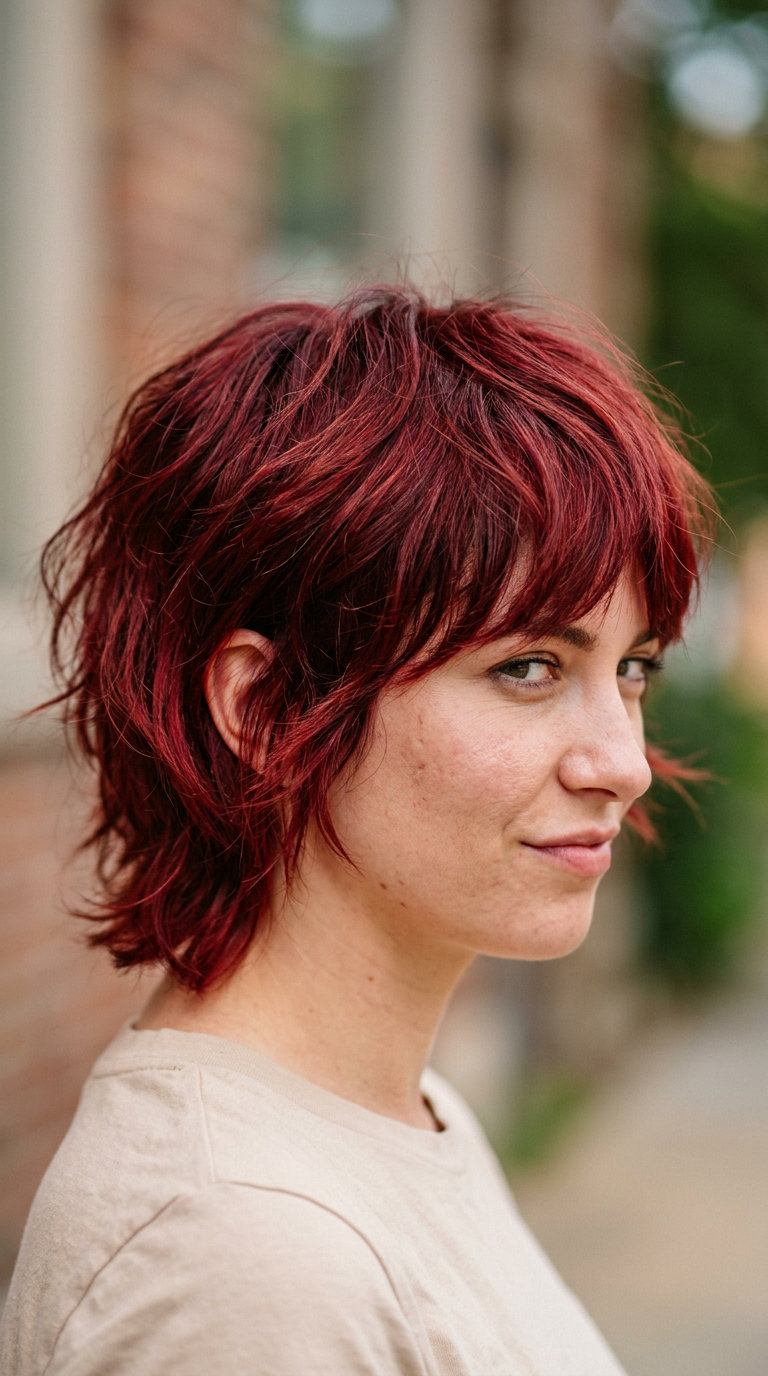
This one leans into the shag lineage—heavy internal layering creates a lot of movement. Heavy internal layering created a shaggy, tousled effect that held with minimal product for 8 hours. Heavy internal layering removes bulk from wavy or curly hair, allowing for a shaggy, tousled effect with movement that feels natural. The cherry cola color deepens that editorial mood, somewhere between burgundy and warm brown depending on the light.
Achieving this specific ‘chewed-up’ finish often requires daily styling with texturizing products, which is fine if you love styling. The cut structure does the heavy lifting, but product and hand-placement are part of the deal. You’re not washing and walking out the door without at least a texturizing paste and maybe a light spray to piece out the layers. That said, the foundation is strong enough that even minimal effort reads intentional. Effortless, but not really.
Ink Black Pixie Cut
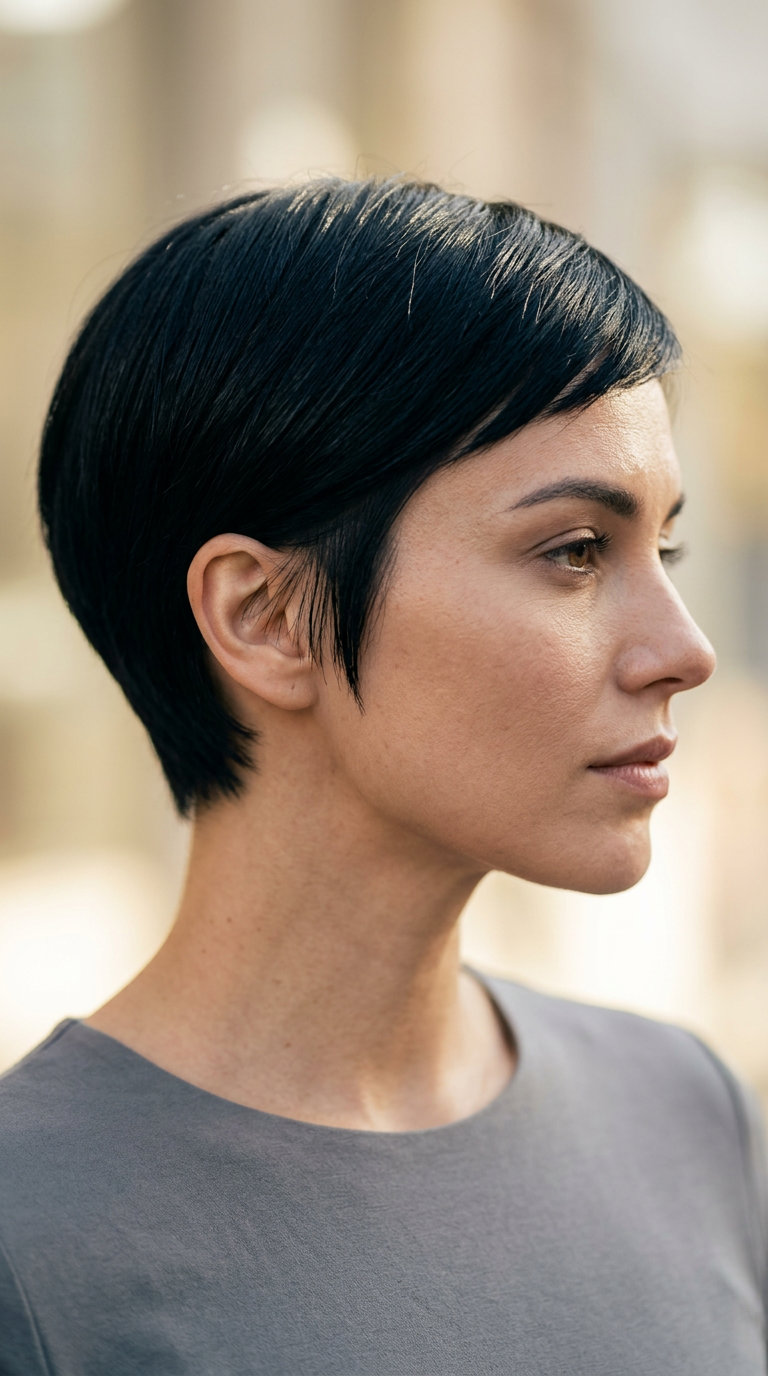
Minimalism meets severity in this version. Blunt micro-fringe held its precise line for 2 weeks before needing a quick trim. Blunt perimeter and minimal layering create a sleek, dense look, emphasizing the architectural micro-fringe. This is the pixie cut for people who want zero ambiguity—stark, geometric, almost architectural in its cleanliness. The ink black pixie cut amplifies that effect, making the silhouette the entire statement.
The micro-fringe is the defining element, so it needs constant upkeep. Avoid if you dislike frequent trims—the micro-fringe needs constant maintenance, meaning salon visits every 2-3 weeks just for that detail. But only if you’re brave enough to commit to the look. Fine to medium straight hair works best here, where blunt cutting emphasizes density and shine. Everything relies on precision and length clarity. The micro-fringe is everything.
Peach Fuzz Pixie
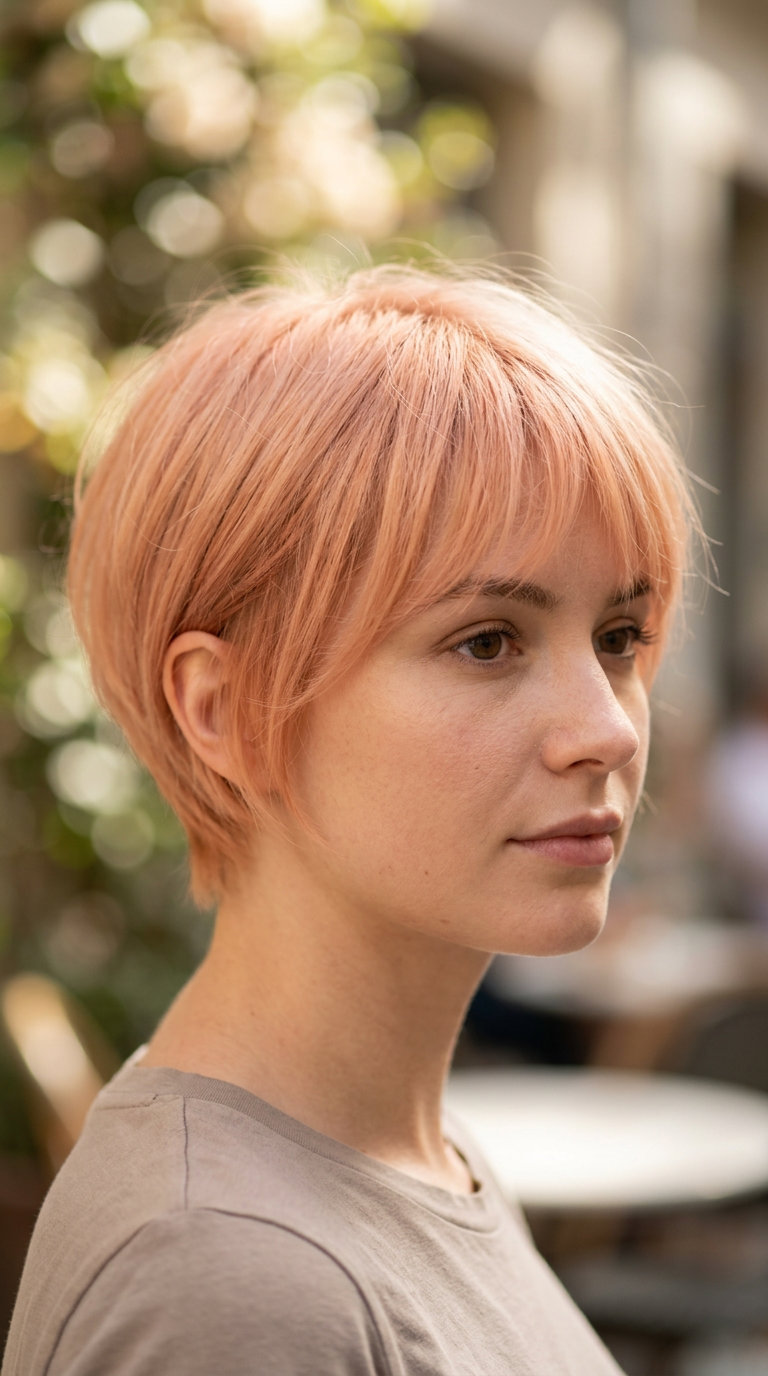
This is the pixie for people who think pixies are too harsh. Soft, wispy, impossibly delicate—the peach fuzz pixie cut uses point-cutting to create a delicate, petal-like texture, allowing the pixie to move softly instead of sitting flat. The micro-fringe stays light and airy, never blunt or severe. It’s precision without the attitude. (Yes, the short one.) Micro-fringe stayed wispy and didn’t clump even after 8 hours of wear, which honestly surprised me—I expected some flyaway situation by mid-afternoon.
The cut works best on fine to medium, straight to slightly wavy hair. Very fine hair? Perfect. Textured waves? Even better. But skip if you have very thick or coarse hair—it won’t achieve the soft, petal-like texture that makes this cut work. The layers are shallow and intentional, built for movement rather than volume. Styling takes five minutes, maybe ten if you’re being careful with a texturizing paste to emphasize those piecy ends. Most mornings, though, air-drying does enough. This is the low-drama pixie, the one that actually works for people who claim they don’t have time for maintenance. Petal-soft perfection.
Sleek Pixie Cut for Professional Women
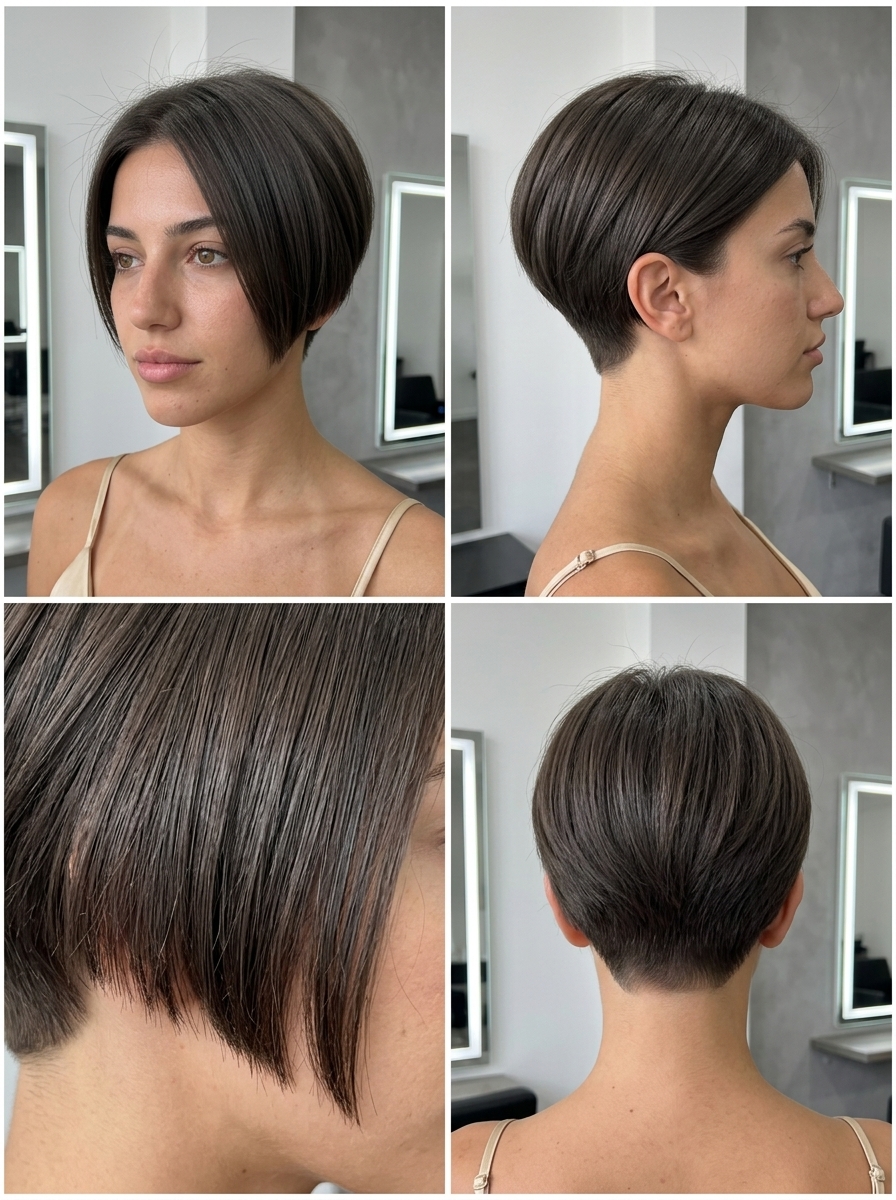
A pixie doesn’t have to mean approachable or soft. This version trades movement for power. Precision blunt cutting creates a sharp, powerful silhouette, ensuring clean lines that closely follow the head shape. The perimeter is blunt, the sides are close, and the top is sculpted into a shape that works for board meetings and press photos. It’s the pixie that reads as decision-making. Blunt perimeter stayed sharp and sculpted for three weeks before needing a clean-up, probably worth the consultation at least to make sure your stylist understands what ‘sculpted’ means.
Best on straight to slightly wavy hair; very curly hair will fight these lines. Very thick or unruly hair should probably avoid this—it will fight the sleek, blunt lines. The color here is optional but a deep brunette, black, or rich blonde reads more professional than pastels. Styling requires precision: blow-dry with a paddle brush, smooth down with a flat iron if needed, finish with a lightweight smoothing serum. Not high-maintenance, but it demands that maintenance happen. This is the pixie for people who have a clear vision of who they are and want their hair to back them up. Sculpted perfection.
Platinum Blonde Textured Pixie
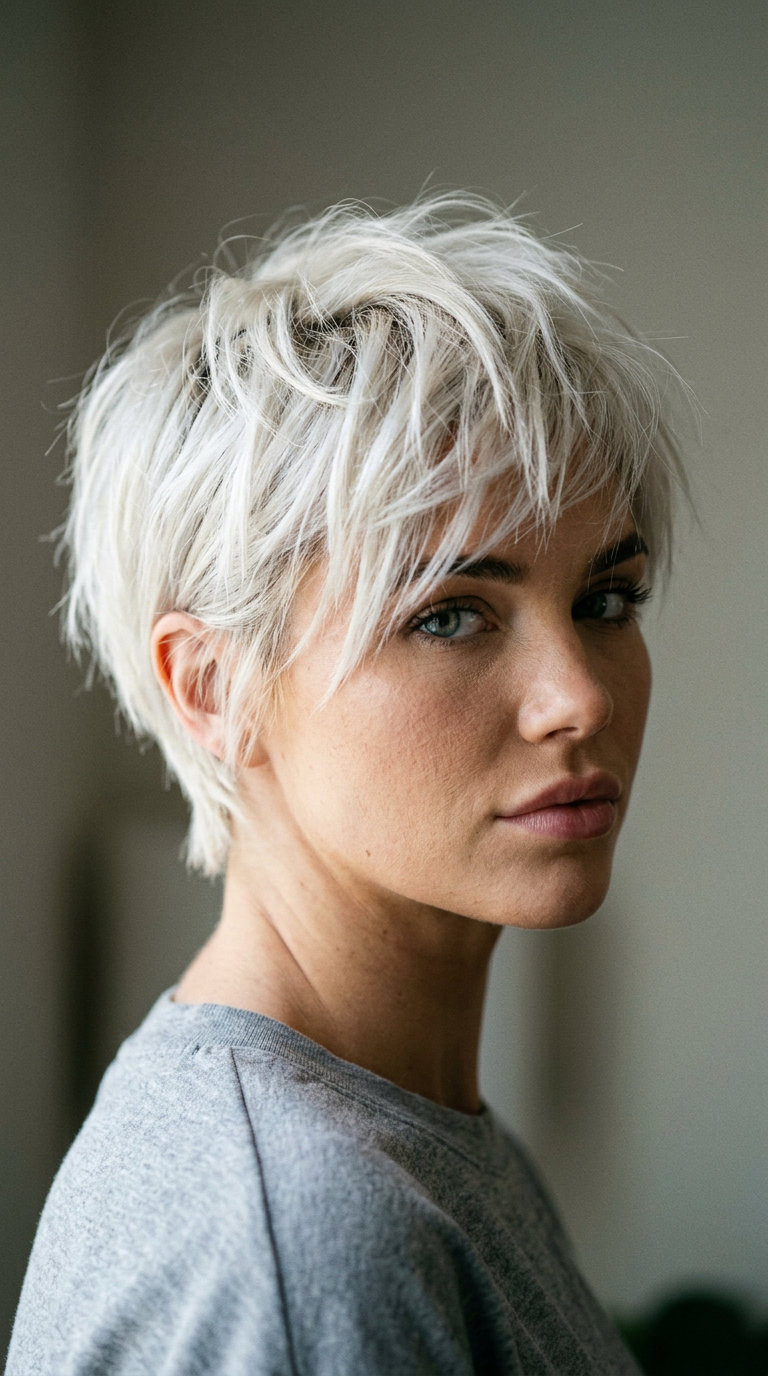
This is the pixie that commits. Clipper fade on sides creates a clean, skin-close finish, while heavy point-cutting and razoring add extreme, jagged texture on top and through the crown. The platinum blonde is uncompromising—it reads as intentional, edgy, and willing to be visible. Every angle matters here. The cut is designed to work with natural texture for a messy finish, which means you’re leaning into movement and disorder, not fighting it. Clipper fade maintained its clean skin-close finish for two weeks before needing a re-fade (the best $30 I’ve spent on hair). The contrast between the shaved sides and the textured crown is where this whole thing lives.
This one demands styling. You’re finger-raking texturizing paste through the crown, directing it upward, letting some pieces fall forward or sideways depending on your mood. Clipper fades grow out quickly, requiring bi-weekly touch-ups to stay sharp, and the platinum will need a toning rinse every other wash to stay true. Best on fine to medium hair; thick hair can work but needs extra thinning to achieve the piecy quality. This is the pixie for people who like being noticed and don’t mind the maintenance that comes with that. The cut works best on heart-shaped or oval faces where the sides can handle exposure. All hair textures work, as long as you’re willing to style it. Bold, messy, brilliant.
Mahogany Balayage Pixie
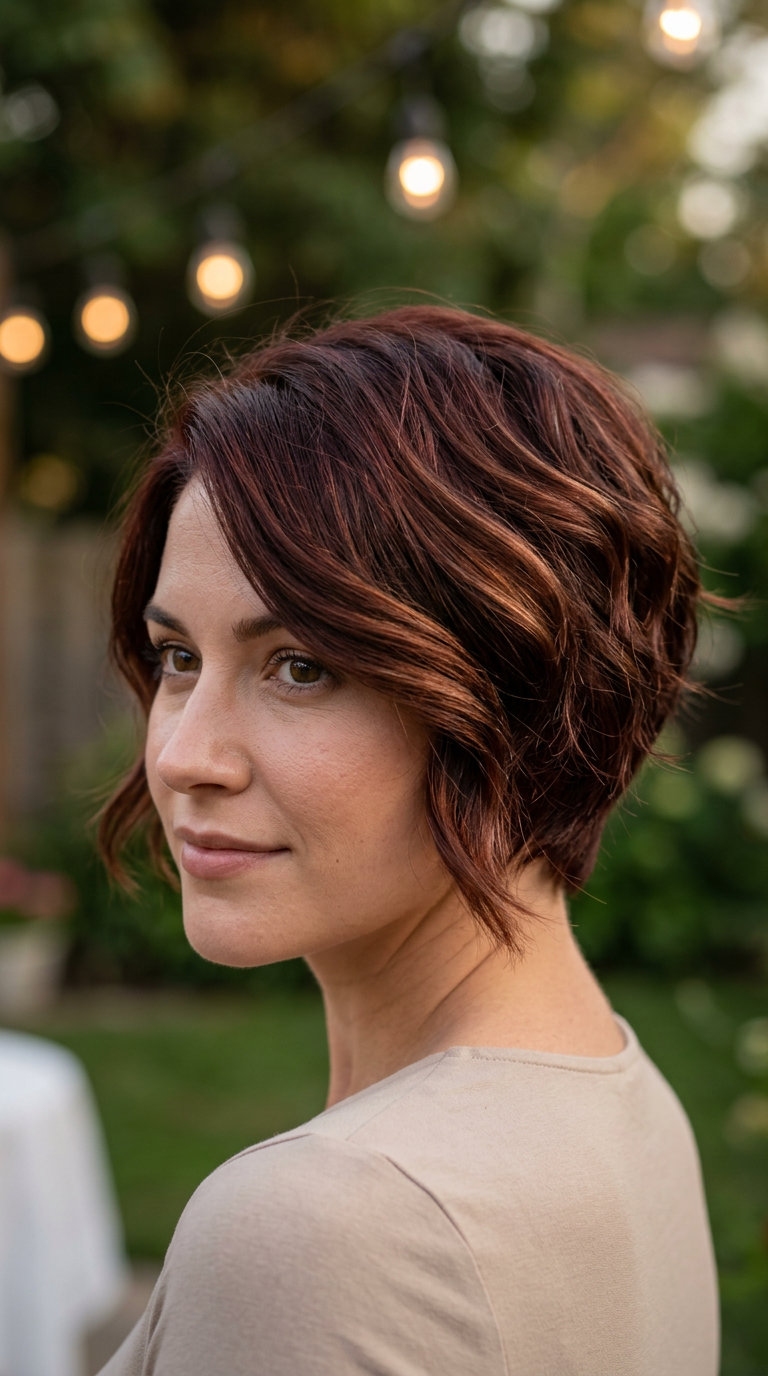
This pixie proves that color can do half the work. The mahogany balayage short hair style layers warmth through the crown and temples, creating dimension that reads as texture even when you’re not touching it. Point-cut layers enhanced natural waves, requiring only air-drying for defined curls—which means you’re actually looking at less styling time than the blunt pixies that came before. The cut itself is lean, maybe two inches at the crown, but the balayage placement makes it feel fuller.
What makes this one land differently: the face-framing pieces sit right at your cheekbone, and they’re cut to move rather than sit flat. Point-cut face-framing layers create movement and blend seamlessly, enhancing natural waves for a softer look. If you have naturally wavy or medium-textured hair (perfect for my fine waves), this cut stops fighting your texture and starts working with it. The mahogany shifts to copper in sunlight, which sounds high-maintenance until you realize the balayage placement means roots are basically invisible for 12 weeks. Finally, a pixie that moves.
Dark Cherry Red Pixie Cut
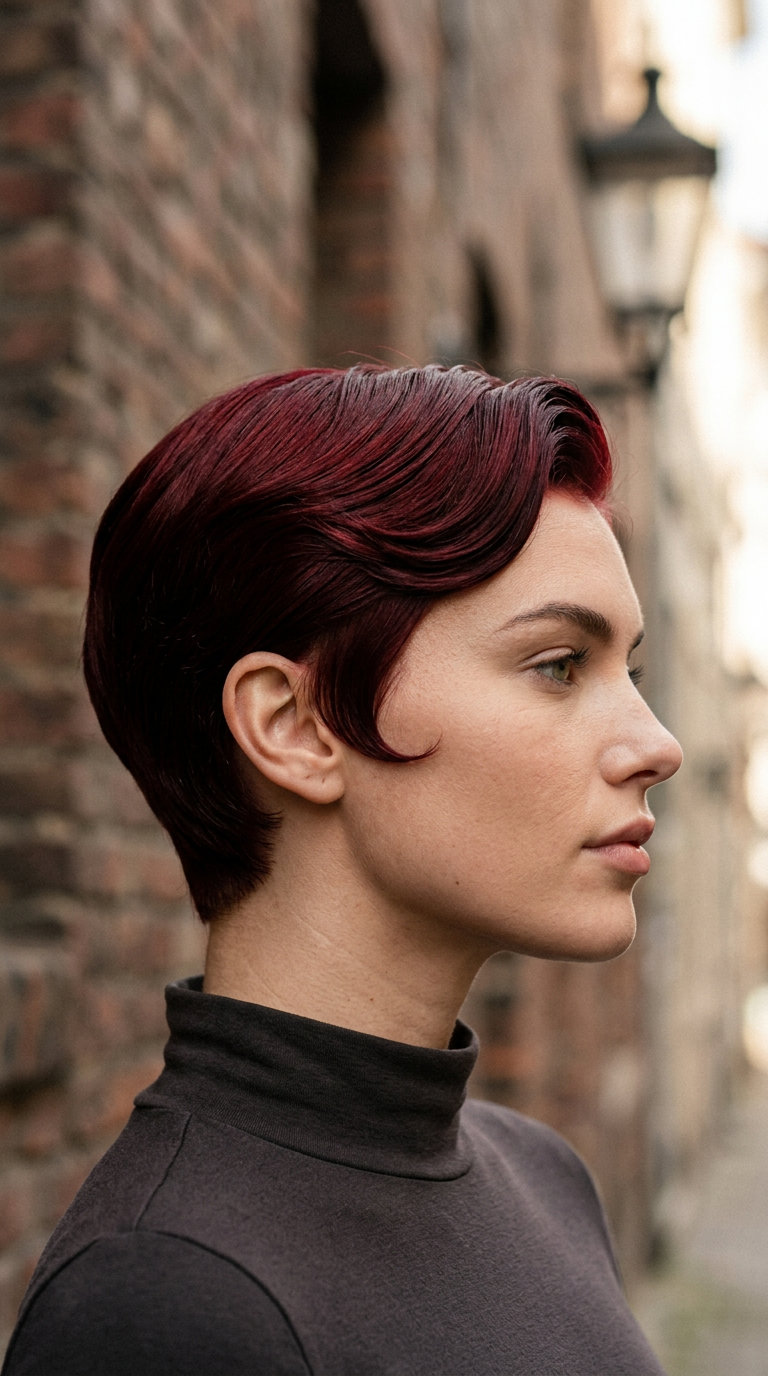
Deep jewel tones have momentum right now, and the dark cherry red pixie cut is the version that actually holds color instead of fading to rust by week three. This is a straight-haired cut, maybe 1.5 inches at the crown with a sharp taper to the nape, and the color saturation is what carries the whole look. Scissor-over-comb technique kept lines sharp for 3 weeks before needing a trim, which is the baseline for maintaining this silhouette. The cherry depth means you don’t need a touch-up every three weeks—it fades to a softer burgundy, which is arguably prettier than the root regrowth situation.
This pixie isn’t about texture or movement; it’s about geometry and color depth. Scissor-over-comb creates smooth, precise lines, essential for this sleek, sculpted finish. The cut works best on straight to slightly wavy hair with medium density—anything thicker and it reads bulky instead of architectural. Skip if you have very thick hair—it will look bulky, not sleek. You’re paying for precision here, probably $180–$240 for the cut and color service combined, and that investment only works if your stylist can execute sharp lines and understand color hold on pixie-length hair. The payoff is a cut that photographs like a jewel and requires maybe two minutes of product in the morning. Precision is everything here.
Wavy Italian Pixie Cut

This is the softest pixie in the roundup, and it costs less than you’d think for what it delivers. The wavy italian pixie cut sits somewhere between a pixie and a crop, with internal layering that creates volume without requiring you to understand product formulas. The cut runs about two inches at the crown, point-cut throughout, and the layers are deliberately stacked to create a rounded crown rather than a sharp silhouette. Internal layering created airy volume that held for 5 days with minimal product, which means you’re not chasing texture with paste every morning.
The technique here is what separates this from a basic pixie: Internal layering and point-cutting create natural volume and movement, enhancing the wavy texture. If you’ve got waves that you usually fight—or just fine, flyaway hair that needs structure—this cut stops making you blow-dry everything straight. The color stays neutral, letting the cut’s movement do the talking. Requires regular trims every 4 weeks to maintain the soft, rounded shape, so budget $80–$120 per trim if you’re not at a chain salon. That’s actually affordable compared to the balayage pixies, which is all my fine hair can handle. You’re looking at a cut that’s genuinely lower-maintenance than it looks, and the price point reflects that simplicity. Effortless, chic, Italian.
Micro Fringe Pixie
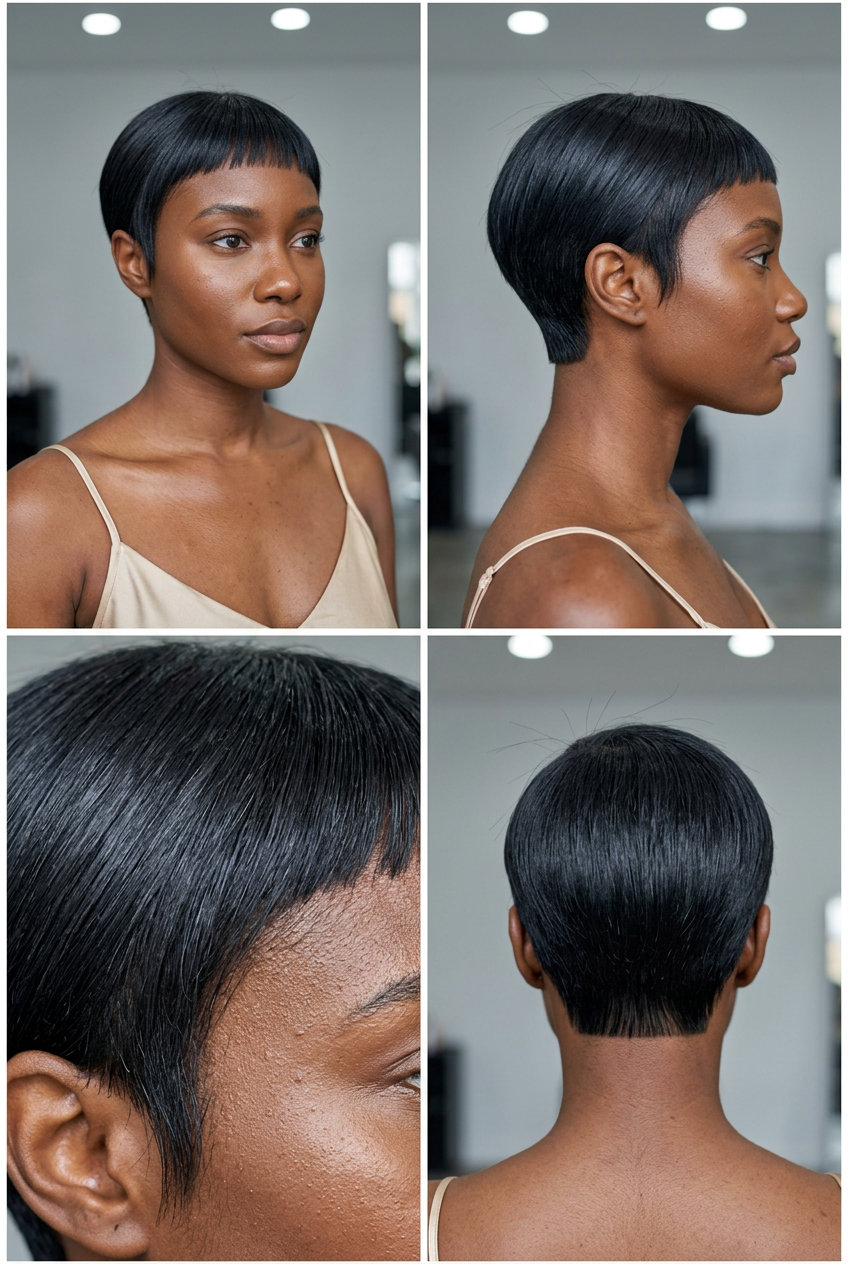
This pixie is an editorial choice, and it knows it. The micro fringe pixie pairs a blunt, short fringe (about one inch above the natural brow line) with a tapered crown and nape, creating an architectural silhouette that demands precision every single day. Minimal internal layering maintains density, creating a precise, architectural silhouette and blunt fringe. The fringe is cut blunt, not feathered, which means it grows out noticeably after two weeks and looks distinctly awkward during week three. Micro-fringe stayed blunt and sleek for 2 weeks, needing daily styling—that’s the reality check before you commit.
This cut works on straight, fine to medium density hair; anything thicker and you’re fighting density every morning. If you have wavy hair, you’d need to straighten it daily, which defeats the purpose of a low-maintenance pixie. The payoff is a cut that photographs like you’re stepping out of a Milan salon, and the vibe is unmistakably editorial. Your stylist needs to understand that the fringe and the taper work together—if either line softens, the whole look collapses. Salon cost runs $160–$200, and that’s before factoring in what you’re spending on a straightener if you don’t already own one. Avoid if you dislike daily styling—micro-fringe needs precision every day, probably worth the consultation at least. The micro-fringe makes it.
Winged Pixie Cut
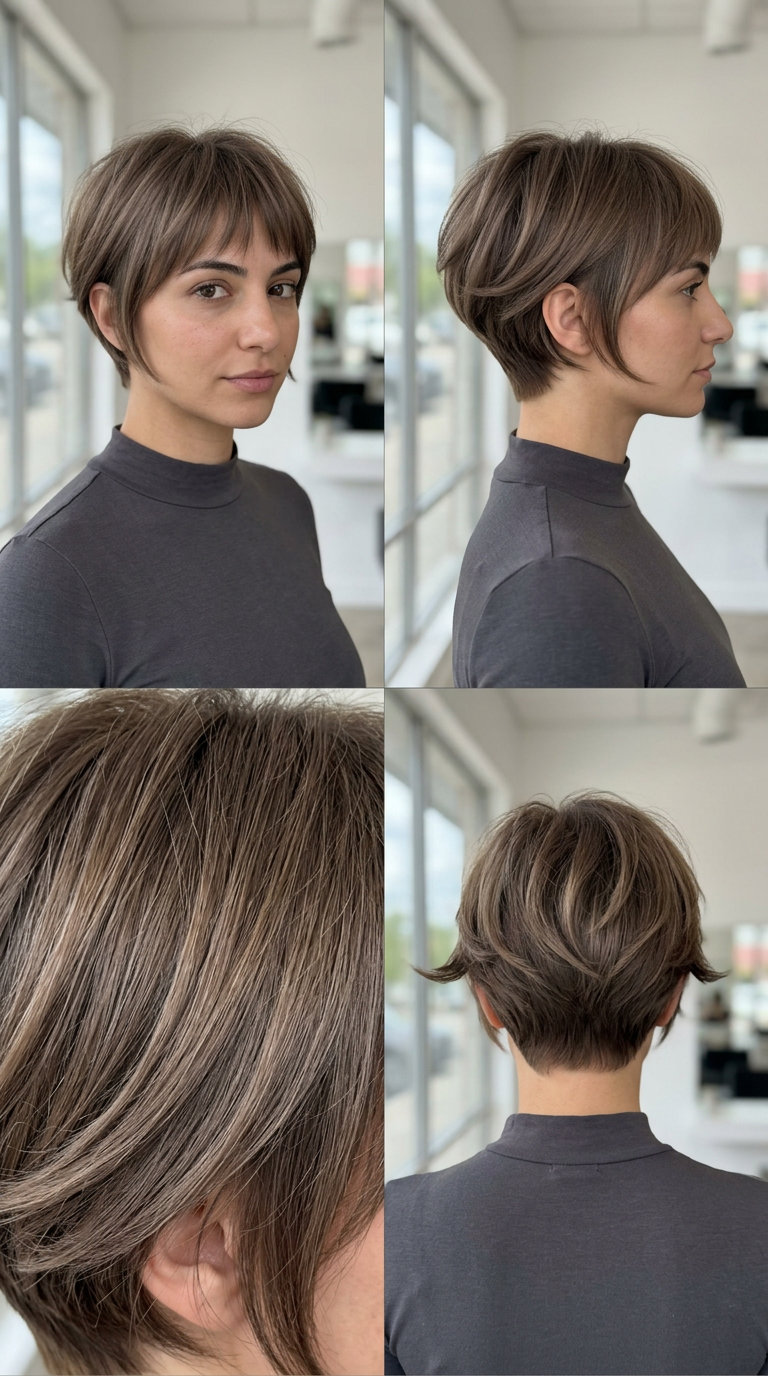
The architecture here matters. Point-cutting layers creates soft texture, while razored pieces at the nape enable the signature outward flip. Those winged pieces around your ears need precision—ask your stylist specifically for point-cut layers, not a blunt chop. Fine to medium density hair holds this look best, though straight to slightly wavy textures will show the movement most clearly. Winged pieces around ears held their flip all day with light product, which means you’re not hauling around a pomade bottle just to keep them airborne.
Maintaining the winged effect needs trims every 3-4 weeks, so factor that into your budget before committing. The good news: between trims, you can style this a dozen different ways—sleek and intentional one day, tousled and undone the next ($50 tip for that precision). If you prefer lower-maintenance looks, this isn’t your cut; the wings are the whole point, and they’ll start drooping around week three without intervention. The wings make it.
Buzz Pixie Fade
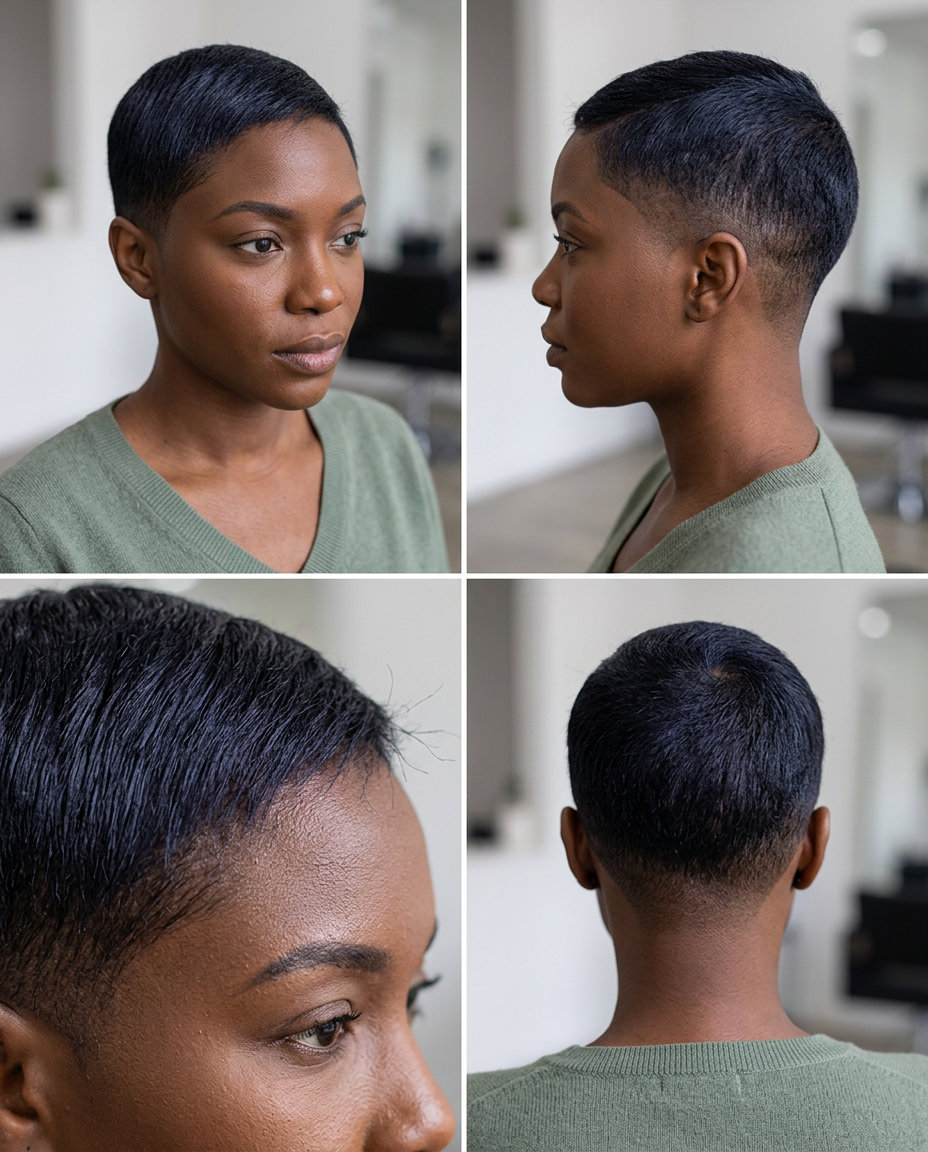
Clean lines, maximum impact. Tight fade from skin-close to 0.25 inches creates a clean transition, emphasizing bone structure—which is precisely the point of this cut. If you have a strong jawline or defined cheekbones, this cut will make them obvious; if you prefer to soften facial features, avoid this one entirely. The fade needs precision work, not a barber’s standard buzz, so bring reference photos and be specific about how tight you want the transition. Fade remained sharp for 2 weeks, only needing a quick neck trim, which honestly beats monthly appointments.
The maintenance reality: buzz fades require visits every 3-4 weeks to stay defined, or maybe just a really good barber who can touch up your neck on the cheap. This cut emphasizes bone structure, so make sure you actually like your face before committing to showing it off completely. The buzz itself is low-maintenance—wash and go, no styling products required—but keeping the fade architectural is the trade-off. Bold. Period.
Sleek Dark Pixie Cut
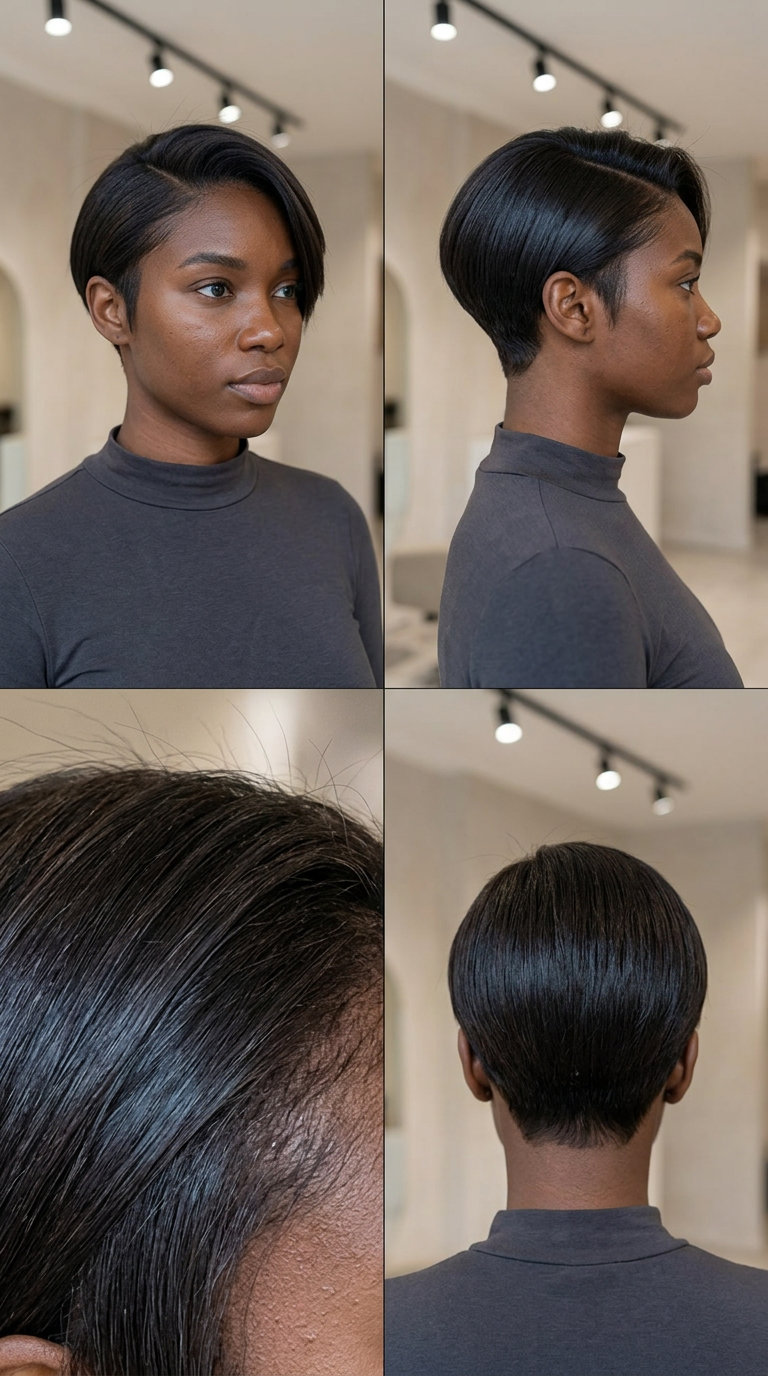
Architecture as intention. Blunt cutting creates a strong, architectural silhouette, while precise tapering keeps the nape sculpted and clean—this is what separates a sleek pixie from a shapeless chop. The dark color goes full noir, no warmth, which lands as professional by default but can feel severe if your skin tone doesn’t read well against it. Blunt lines held sharp for 4 weeks before needing a perimeter clean-up, so you’re not visiting your salon every other week just to exist. The payoff is immediate and visible; this cut commands attention simply by existing.
Maintaining architectural bluntness requires salon visits every 3-4 weeks, so treat this as a salon investment, probably worth the consultation at least. The styling is almost irrelevant—comb it, let the cut do the work, move on. Thick or medium-density hair holds these lines best; fine hair tends to soften the bluntness unintentionally within days. This isn’t a low-maintenance cut despite how simple it looks; it’s a sleek dark pixie cut that demands precision upkeep. Sharp, clean lines.
Platinum Buzz Pixie
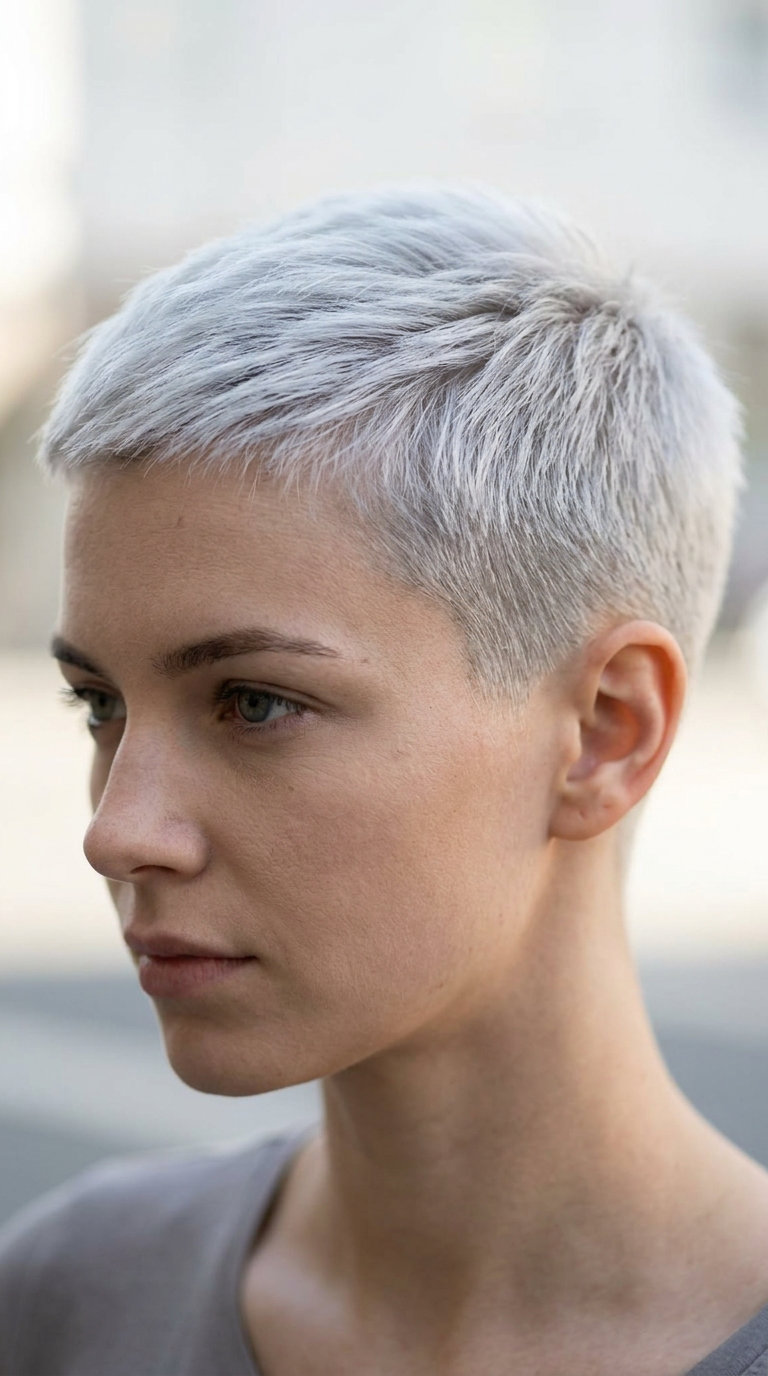
A platinum buzz cut women look that goes all-in on the commitment: clippers, uniformity, and zero apologies. This is the pixie for people who’ve spent years managing length and decided that 0.25 inches was the sweet spot. Clippers at uniform length create a clean, minimalist silhouette that highlights facial features and bone structure, and honestly, if you have strong cheekbones, this reads like sculpture. The base is a single-process platinum—a level 10 that requires either two sessions from dark hair or acceptance that one bleach appointment will be brutal.
Maintenance is the real plot here. This 0.25-inch buzz-pixie maintained its sharp, uniform length for 2 weeks before needing a clipper touch-up, which means you’re either becoming best friends with your stylist or investing in your own clippers (yes, the super short one). Extreme shortness requires bi-weekly trims to maintain—a significant time commitment. But here’s what makes it worth it: you will never have a bad hair day again. No styling. No product. No negotiation. The platinum shows every speck of regrowth, true, but the trade-off is looking intentional every single moment. Bold. Unapologetic.
Copper Red Pixie Cut Textured
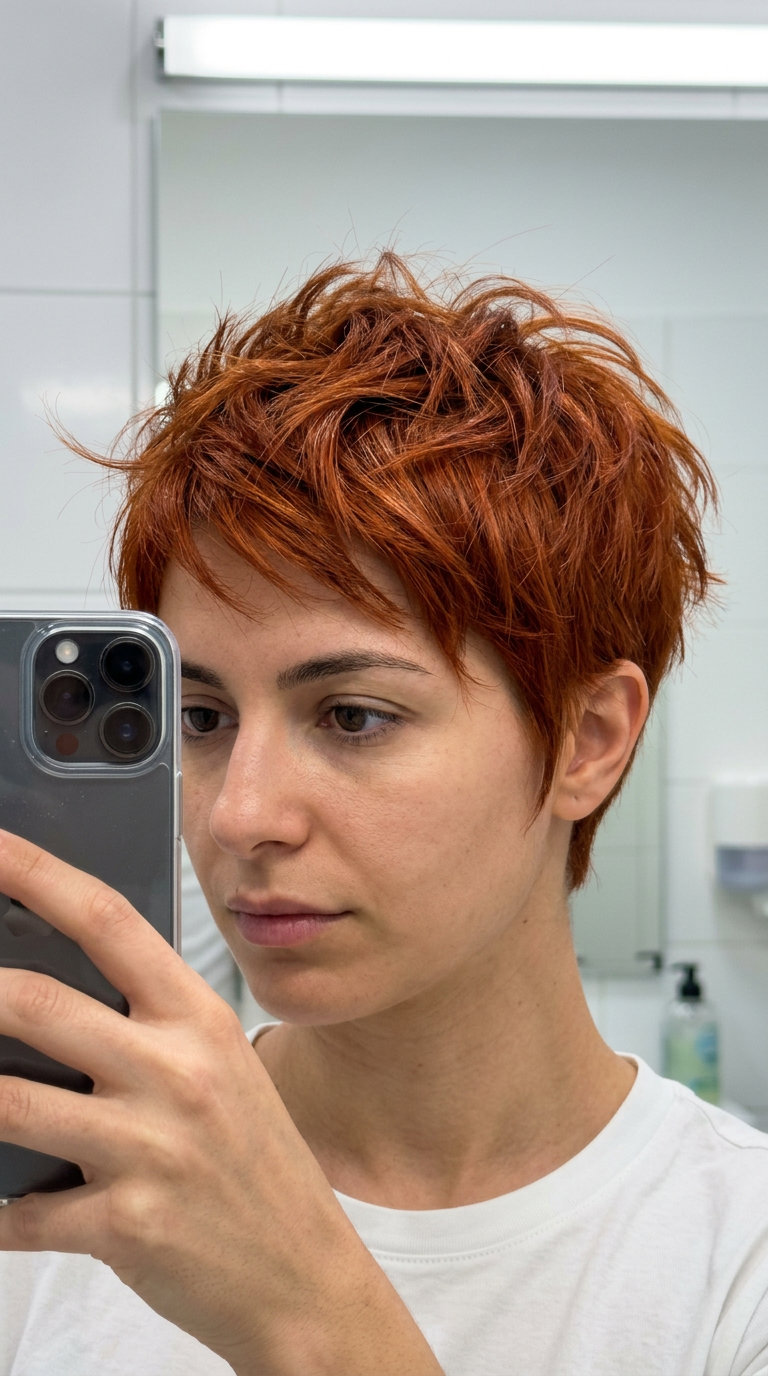
Textured pixie with dimension built in: razor-cut layers on top in a warm copper-red base that moves like it has a personality. This is the pixie for people who want more than silhouette—who need their hair to do something. The color is a single-process copper red (around level 6 with orange and red undertones) that glows in sunlight and reads rich indoors. The cut is all about the razor: choppy, uneven, piecey layers that create volume without weight.
The razored layers provided piecey texture for 5 weeks before needing a trim to redefine the shape, and the copper held its warmth beautifully on a color-treated base. Razor cutting creates soft, irregular ends and choppy layers, maximizing movement and piecey texture on fine hair, which is all my fine hair can handle (trailing thought, but real). Not for very curly or coarse hair—razor cutting can cause frizz and damage. But for straight-to-wavy fine hair? This cut is a revelation. The layers catch the light. The texture reads intentional, not accidental. Movement is everything.
Pastel Pink Pixie Cut
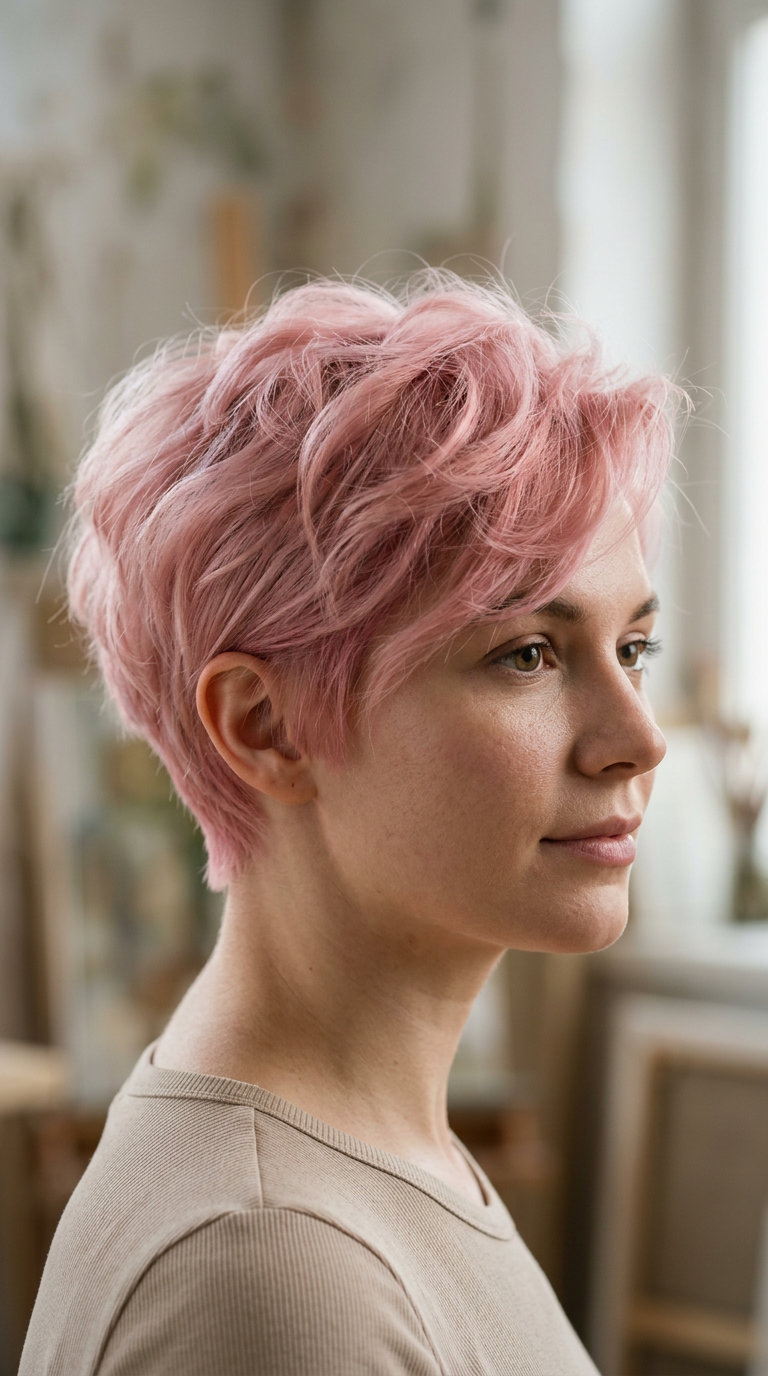
A soft pastel pink pixie—pale, ethereal, and surprisingly wearable if you’re willing to maintain it. The base color is a light blonde (level 9) with pastel pink deposited on top, which means you need pre-lightened or naturally very light hair. The cut is where the real story lives: deep point-cut layers throughout, longer on top, shorter on the sides, with an intentional tousle that prevents the helmet effect. Point-cut layers on top maintained their soft, tousled texture for 4 weeks before needing a shape-up, and the pastel pink fades gradually into a cooler blonde, which actually extends the life of the look.
Deep point-cutting and internal layering create softness and movement, preventing a blunt, helmet-like appearance, and this cut is salon-only; replicating its precise point-cutting at home is nearly impossible (or maybe just a really good stylist with very steady hands). The pink requires a color-depositing shampoo every 3-4 washes to hold the tone, and you will need touch-ups every 4-6 weeks as the pastel fades. But here’s the thing: this pixie actually photographs better than it looks in person, and in person it looks extraordinary. It reads young, experimental, and confident. Finally—a pixie that moves.
Wavy Pixie Cut for Summer
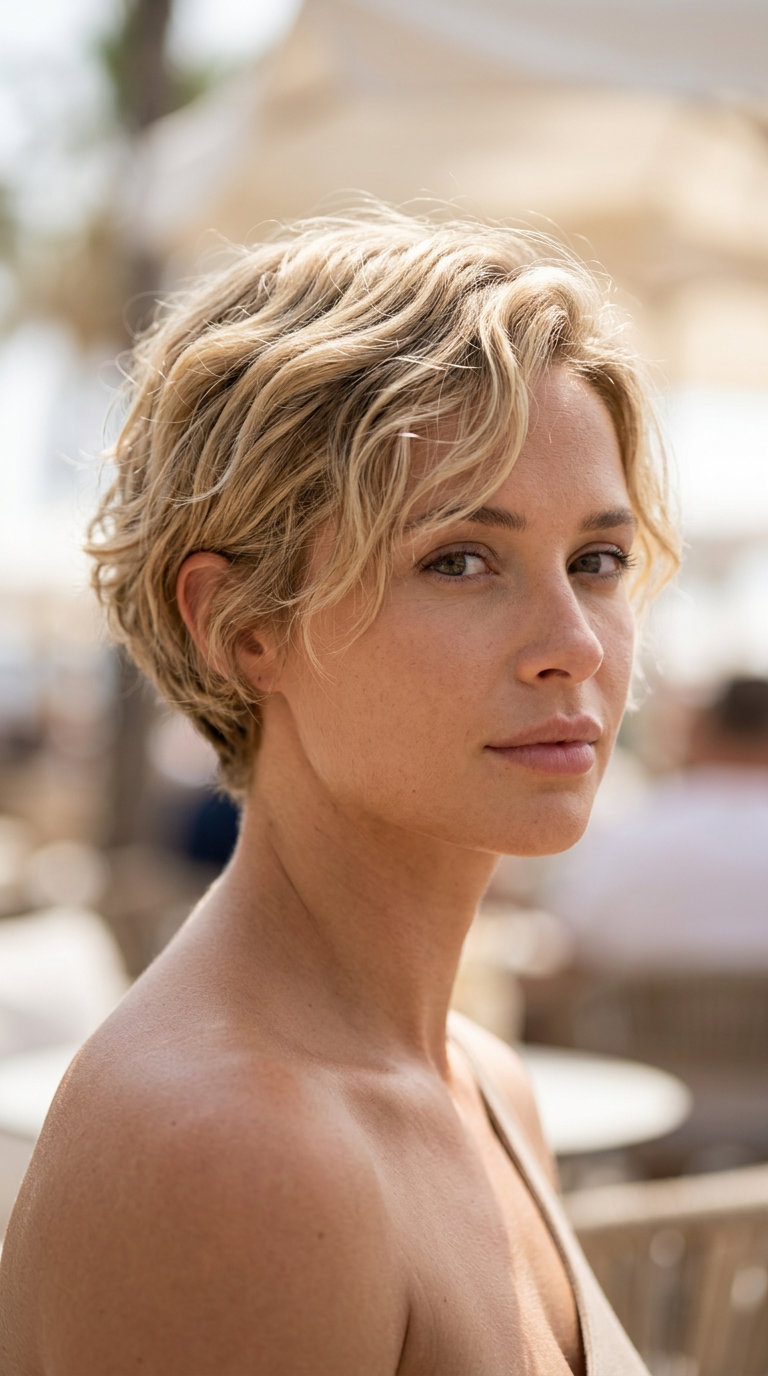
A pixie designed specifically for natural wave, not despite it—shorter on the sides and back, slightly longer and point-cut on top to encourage your natural texture to coil and define itself. This is for people with naturally wavy or fine-to-medium hair with a slight bend who’ve been fighting their curl pattern in longer styles. Intentionally short, point-cut top layers encourage natural waves to coil and define the cut’s unique shape, and the beauty is that this cut actually gets better as it dries, not worse. You wash, scrunch, and let air-dry or use a diffuser—the waves do the work.
This pixie enhanced natural waves, allowing them to coil beautifully for 5 days without needing restyling, and the cut grows out gracefully because the layers blend as they extend. Not for straight hair—this cut relies on natural wave for its shape, and trying to force it on pin-straight hair reads flat and frustrated. But if you have wave? This is the permission you’ve been waiting for. No blow-dryer required. No straightener needed. The cut honors what’s already there (my new mantra). For summer, this is the move: wash-and-go texture, minimal styling, maximum impact. Embrace the curl.
Still Deciding? Here’s a Quick Comparison
| Hairstyle | Difficulty | Maintenance | Best Face Shapes | Pros | Cons | |
|---|---|---|---|---|---|---|
| Edgy & Textured | ||||||
| 5. The Sleek Ink Black Gamine Pixie | Moderate | Medium — every 6-8 weeks | oval, square, heart | Suits most face shapesWorks on multiple textures5-minute styling | Not ideal for very curly hair |
| 10. The Arctic Edge Pixie | Salon-only | High — every 3-4 weeks | oval, diamond, heart | Suits most face shapesWorks on multiple texturesLayers add movement | Requires professional styling |
| 16. The Playful Winged Pixie | Moderate | Medium — every 6-7 weeks | long, oval, heart | Suits most face shapesWorks on multiple texturesLayers add movement | Not ideal for very curly hair |
| 18. The Futuristic Buzz-Pixie Fade | Easy | Low — every 2-3 weeks | oval, diamond, square | Low maintenanceEasy to style at homeSuits most face shapes | Needs trim every 3 weeks |
| 22. The Fiery Copper Flash Pixie | Moderate | High — every 4-6 weeks | heart, oval | Works on multiple texturesLayers add movementLow-maintenance roots | Frequent salon visits needed |
| 24. The Candyfloss Cloud Pixie | Moderate | High — every 2-3 weeks | oval, heart, long | Suits most face shapesWorks on multiple texturesLayers add movement | Frequent salon visits needed |
| Classic & Clean | ||||||
| 2. The Textured Mushroom Bronze Pixie | Easy | Low — every 8-10 weeks | square, long, oval | Low maintenanceEasy to style at homeSuits most face shapes | Not ideal for very curly hair |
| 6. The Soft Peach Fuzz Pixie | Moderate | High — every 2-3 weeks | oval, small features, heart | Suits most face shapesWorks on multiple texturesLayers add movement | Frequent salon visits needed |
| 9. The Ash Brown Sleek Pixie | Moderate | Medium — every 4-6 weeks | oval, heart, square | Suits most face shapesWorks on multiple textures5-minute styling | Not ideal for very curly hair |
| 13. The Vampy Cherry Pixie | Moderate | Medium — every 4-6 weeks | oval, square, round | Suits most face shapesWorks on multiple texturesLayers add movement | Not ideal for very curly hair |
| 14. The Relaxed Wavy Italian Pixie | Easy | Medium — every 6-8 weeks | square, round, oval | Easy to style at homeSuits most face shapesWorks on multiple textures | Not ideal for very curly hair |
| 15. The Sleek Micro-Fringe Pixie | Salon-only | High — every 4-6 weeks | oval, heart, small features | Suits most face shapesWorks on multiple textures | Requires professional styling |
| 19. The Midnight Mocha Sculpt | Moderate | Medium — every 6-8 weeks | oval, square | Works on multiple texturesWorks with air-drying5-minute styling | Not ideal for very curly hair |
| 21. The Chrome Buzz Pixie | Salon-only | High — every 3-4 weeks | oval, diamond | Works on multiple texturesLayers add movementFlattering face-framing | Requires professional styling |
| Soft & Romantic | ||||||
| 3. The Tousled Cherry Cola Bixie | Moderate | High — every 3-5 weeks | all face shapes | Works on multiple texturesLayers add movementFlattering face-framing | Frequent salon visits needed |
| 11. The Mahogany Balayage Pixie | Moderate | Medium — every 6-8 weeks | oval, long, square | Suits most face shapesWorks on multiple texturesLayers add movement | Not ideal for very curly hair |
| 25. The Sun-Kissed Wave Pixie | Easy | Low — every 6-8 weeks | oval, heart, long | Low maintenanceEasy to style at homeSuits most face shapes | Not ideal for very curly hair |
Frequently Asked Questions
What’s the easiest modern pixie cut to style at home for beginners?
The Textured Mushroom Bronze Pixie is your answer. It’s an easy, 5-minute air-dry style that relies entirely on natural texture—no blow-dryer required. Just use the Oribe Dry Texturizing Spray for instant volume and you’re done.
Which pixie styles best suit natural curly or coily hair?
The Buttercream Coils Pixie is specifically designed for 3C-4C curly and coily textures, emphasizing defined coils and natural volume. Point-cut layers enhance your existing curl pattern rather than fighting it. Skip the heat styling entirely—this cut thrives on air-drying.
How can I get a really sleek, high-shine finish on my short hair?
The Sleek Ink Black Gamine Pixie is all about that mirror-like shine. You’ll need to blow-dry flat with the Redken Acidic Bonding Concentrate Leave-In Treatment for heat protection, then finish with the Color Wow Extra Shine Spray for that polished, glass-hair effect.
What are the best options for a bold, statement-making pixie color?
If you’re going for shock value, The Edgy Platinum Bixie Crop’s icy platinum is hard to beat—but maintain it with the Redken Color Extend Magnetics Shampoo and K18 Leave-In Molecular Repair Hair Mask to keep that color vibrant. For a rich, deep statement, The Tousled Cherry Cola Bixie delivers a burgundy that truly stands out without requiring bleach.
Final Thoughts
Who knew shedding hair could be so liberating? These modern summer pixie haircuts 2026 prove that minimal length doesn’t mean minimal personality. The cut honors what’s already there—that’s the whole philosophy. For summer, this is the move: wash-and-go texture, minimal styling, maximum impact. Embrace the curl, embrace the fade, embrace the fact that you’re about to spend significantly less time blow-drying.
Now go forth and conquer. Your stylist is waiting, and your neck has never been freer.