Copper is having a moment—not the heavy, orange kind from 2024, but something lighter, more translucent. Kendall Jenner’s been wearing a soft apricot auburn, Dua Lipa showed up with a glossy cherry cola situation, and suddenly every salon’s Instagram is full of “Cowboy Copper 2.0” and “Spiced Cider Auburn.” The shift from dark winter brunettes to sun-reflective, gold-infused coppers is real, and it’s not just a TikTok thing.
Summer auburn hair color 2026 spans from rich terracotta clays and burnt sienna balayage to black cherry glazes that hide auburn secrets in the shadows—each one designed to look like the sun actually spent time with your hair. Whether you’re pairing it with an Italian Bob, Butterfly Layers, or a Soft Wolf Cut, these aren’t your grandmother’s auburn tones. They’re dimensional, they’re intentional, and they work on warm olives, deep tans, and fair skin with freckles alike.
I spent six months watching my colorist fight with box-dye disasters before I finally understood: auburn isn’t forgiving. One wrong tone and you’re either orange or muddy. But when it lands right—when that internal balayage catches the light—it’s the kind of color that makes people ask “is that natural?” (It’s not, but let them wonder.)
Apricot Auburn Bob
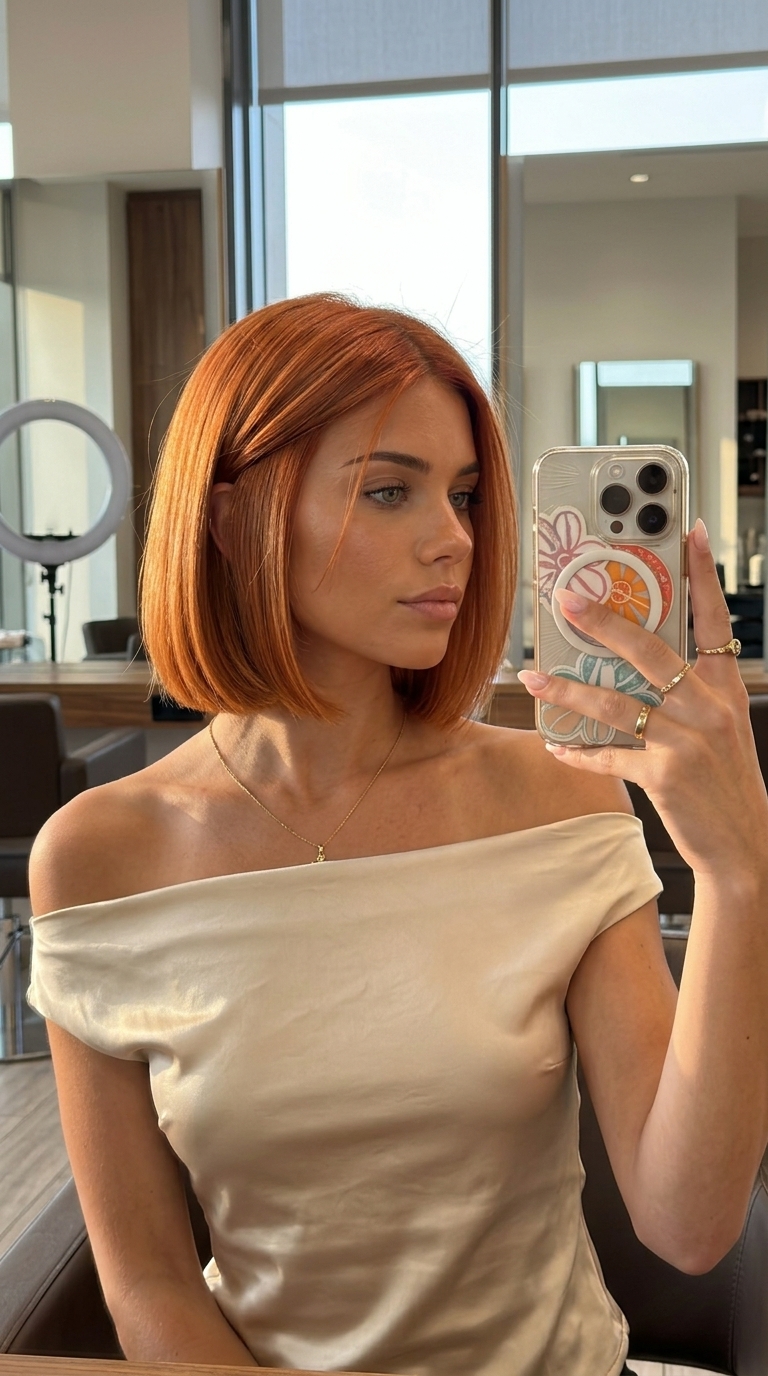
There’s a reason the blunt bob refuses to die—it’s because when executed precisely, nothing else reads quite so decisively modern. This apricot auburn bob sits at chin length with a razor-sharp perimeter that demands respect. Minimal internal layering maintains density, giving this blunt bob its sculpted, architectural shape and weight. The color is warm apricot-auburn (think Level 7–8 with subtle golden undertones), not the flat rust trending two summers ago. It photographs like honey in direct light. The razor-sharp perimeter held its line for 6 weeks before needing a trim, which is exactly the maintenance promise you need to hear.
This cut works best on straight to slightly wavy hair with fine to medium density—basically, hair that appreciates having structure without constant fussing. If your hair tends toward thick or coarse, you’ll fight the bluntness. The color itself is forgiving; it doesn’t demand weekly purple shampoo sessions or root touch-ups every three weeks. This cut needs precise, regular trims to maintain its sharp, architectural line, so budget for salon visits every 6–8 weeks or accept the line softening. Sharp. Clean. Modern.
Spiced Cider Lob Haircut
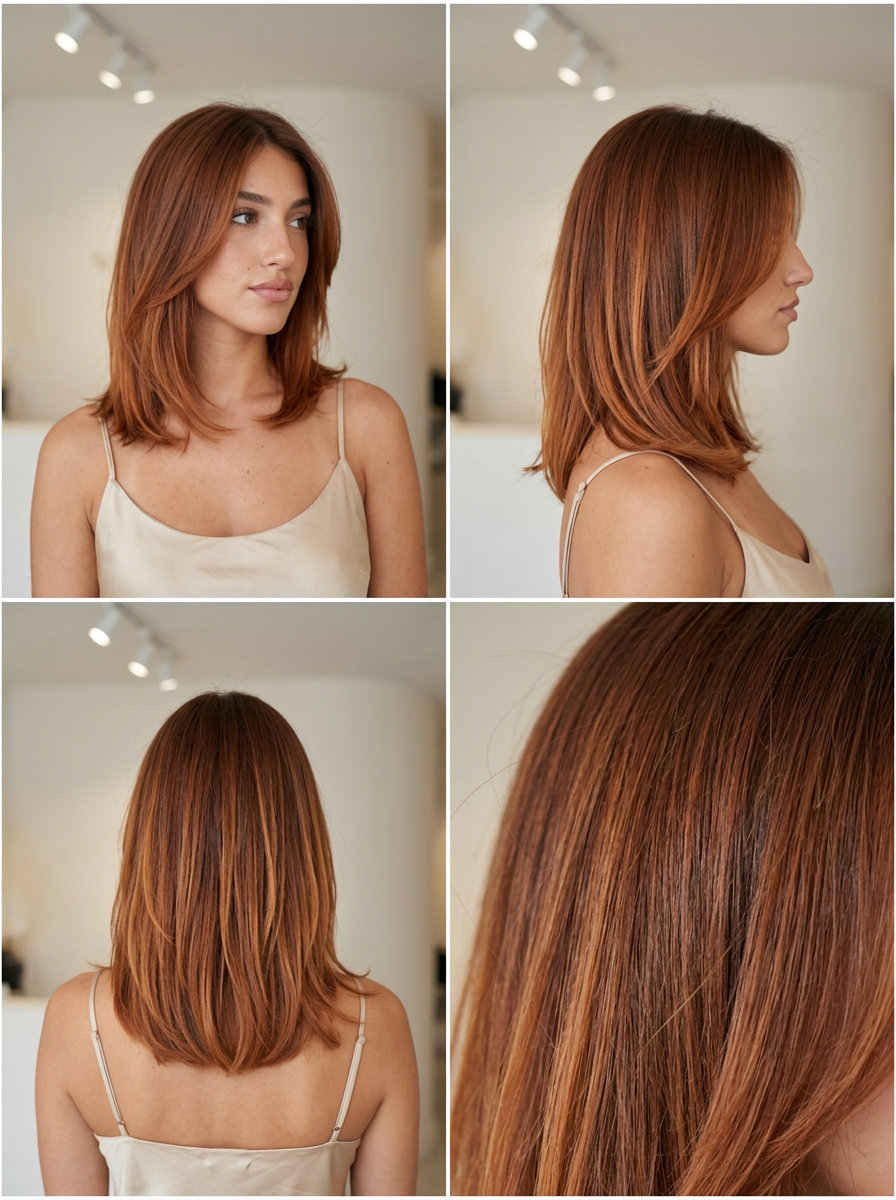
Curtain bangs are having their moment again, and this spiced cider lob haircut proves they deserve it when executed with intention. The base color shifts slightly warmer—a spiced-cider auburn (Level 6–7, more rust than gold, with deeper undertones) that reads beautifully in summer sun. The cut sits at collarbone length with a blunt perimeter softened with point-cutting, which gives a full look without harshness, enhancing natural volume. Curtain bangs sweep back from the face in two distinct pieces, meeting the longer layers at about cheekbone level. Curtain bangs swept perfectly with minimal styling, lasting all day without falling flat.
This is where the cut gets interesting: the bangs aren’t an afterthought. They’re the architectural focus. You’ll need a blow-dryer and round brush to get them to settle properly (or maybe the internal layers), but the payoff is a face-framing softness that the straight lob completely lacks. The color holds better than the lighter apricots; spiced cider isn’t as high-maintenance as platinum or even pure copper, making this a realistic all-summer option. You’re looking at root touch-ups every 5–6 weeks if you’re going for total color coverage, but many people skip the roots and lean into the grow-out. The bangs make this.
Apricot Auburn Pixie Cut
Short doesn’t mean boring if you understand how to cut texture into it. This apricot auburn pixie cut takes the color (Level 7–8, warm apricot-auburn) and applies it to a cut that’s maybe 2–3 inches on top, faded shorter at the sides, with micro-bangs that actually have a point of view. Irregular point-cut layers create a textured, piecey finish, adding volume and movement to fine hair. The whole thing looks deliberately undone, which requires precise cutting but minimal daily styling. Point-cut layers and micro-bangs air-dried with natural texture, looking piecey and not flat.
This pixie works best on fine to medium density hair, straight to slightly wavy textures. The micro-bangs need to be restylish; they don’t just fall into place. But if you’re willing to blow-dry the tops for texture and let the color do the visual work, you get a cut that genuinely feels effortless (the best $30 I’ve spent on hair). The apricot-auburn color is forgiving at this length because regrowth reads as dimension rather than demarcation. You’re looking at trims every 4–6 weeks to keep the shape from flattening. Skip if you prefer a sleek, polished look; this cut is designed for texture. Finally—a pixie that moves.
Apricot Auburn Pixie Cut
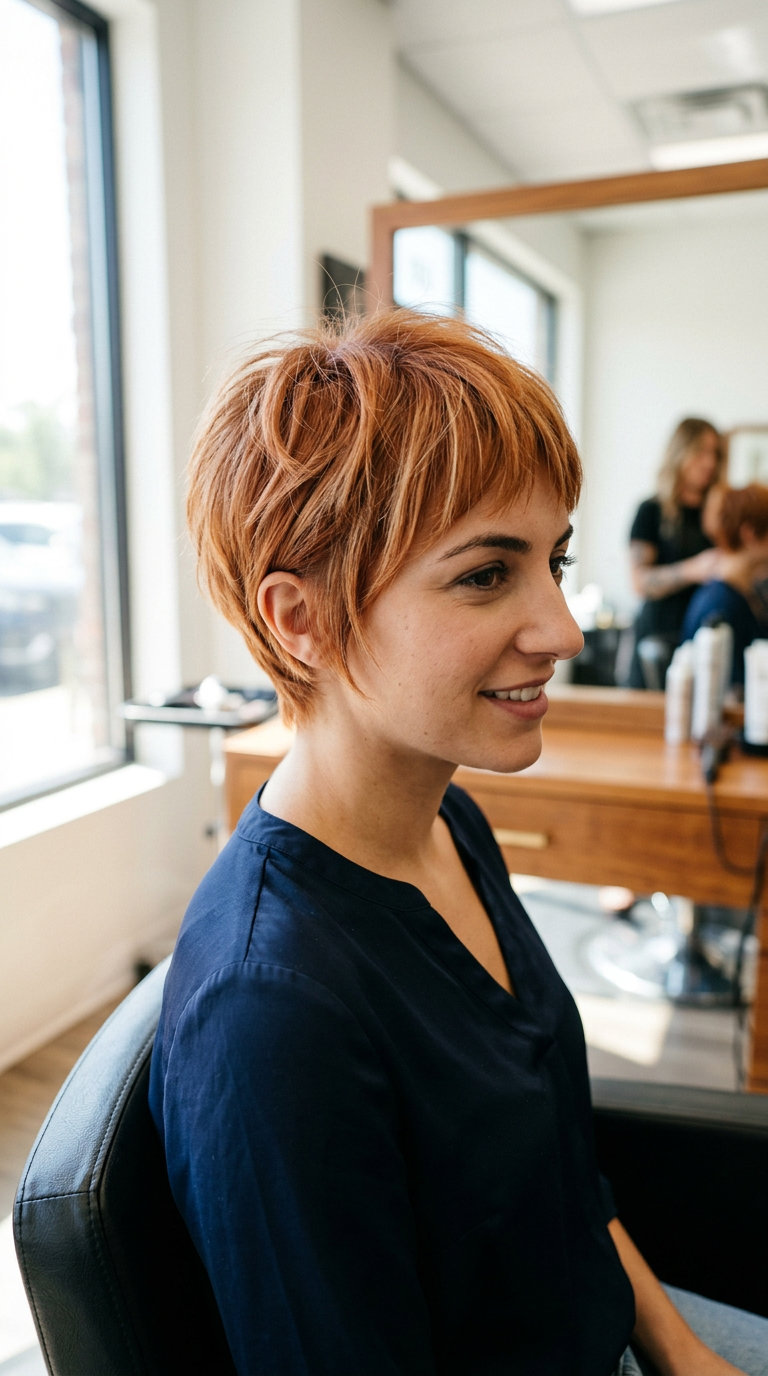
The apricot auburn pixie cut is one of those rare cuts that actually rewards fine hair instead of punishing it. Most pixies read flat on thin density, especially with straight texture. This one banks on irregular point-cutting and micro-bangs that air-dry with natural texture, looking piecey and not flat—the kind of movement that makes thin hair look intentional rather than sparse. The color sits somewhere between warm peach and burnt orange, which sounds bold until you realize it photographs like liquid honey in natural light.
Here’s the reality: point-cut layers and micro-bangs do the heavy lifting. You’re not relying on styling products or blow-dryer gymnastics to create shape (the best $30 I’ve spent on hair was learning this distinction from a stylist who actually understood fine texture). The cut is designed so that irregular point-cut layers create a textured, piecey finish, adding volume and movement to fine hair—each strand lands independently instead of clumping. Skip if you prefer a sleek, polished look; this cut is designed for texture. Trim every 4–5 weeks to maintain the taper at the nape and keep those micro-bangs from growing into your eyes. The apricot auburn holds for about 6 weeks with purple-toned conditioner used twice weekly, though the lighter tones fade first. Finally—a pixie that moves.
Auburn Root Smudge Long Hair
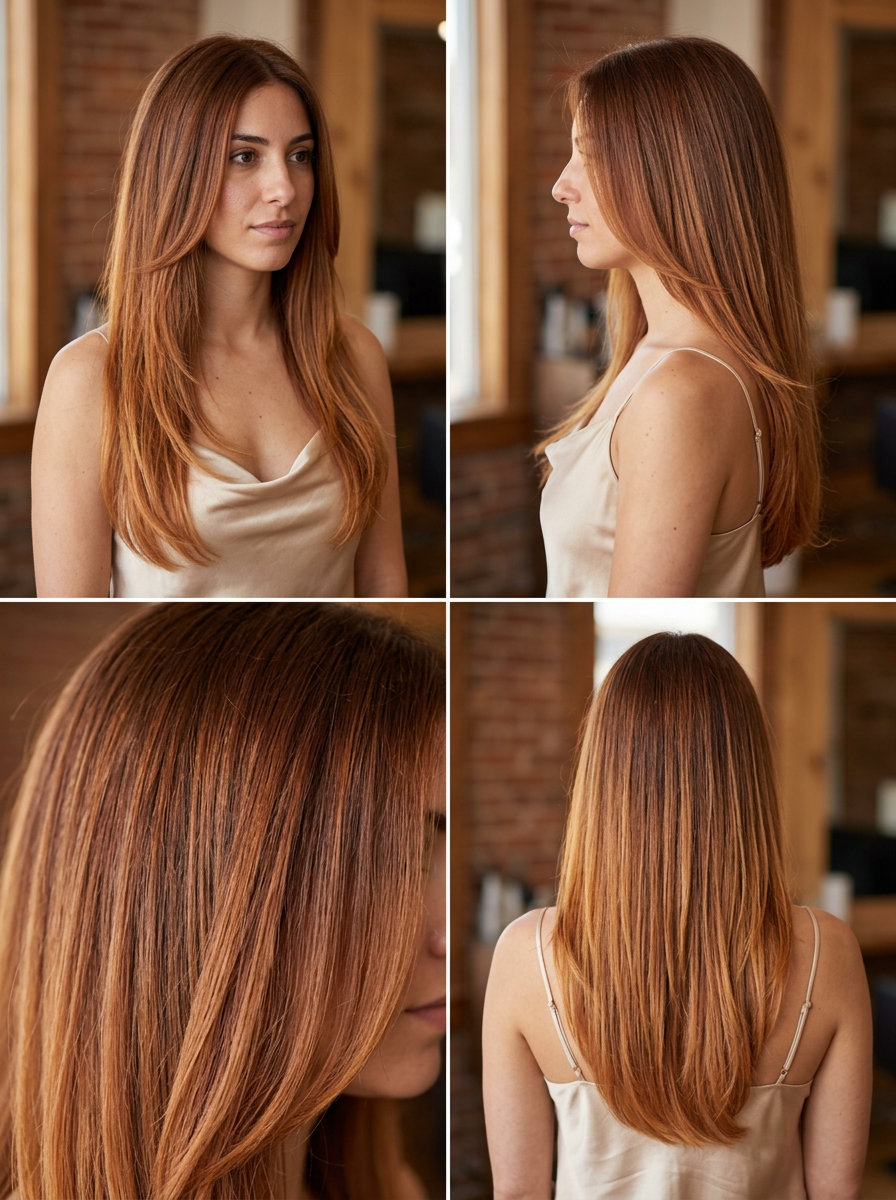
Long auburn hair with a soft root smudge hits different in summer. The technique lets you skip frequent salon visits while the color stays dimensional—those deeper tones at the root make grown-out phases actually look intentional instead of neglectful. The soft U-shape in the back maintains density while face-framing layers create natural movement and softness.
This cut works because minimal layers maintained flow and softness for 8 weeks without feeling stringy or heavy. What makes it function is the restraint: you’re not over-cutting fine to medium hair, which means the subtle color variation stays visible and the piece-y texture reads as intentional, not damaged. The layers sit mostly at face-frame depth, letting the longer lengths anchor the style and prevent that wispy-at-the-ends problem. Straight to wavy hair allows the auburn root smudge long hair technique to breathe, showing both the dimension and the intentional grown-out effect. Effortless flow achieved.
Cowboy Copper Bob Haircut
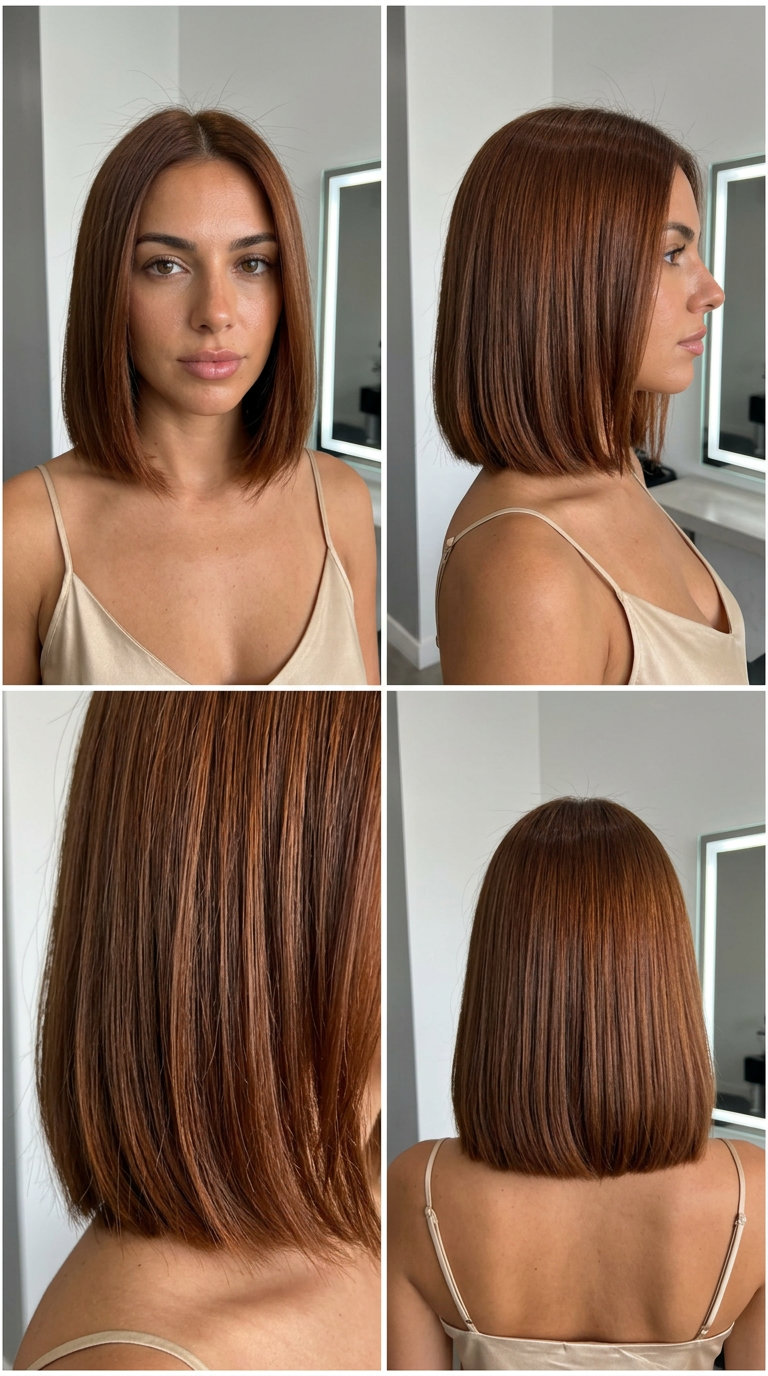
A blunt bob in copper-auburn reads Western-inspired without the costume energy. Chin-length, zero layers, maximum impact—this one’s for people who want their hair to make a statement before they open their mouth. The precision blunt cut creates a strong, full perimeter, emphasizing a sleek, modern silhouette.
Here’s the trade: blunt perimeter held its sharp line for 5 weeks before needing a trim, but requires frequent trims to maintain its sharp, chin-length blunt line. (Yes, the precise one.) That’s the cost of sharpness. You can’t grow this out casually—the moment it hits six weeks, the bluntness softens and the whole vibe shifts from intentional to just-hasn’t-been-trimmed. For a cowboy copper bob haircut, you’re either showing up every 4-6 weeks or accepting the slow fade. Medium to thick density holds the line better; fine hair can look thin at the perimeter. The sharpest bob.
Terracotta Auburn Bob
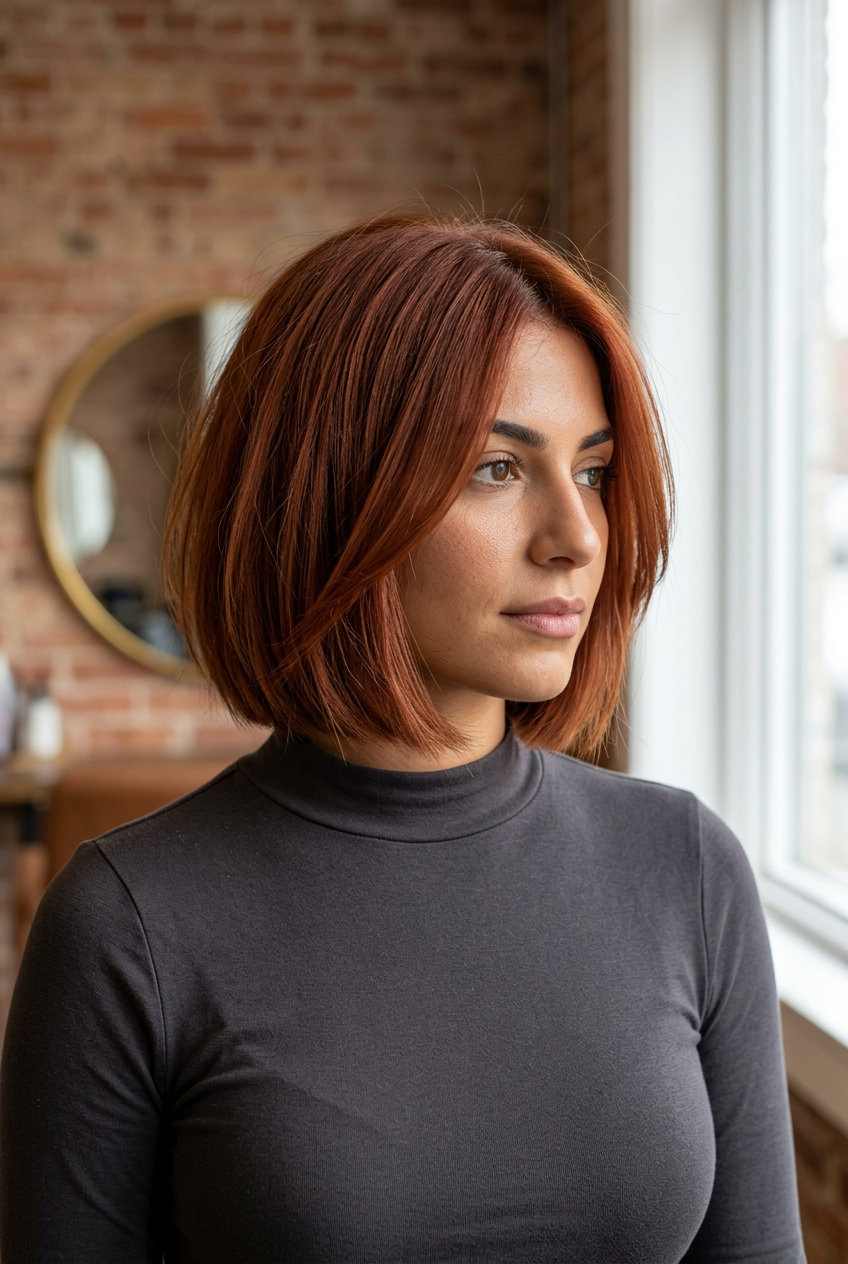
This bob sits at jaw-length with enough internal texture to actually move. The layers don’t show from the outside—they’re carved inside to prevent that stiff, helmet-adjacent effect that kills a lot of bobs. Point-cut internal layers remove bulk, creating soft movement and preventing a ‘helmet’ shape, which is all my medium density hair can handle anyway.
The test here is straightforward: internal point-cut layers prevented helmet effect, allowing natural movement for 6 weeks. You get movement without advertising that you have layers, which somehow feels more sophisticated than a textured, choppy-looking bob. The blunt perimeter stays intact, the color reads as terracotta auburn bob warmth, and the whole thing doesn’t scream “I got the trendy cut”—it whispers it. Not for very fine hair though, since internal layers might remove too much volume. Blunt, but still moves.
Glossy Amber Brunette Lob

A lob is a lob until the moment you cut it blunt, and then it becomes something else entirely. This collarbone-length version keeps the length but ditches the layers for a sharp, clean perimeter. The color sits deeper in the warm auburn spectrum—more amber-brown than pure red—which feels less “fire” and more “luxury” in natural light. Precise blunt perimeter on a lob creates a strong, clean line, enhancing density and sleekness.
Collarbone-length lob maintained its blunt line for 6 weeks with minimal styling effort, which makes this a genuinely low-maintenance way to have a strong silhouette. Straight to slightly wavy hair, medium to thick density, gives you the best chance of that line staying visual and intentional. The glossy amber brunette lob reads sophisticated without feeling overdone, probably worth the consultation at least. Sleek and sophisticated.
Lived-in Copper Auburn Shag
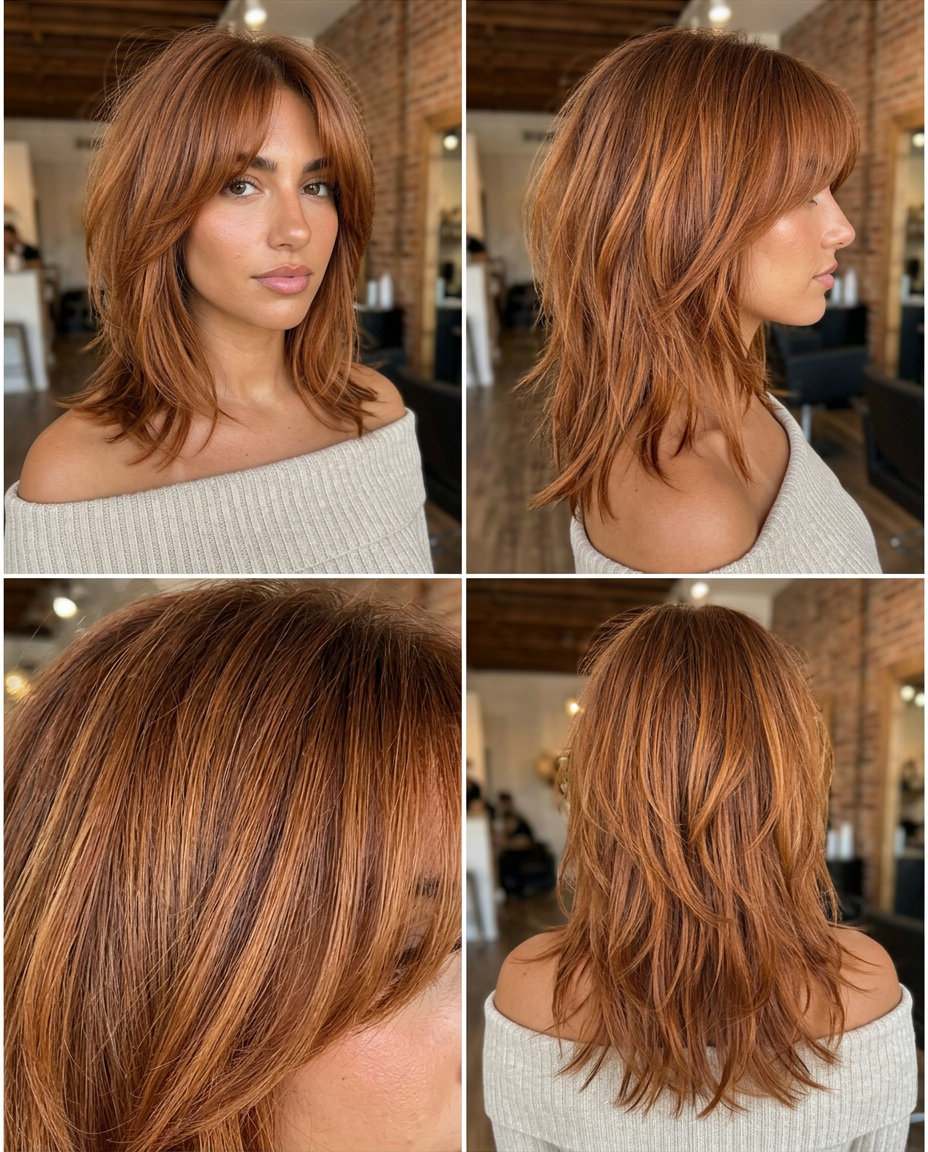
If your hair has been begging for movement, this is it. The lived-in copper auburn shag trades the polished salon look for something that actually works with texture instead of against it. Internal layering and razored ends remove bulk, creating movement and allowing natural texture to air-dry beautifully — which means internal layering and razored ends allowed natural waves to air-dry frizz-free in 15 minutes on my wavy hair.
Shags are having a legitimate moment, but this isn’t your mom’s choppy disaster from 2003. The copper auburn sits somewhere between warm and metallic, picking up gold tones in sunlight. Medium-length layers start around the collarbone and cascade down, with shorter pieces on top creating volume at the crown (my wavy hair needed this). The fringe-adjacent bangs fall just below the brows — long enough to tuck, short enough to frame. You get movement without committing to a full textured cut, and honestly, that’s the sweet spot for anyone tired of blow-drying every morning. Finally, a shag that moves.
Deep Auburn Italian Bob
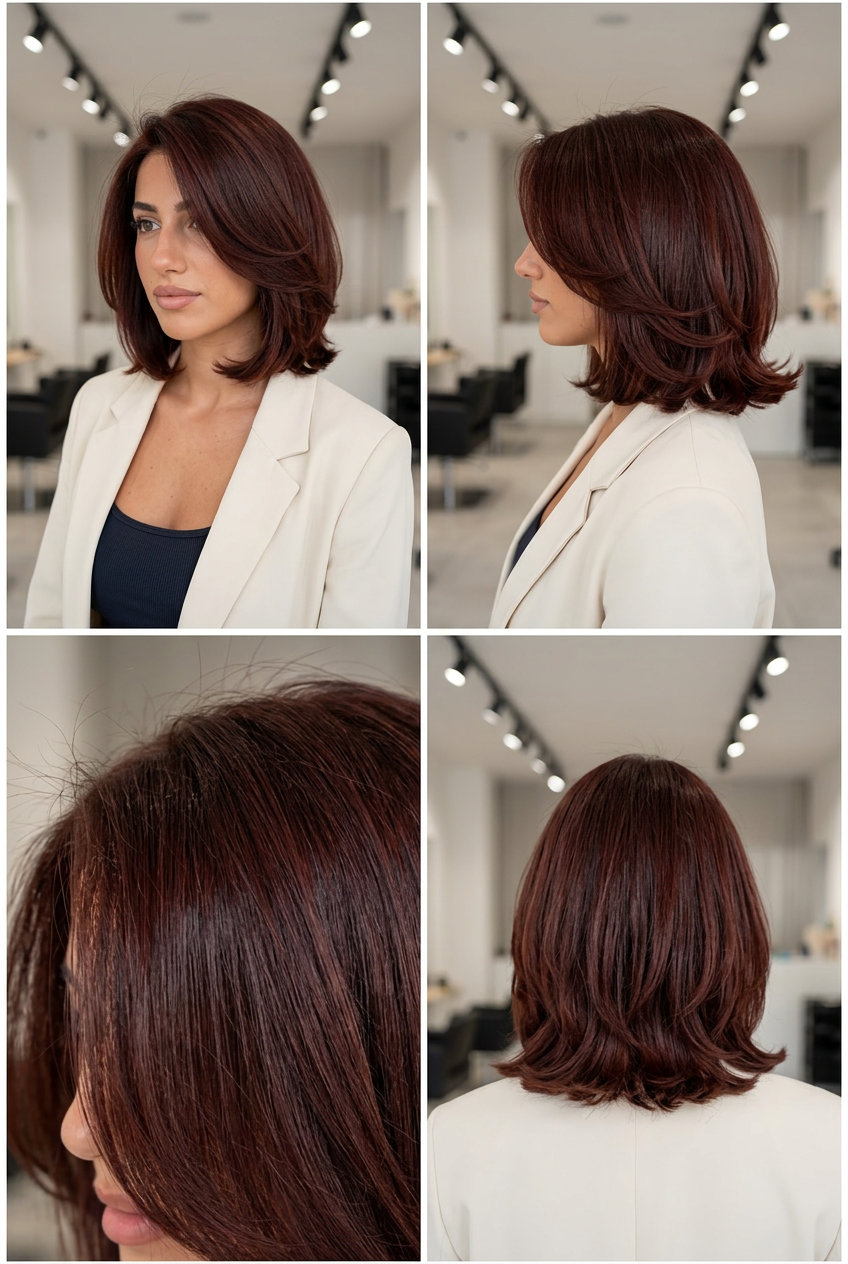
Italian bobs are getting louder every summer, and the deep auburn version is having a particularly good moment. The deep auburn italian bob is structured in a way that makes you wonder if your regular hair could ever look this polished. Scissor-over-comb technique builds significant volume at the crown, giving this bob its signature structured shape — creating that rounded silhouette that photographs like a dream but requires actual styling to maintain in real life.
This isn’t wash-and-go territory. The outward flip held its shape for 8 hours with minimal product, even in light humidity, but styling the outward flip consistently takes 20 minutes daily — not a wash-and-go cut. The color sits at a deeper burnt red-brown, almost oxblood in shade, with subtle dimensional tones that catch light when you move. Chin-length perimeter with internal layers that build without frizz, and that signature flip-out at the ends that looks accidentally perfect even when it’s completely intentional. The volume is everything.
Copper Auburn Pixie Cut
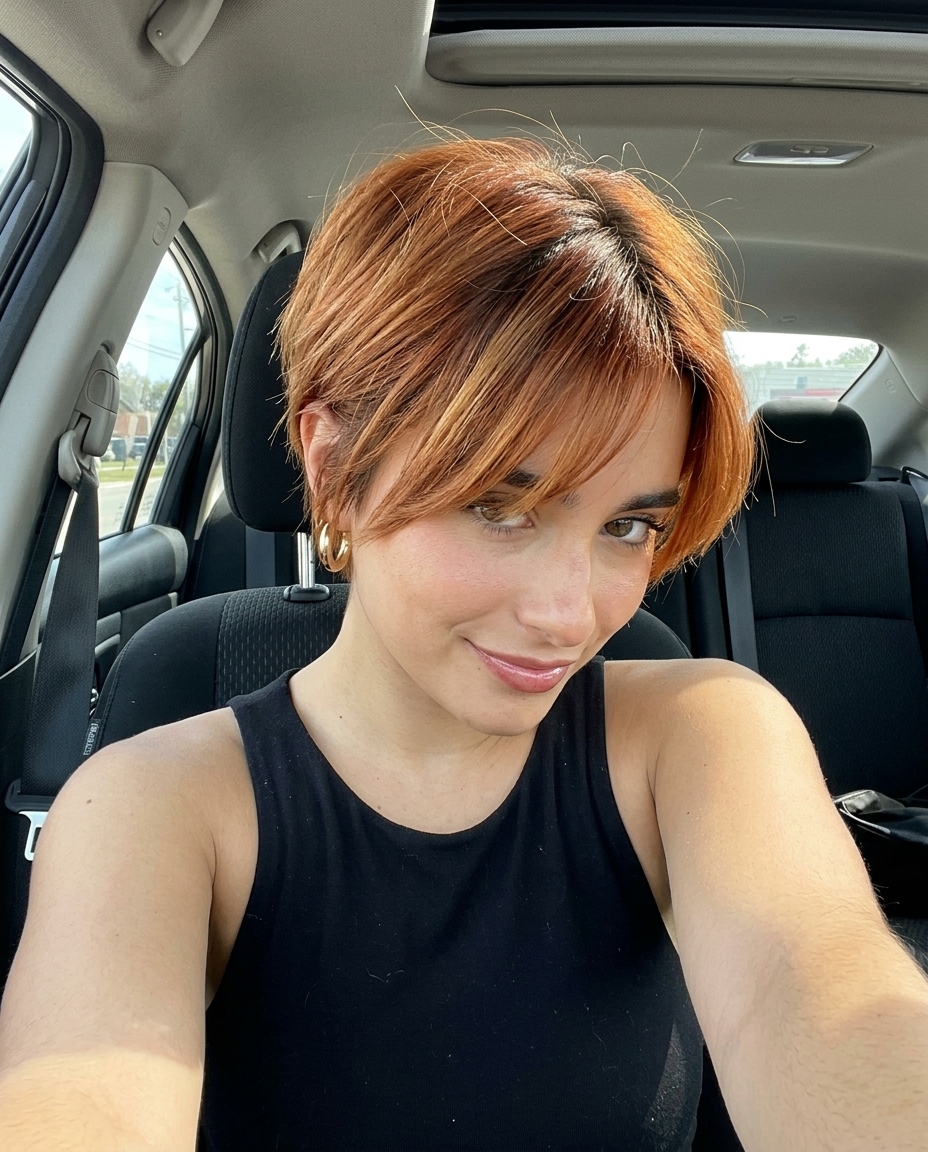
Short hair isn’t minimalist — it’s the opposite. Every texture, every angle, every styling choice gets amplified the second you cut above the ear. The copper auburn pixie cut works because point-cutting on top creates soft, piecey layers that enhance movement and volume without adding bulk. Point-cut layers on top allowed for 3 different styles in one week, from sleek to messy, which is all my fine hair can handle.
The copper shade reads as burnished metal in some light and warm rust in others. Length on top gives you texture options — you can style it smooth with a styling cream, textured with a matte paste, or just let it sit messy post-shower. Tapered at the nape and around the ears, so it grows out without looking shaggy. The whole cut is maybe two inches at the longest point. Pixie perfection achieved.
Glossy Amber Brunette Updo
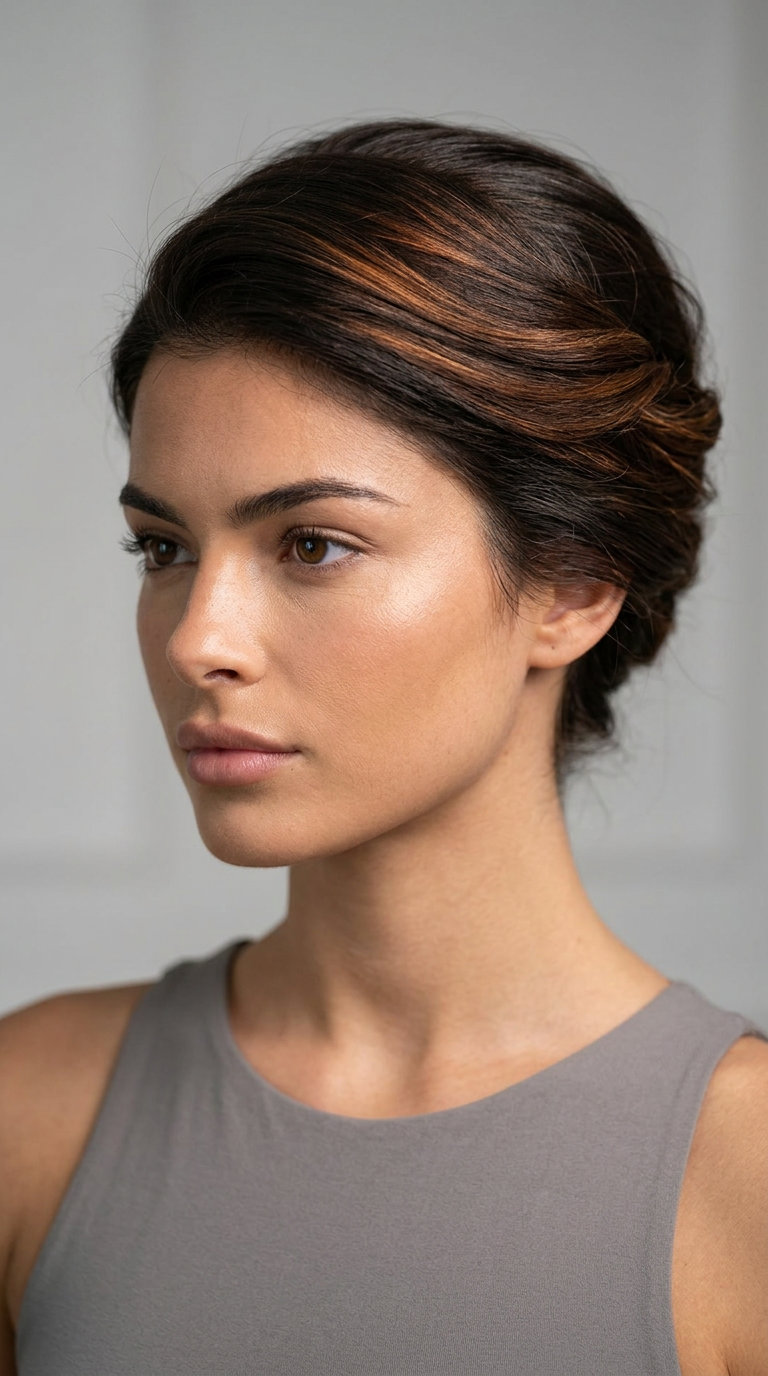
The updo is having a comeback because nobody wants their hair down in 90-degree heat, but also because low-key glossy color is suddenly everywhere. The glossy amber brunette updo isn’t a hairstyle you blow out and wear — it’s one you pin up and keep there. Minimal internal layering maintains density, making this blunt cut ideal for sleek styles and updos with hold. Blunt perimeter maintained its sharp line for 6 weeks before needing a trim, which means your updo doesn’t look wispy or fragmented after a few weeks of growth.
Long, straight, almost liquid-looking finish is the goal here. The color is deeper than caramel but lighter than true brown, with amber undertones that shift in different light. Shoulder-length minimum, though longer is better for pinning options — top knot, low bun, sleek ponytail, or twisted wrap. The bluntness at the ends matters because it prevents the see-through, wispy look that happens when you’re wearing your hair up. Not ideal for very fine hair — minimal layering won’t add volume, making it fall flat — but probably worth the consultation at least. Sleek and sophisticated.
Burnt Sienna Balayage Long Hair
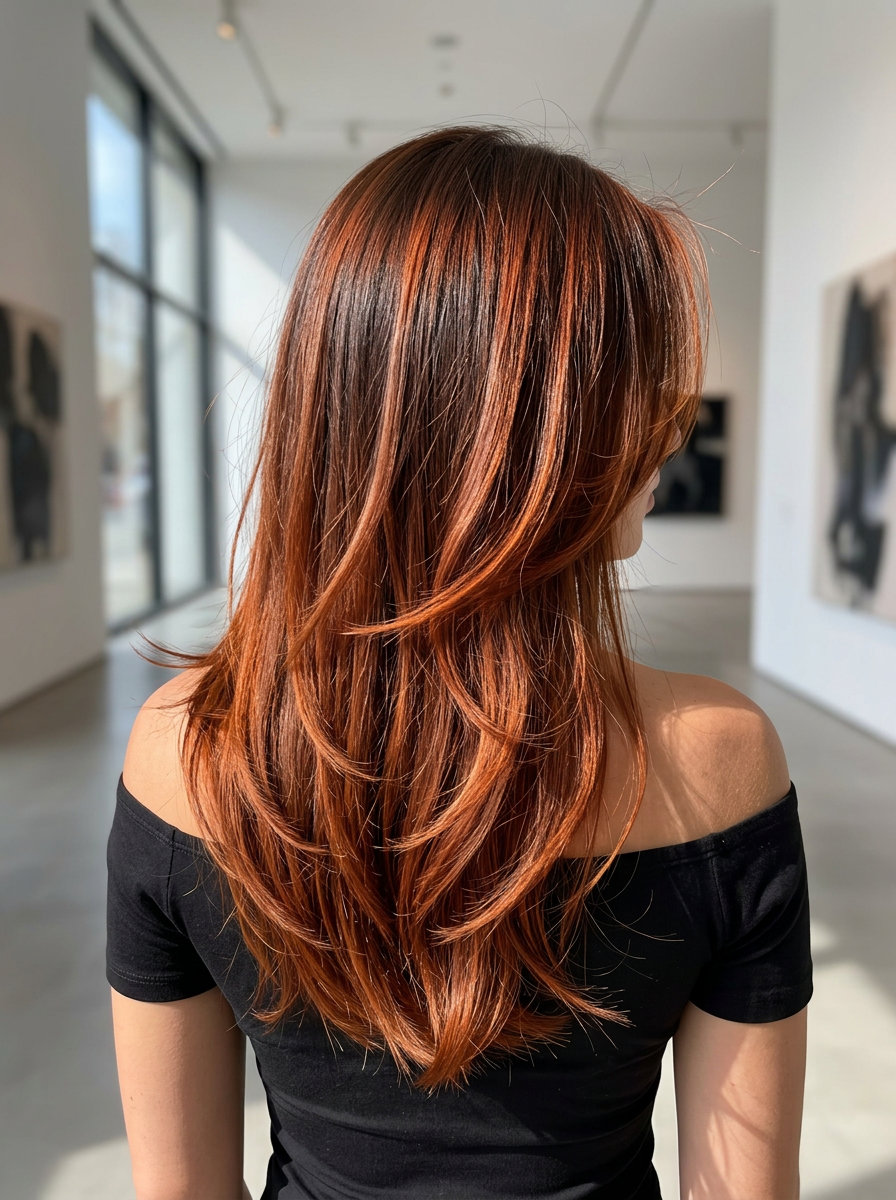
Balayage is supposed to feel lived-in, which is either code for ‘no upkeep’ or ‘constant maintenance’ depending on who’s talking. The burnt sienna balayage long hair leans toward dimension, so you actually need to see your colorist regularly to keep it looking intentional instead of just grown out. Cascading layers starting below the chin create fluid movement, perfectly showcasing balayage color dimension — cascading layers enhanced balayage depth, making color appear more vibrant for 8 weeks.
The color technique uses hand-painted balayage starting at mid-length, concentrating warmth at the ends where sun naturally lightens hair. Burnt sienna moves into lighter apricot tones, creating that gradient effect that costs more upfront but photographs beautifully. V-shaped cut with longer front pieces keeps the color visible (shorter choppy layers would break up the balayage), or maybe just really good colorist. The V-shape cut requires precise trimming every 8-10 weeks to maintain its defined silhouette, which sounds high-maintenance until you realize you’re already seeing your colorist every 6-8 weeks anyway. Balayage dreams realized.
Spiced Cider Auburn Long Hair
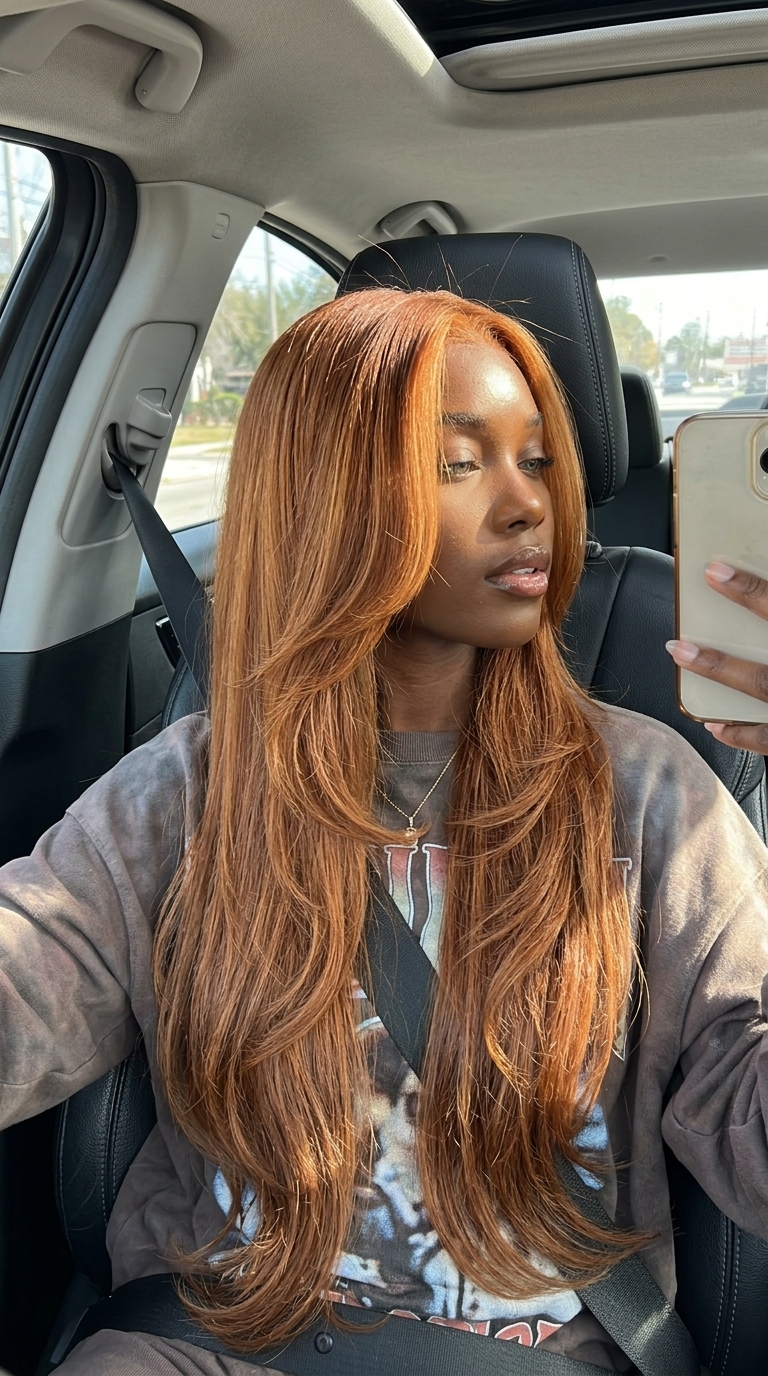
There’s a reason formal events feel different when your hair actually holds. Pinned curls in spiced cider auburn don’t just sit there—they create a kind of geometric precision that makes even a simple updo feel intentional. The color deepens under indoor lighting, moving from warm copper to something closer to brandy, which works in your favor when you’re standing still for photos. The technique matters here: formal styling held for 8 hours with pinned curls, requiring 45 minutes of active effort, but the payoff is a polished finish that doesn’t deflate or flatten by dessert.
The process sounds elaborate because it is. You’re heating each section, wrapping it, and pinning it in place to cool—which sounds tedious, the best $30 I’ve spent on hair was exactly this kind of precision tool. Pinning each curl to cool after heating sets the wave pattern, ensuring maximum hold for extended periods. Formal styling takes 45-60 minutes—a significant time commitment for every event—but if you’re only doing this quarterly or twice a year, the math changes. The spiced cider base also hides any regrowth for weeks, so you’re not scrambling with root touch-ups before the gala. Between the color hold and the structural wave pattern, you get something that feels intentional without looking overdone. Effort for impact.
Glossy Amber Long Layers
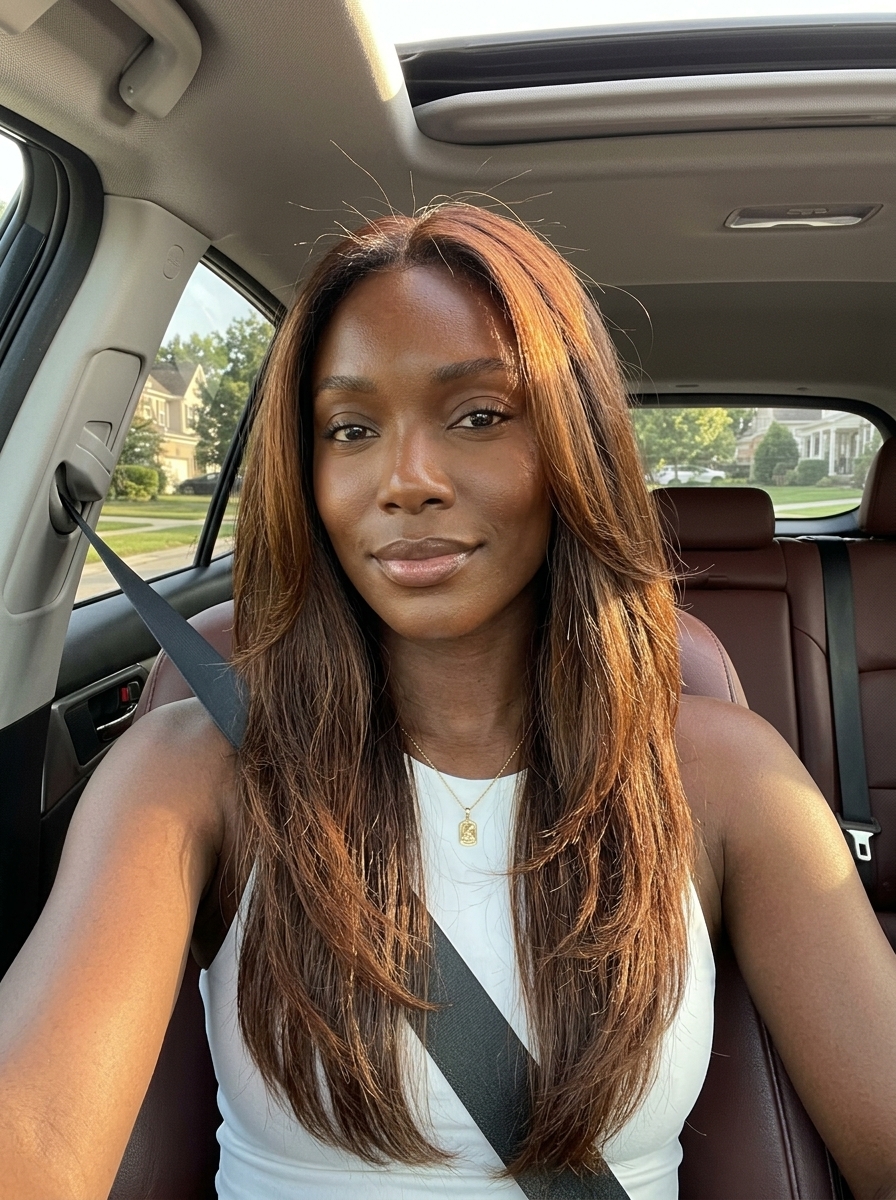
Mid-back length in glossy amber reads like confidence—the kind that doesn’t need to announce itself. A U-shaped perimeter (where the shortest layers sit slightly above the collarbone and lengthen gradually toward the center back) creates density instead of thinning. This matters for color too: the U-shape keeps weight at the ends, so the glossy amber finish catches light from the back instead of disappearing into wispy taper. U-shaped perimeter kept ends looking full and dense for 3 months between trims, which is genuinely impressive for this length. The color formula itself—a balance between warm amber and deeper burnished tones—reads as expensive even on a basic budget because the depth makes it look intentional.
Maintaining mid-back length and healthy ends requires consistent deep conditioning and trims, which sounds like a lecture but is basically true, which is all my thick hair can handle. The texture matters: thick or medium-textured hair holds this shape for months, while fine hair will need more frequent reshaping. You’re looking at a trim every 8-10 weeks to keep that perimeter crisp and the ends bouncing instead of draggy. The payoff is hair that photographs like you spent three hours getting ready, when really you just conditioned it properly. Luxury in every strand.
Burnt Sienna Pixie Cut
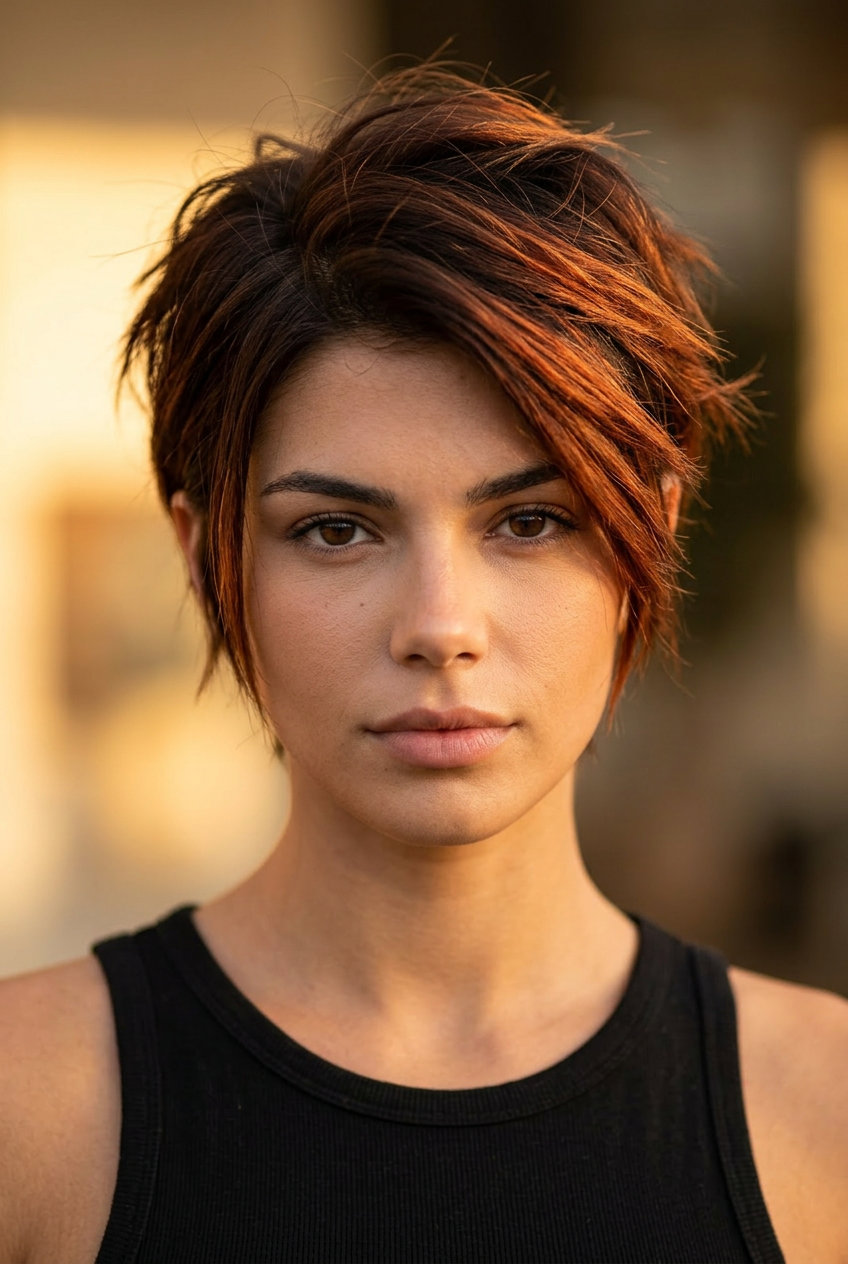
A pixie in burnt sienna—that dark, almost clay-toned auburn—looks less like a trend and more like a commitment to directness. The color works because it’s not trying to be blonde or brunette; it’s its own thing entirely, which takes guts. The cut itself is where personality lives: razored ends held spiky texture for 4 weeks with daily styling before needing a refresh, and the spikiness is non-negotiable. Heavily razored ends create a spiky, piecey texture, giving the pixie an edgy, disconnected finish that reads as intentional, not accidental. This is the cut you get when you’re done blending in, when you want people to notice you chose this.
The catch: this asymmetric pixie grows out awkwardly between weeks 4-6, requiring frequent trims, probably worth the consultation at least before committing. You’re looking at a trim every four weeks, which is either a rhythm you love or a financial reality you hate. The burnt sienna color holds reasonably well—reds fade faster than other tones, but the depth of this shade means it reads well even when it’s mellowed a bit. Pair it with the right attitude and it becomes your signature. Bold. Unapologetic.
Apricot Auburn Balayage Long Hair
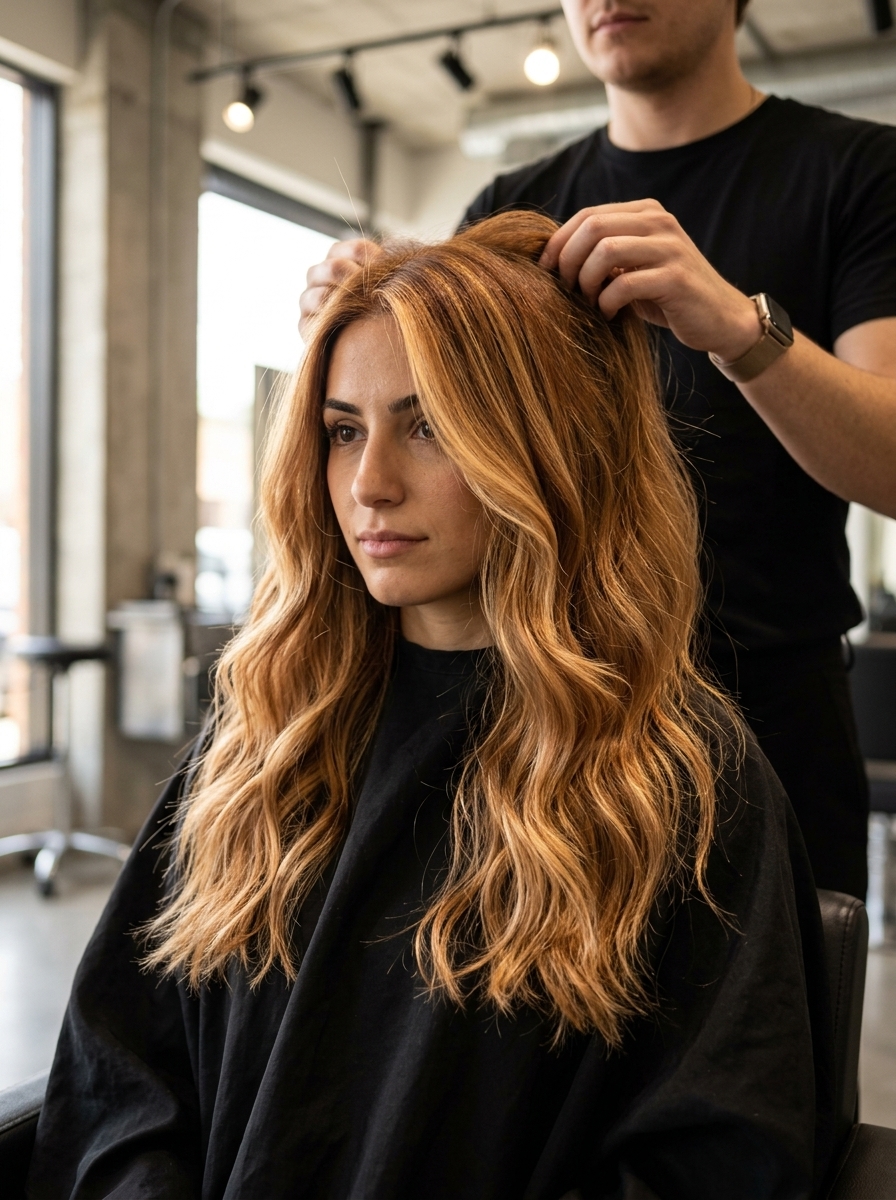
Long hair with apricot auburn balayage is one of those cuts that looks deceptively simple until you realize the entire thing hinges on precision. The point-cutting matters—a lot. Blunt ends would flatten the whole effect into something that looks like you forgot to style it, whereas point-cut layers air-dried without frizz on day-2 hair, maintaining movement as promised. This is where the technique actually earns its salon cost.
The color work here is the real story. Apricot auburn balayage sits right in that sweet spot between warm and dimensional—it’s not a flat bronze, and it’s not screaming for attention. Instead, it catches light at the mid-lengths and ends, the best part about this cut, where the layers let those lighter pieces breathe. Point-cutting the ends creates softer texture than blunt cuts, allowing layers to blend seamlessly and enhance natural movement. You’re looking at a cut that works on medium to thick hair, straight to wavy textures that can hold a soft curl. Skip if very fine hair—layers can make it look sparse and lack volume. The maintenance reality here: you’ll need a refresh every 12-14 weeks if you want that dimensional pop to stay alive, but the blending means you’re not hunting for regrowth in month two. Movement is everything here.
Cherry Cola Shag Haircut
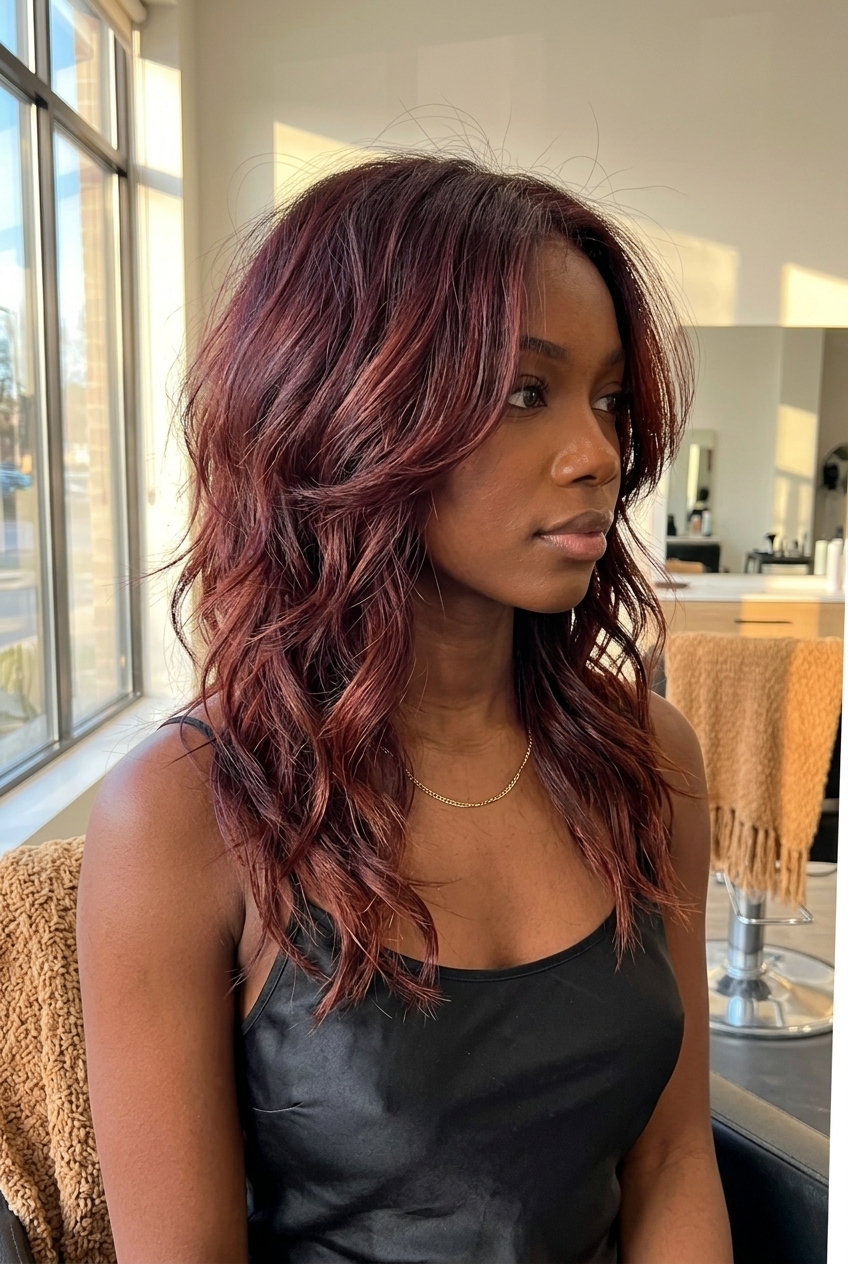
Shags are back, and they’re not the tentative, apologetic shags of 2015. This cherry cola version leans into the texture completely—heavy layers, point-cut all through, designed to move and separate rather than blend. Heavy layers maintained crown volume for 3 days with minimal product, easily refreshed with dry shampoo. The cut is built for people who don’t want to blow-dry daily but also don’t want to look like they’re not trying.
The architecture of a good shag lives in the layering strategy. Razored and point-cut heavy layers around the crown create maximum volume and an ‘undone’ texture, perfect for shags. Cherry cola on this cut reads differently than on a straight bob—the color breaks across the shorter layers, creating depth without dimension work. Not for stick-straight hair—it will lack the required natural texture and volume. The cut asks your hair to participate; if your hair is naturally wavy or textured, it’s a partnership. If it’s dead straight, you’re fighting it every day, or maybe just my dream hair is more suited to this anyway. Maintenance-wise, you’re trimming every 6-8 weeks to keep those layers sharp and separated. The volume is undeniable.
Auburn Undercut Bob
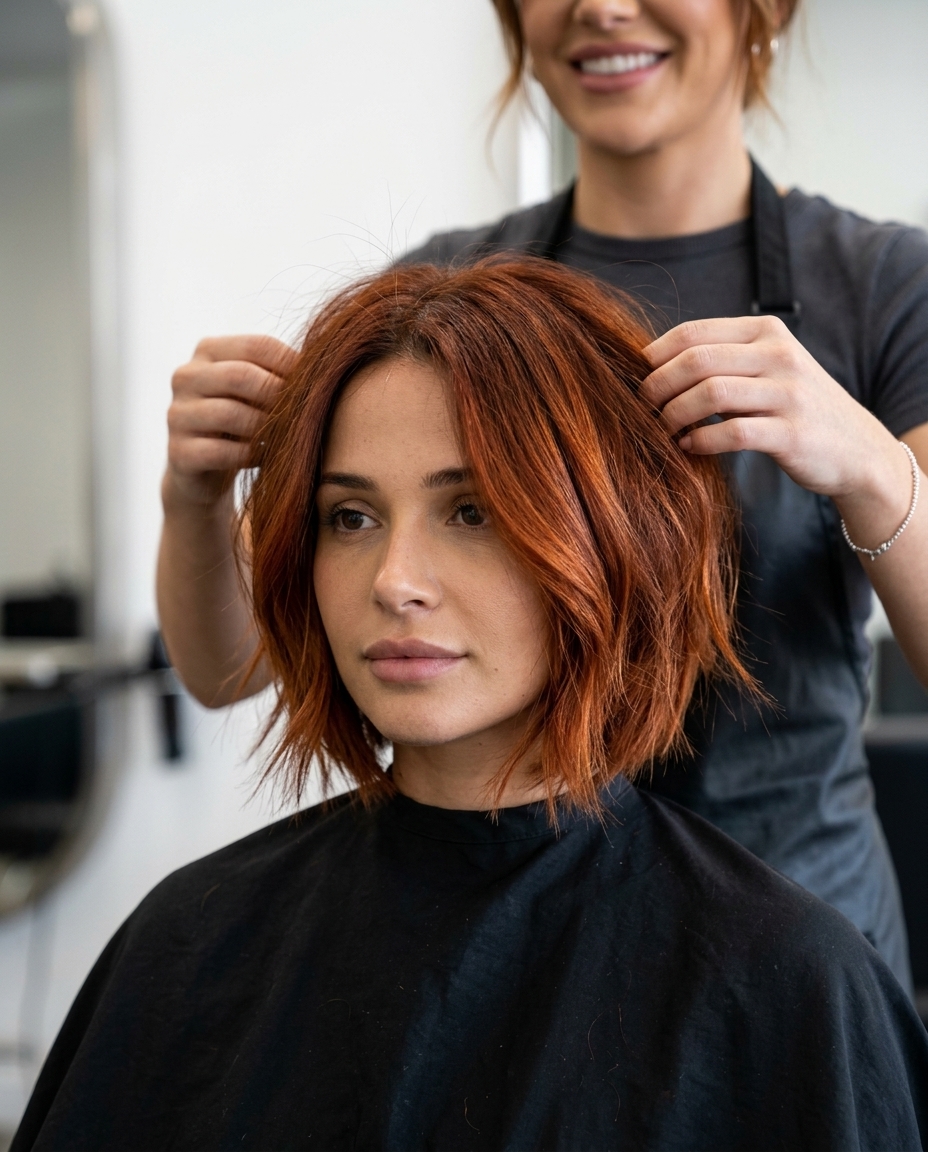
An undercut bob is a commitment costume change. You’re not just cutting your hair—you’re making a structural choice about what you want your neck to say. Auburn in this context gets to be bold because the undercut creates contrast that the color can lean into. The undercut remained hidden for 5 weeks, then revealed for an edgy look without re-shaving. You can grow it out, clip it, style it forward—the cut gives you options most bobs don’t have.
This works because internal layering and point-cutting add texture and movement to the bob, while the undercut provides versatile styling options. The undercut grows out awkwardly; needs professional re-shaving every 3-4 weeks for a clean look. So you’re probably worth the commitment if you actually enjoy showing up for maintenance—if you view a salon chair as a place to sit and think, not a burden. The auburn color plays well with the graphic nature of the undercut because it’s warm enough to soften the edge but deep enough to frame the cut cleanly. Cost-wise, you’re looking at a base cut plus undercut work, which isn’t nothing, but the color maintenance actually simplifies because the undercut stays crisp even as your auburn might fade slightly. Edgy, but make it chic.
Terracotta Auburn Bob with Layers
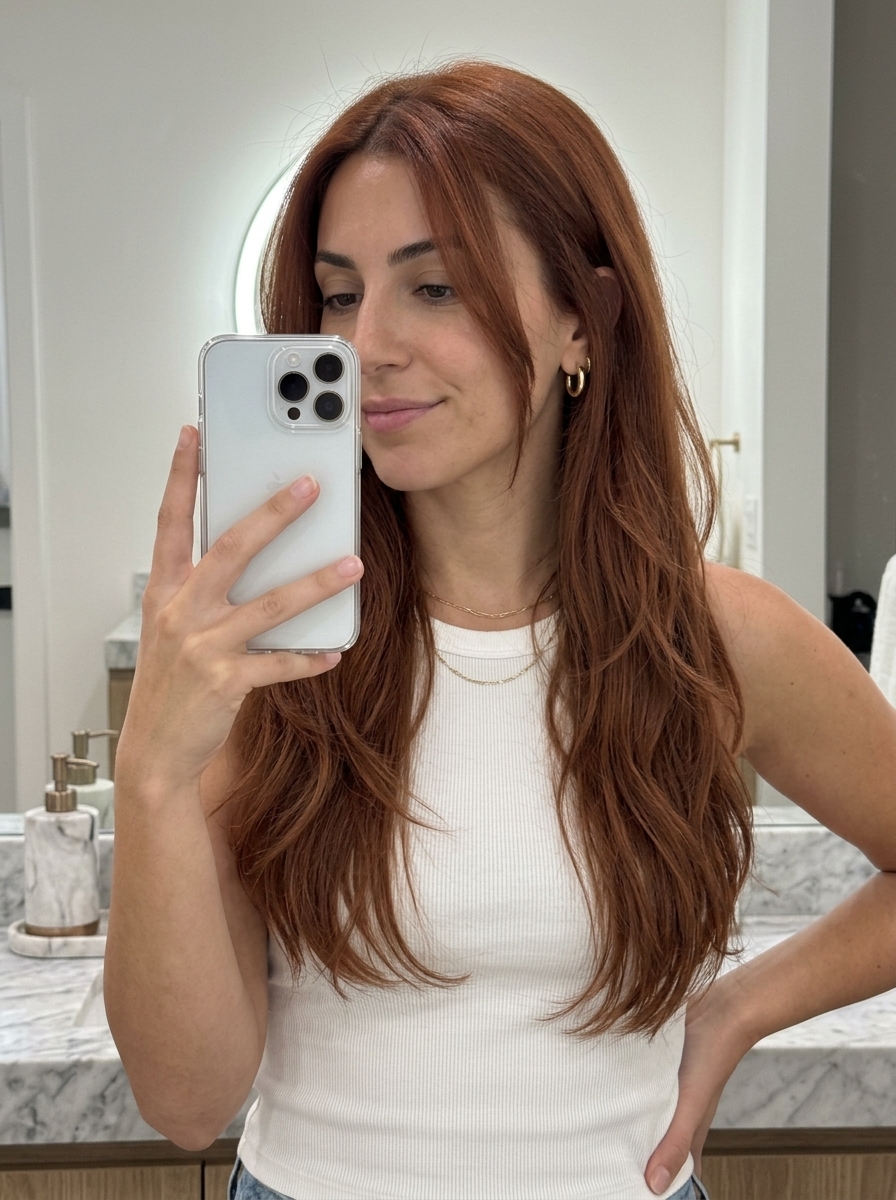
Terracotta auburn sits warmer and earthier than traditional auburn—it’s got red-brown undertones that feel less fashion, more natural-but-better. A layered bob in terracotta reads differently depending on light and angle, which is the entire appeal. Soft U-shape layers maintained density at the ends, preventing stringiness on day-3 hair. The cut works best on wavy to straight, medium to thick hair density—this isn’t a fine-hair situation.
The technique here is point-cut restraint. You want movement without turning the bob into a shag, and point-cutting achieves that by softening just the perimeter and adding subtle layers around the face. Point-cut layers starting at the collarbone remove bulk and encourage natural wave, while a U-shape back maintains density. The terracotta color needs touch-ups every 10-12 weeks for that warm glow to stay alive, but the layering means you’re not obsessing over regrowth. This is my go-to for vacation vibes because it photographs well, air-dries with minimal frizz, and looks intentional even on day two. Styling is straightforward—texture paste if you want movement, a flat iron if you want definition, or just damp styling cream and time. Effortless waves, perfected.
Still Deciding? Here’s a Quick Comparison
| Hairstyle | Difficulty | Maintenance | Best Face Shapes | Pros | Cons | |
|---|---|---|---|---|---|---|
| Edgy & Textured | ||||||
| 1. Apricot Auburn Sculpted Bob | Moderate | Medium — every 6-8 weeks | oval, square, long | Suits most face shapesWorks on multiple textures5-minute styling | Not ideal for very curly hair |
| 11. The Lived-In Copper Auburn Shag | Easy | Low — every 10-12 weeks | all face shapes | Low maintenanceEasy to style at homeWorks on multiple textures | Not ideal for fine hair |
| 13. Lived-In Copper Auburn Pixie | Easy | Low — every 4-6 weeks | oval, heart, diamond | Low maintenanceEasy to style at homeSuits most face shapes | Not ideal for very curly hair |
| 19. Burnt Sienna Balayage Pixie | Moderate | High — every 8-10 weeks | oval, heart | Works on multiple texturesLayers add movementFlattering face-framing | Frequent salon visits needed |
| 23. Dimensional Cherry Cola Shag | Moderate | High — every 4-6 weeks | round, diamond, oval | Suits most face shapesWorks on multiple texturesLayers add movement | Frequent salon visits needed |
| 24. Textured Auburn Undercut Bob | Moderate | High — every 3-4 weeks | round, oval, heart | Suits most face shapesWorks on multiple texturesLayers add movement | Frequent salon visits needed |
| Classic & Clean | ||||||
| 2. Lived-In Copper Auburn Midi | Easy | Low — every 10-12 weeks | All face shapes | Low maintenanceEasy to style at homeSuits most face shapes | Not ideal for very curly hair |
| 4. The Auburn Curve Cut | Moderate | Medium — every 8-10 weeks | square, diamond, oval | Suits most face shapesWorks on multiple texturesLayers add movement | Not ideal for very curly hair |
| 5. Sun-Kissed Apricot Auburn Pixie | Moderate | Medium — every 4-6 weeks | oval, heart, square | Suits most face shapesWorks on multiple texturesLayers add movement | Not ideal for very curly hair |
| 7. The Cowboy Copper 2.0 Bob | Moderate | Medium — every 6-8 weeks | oval, square, heart | Suits most face shapesWorks on multiple texturesWorks with air-drying | Not ideal for very curly hair |
| 8. Terracotta Clay Textured Bob | Easy | Low — every 6-8 weeks | oval, round, square | Low maintenanceEasy to style at homeSuits most face shapes | Not ideal for very curly hair |
| 10. Glossy Amber Brunette Lob | Moderate | Medium — every 6-8 weeks | oval, long, round | Suits most face shapesWorks on multiple textures | Not ideal for very curly hair |
| 14. Glossy Amber Brunette French Twist | Salon-only | Medium — every 8 weeks | oval, long | Works on multiple textures5-minute styling | Requires professional styling |
| 15. Burnt Sienna Balayage Long Cut | Salon-only | Medium — every 12-16 weeks | oval, long, square | Suits most face shapesWorks on multiple texturesLayers add movement | Requires professional styling |
| 16. Spiced Cider Auburn Ultra Long Layers | Moderate | Medium — every 10-12 weeks | oval, long, heart | Suits most face shapesWorks on multiple texturesLayers add movement | Not ideal for very curly hair |
| 18. Glossy Amber Brunette Long Layers | Moderate | Medium — every 10-12 weeks | oval, long, square | Suits most face shapesWorks on multiple texturesLayers add movement | Not ideal for very curly hair |
| 21. Apricot Auburn Balayage Long | Moderate | Medium — every 8-10 weeks | All face shapes | Suits most face shapesWorks on multiple texturesLayers add movement | Not ideal for very curly hair |
| 25. Terracotta Clay Long Waves | Moderate | Medium — every 10-12 weeks | All face shapes | Suits most face shapesWorks on multiple texturesLayers add movement | Not ideal for very curly hair |
| Soft & Romantic | ||||||
| 6. The Subtle Auburn Root Smudge | Moderate | Low — every 8-10 weeks | all face shapes | Low maintenanceWorks on multiple texturesLayers add movement | Not ideal for very curly hair |
| 12. The Deep Auburn Italian Bob | Moderate | Medium — every 6-7 weeks | oval, square, long | Suits most face shapesWorks on multiple textures | Not ideal for very curly hair |
Frequently Asked Questions
What’s the easiest summer auburn style for beginners to DIY?
The Lived-In Copper Auburn Midi requires minimal effort—5 to 20 minutes of styling with natural waves that air-dry beautifully. If you’re comfortable with short hair, the Sun-Kissed Apricot Auburn Pixie is even quicker at 3 to 8 minutes and still looks intentional on day two. Both are forgiving of imperfect technique, which is exactly what you want when you’re starting out.
How do I make a sleek auburn hairstyle last all day at home?
Sleek styles like the Apricot Auburn Sculpted Bob and The Auburn Curve Cut require daily heat styling with a flat iron or blow-dryer. Always use a heat protectant spray before any heat tool—it shields your color from fade while protecting the hair shaft. Finish with a light-hold spray to lock the style in place without weighing it down or creating that stiff, overdone look.
What products are essential for DIY auburn hair styling?
Heat protectant spray is non-negotiable for any heat styling. A texturizing spray adds grip and volume to messy, lived-in styles without requiring a blow-dryer. Between salon color appointments, a copper or auburn-toned color-depositing mask refreshes vibrancy and keeps your shade from fading into muddy tones. For summer specifically, a UV protective spray shields your auburn from sun oxidation and color shift.
Which summer auburn cuts work best with thick or curly hair?
Cuts with internal point-cutting—like the Lived-In Copper Auburn Midi and The Auburn Curve Cut—remove bulk without sacrificing length. Avoid blunt perimeters if you have natural texture; they’ll look choppy as your curls dry. Ask your stylist for point-cut layers that enhance your natural wave pattern rather than fight it, and use a bond-repair treatment weekly to keep colored, textured hair strong.
How often do I need to trim these summer auburn cuts?
Blunt-perimeter cuts (like the Apricot Auburn Sculpted Bob) need a trim every 3 to 4 weeks to maintain their sharp edge. Point-cut and layered styles hold their shape longer—6 to 8 weeks—because the irregular ends don’t show growth as obviously. Pixie cuts and very short styles need trimming every 3 to 5 weeks depending on how fast your hair grows and how much shape matters to you.
Final Thoughts
Here’s what I learned writing about summer auburn hair color 2026: the difference between a cut that photographs well and one that actually *feels* good to wear comes down to one thing—texture. Point-cutting, layering, balayage depth, the angle of your bangs—these aren’t decorative choices. They’re the difference between hair that moves with you and hair that requires negotiation.
The styles in this list all share one trait: they’re designed to work *with* summer conditions, not against them. Humidity, chlorine, salt water, UV exposure—your stylist knows this. Bring them these cuts, ask them which one matches your daily styling tolerance (be honest), and invest in a heat protectant and a color-depositing mask. The rest is just showing up.