Linen blonde, syrup blonde, melted pecan, iced chai, peach fuzz balayage — I’ve watched these five color stories take over salon chairs since last fall, and they’re not slowing down for summer 2026. Sofia Richie Grainge’s shift toward that expensive, barely-there blonde aesthetic, Rihanna’s translucent golden moment, and Hailey Bieber’s cookie-butter evolution all pointed to the same thing: we’re done with harsh contrast. The new balayage is about internal glow, not stripes.
Summer balayage 2026 pairs these dimensional color techniques with cuts designed to show them off—the Curve Cut with its C-shaped layers, Birkin Bangs for the committed, the Italian Bob for the low-maintenance crowd, Butterfly Layers if you want drama, or the Soft Blunt Midi if you want something that actually grows out gracefully. Whether you’re fair-skinned chasing linen blonde, deep-toned and reaching for syrup, or somewhere in between needing that bronde sweet spot, there’s a combination here that works.
I spent four months growing out a botched honey balayage once and learned the hard way: the color is only half the equation. The cut determines whether you look intentional or just… neglected. That’s what changed my approach to recommending both together.
Melted Pecan Balayage
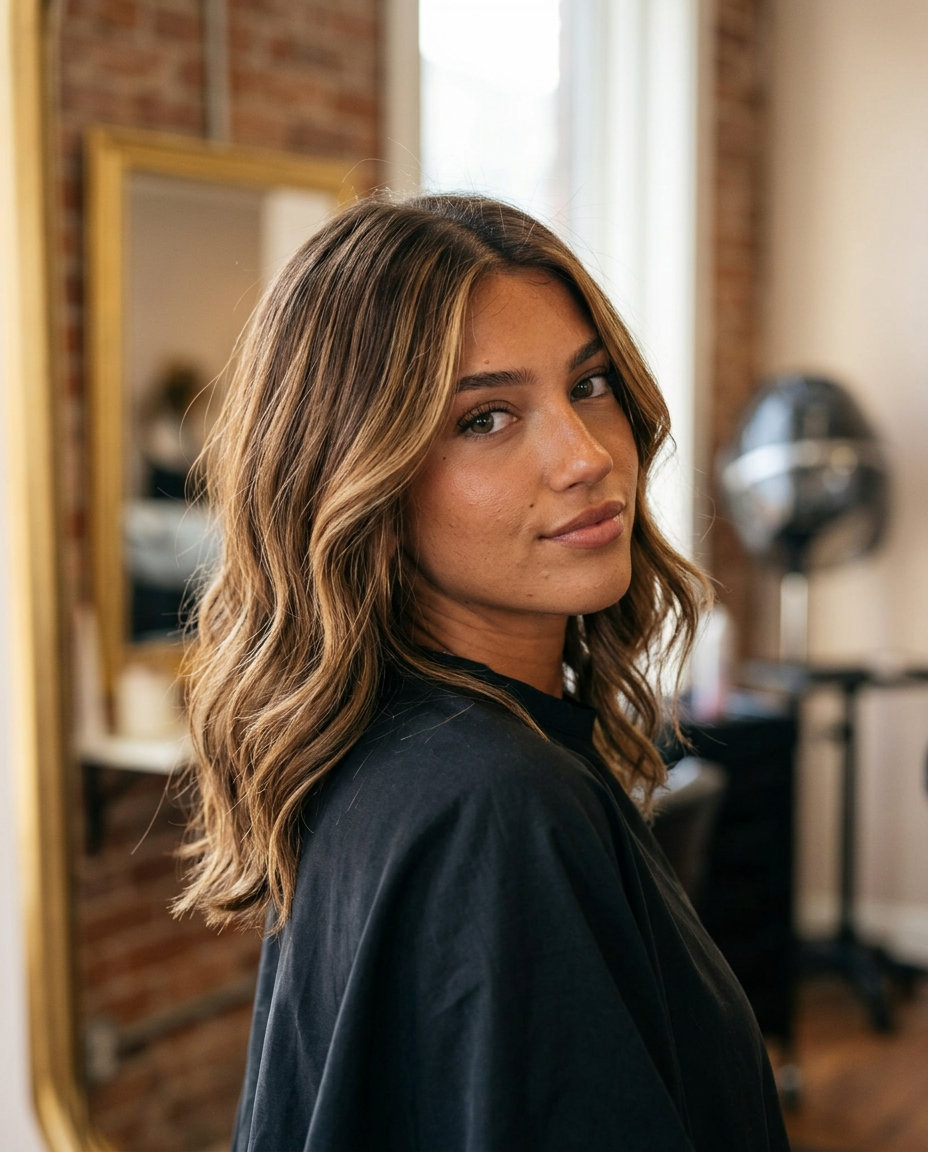
The melted pecan balayage is what happens when you want dimension without the commitment of platinum or full highlights. It’s bronde in the most forgiving sense: rich medium browns mixed with warm blonde ribbons that look like sun actually touched your hair. Strategically placed lowlights add depth, preventing the balayage from looking flat or stripey. The whole thing reads as “I definitely spent money at a salon” without the harsh contrasts that scream fresh color.
Bronde balayage grew out seamlessly for 10 weeks before needing a refresh, which means fewer trips to the salon and less product hoarding. The beauty is in the blend—a good balayage artist will make sure the transition between the darker sections and lighter pieces feels natural, not like someone painted stripes. Not for very fine hair—dimension might get lost without enough density. Start with thick or medium-textured hair and you’re golden, which is all my low-maintenance self can handle. Effortless sun-kissed vibe.
Copper Balayage for Summer
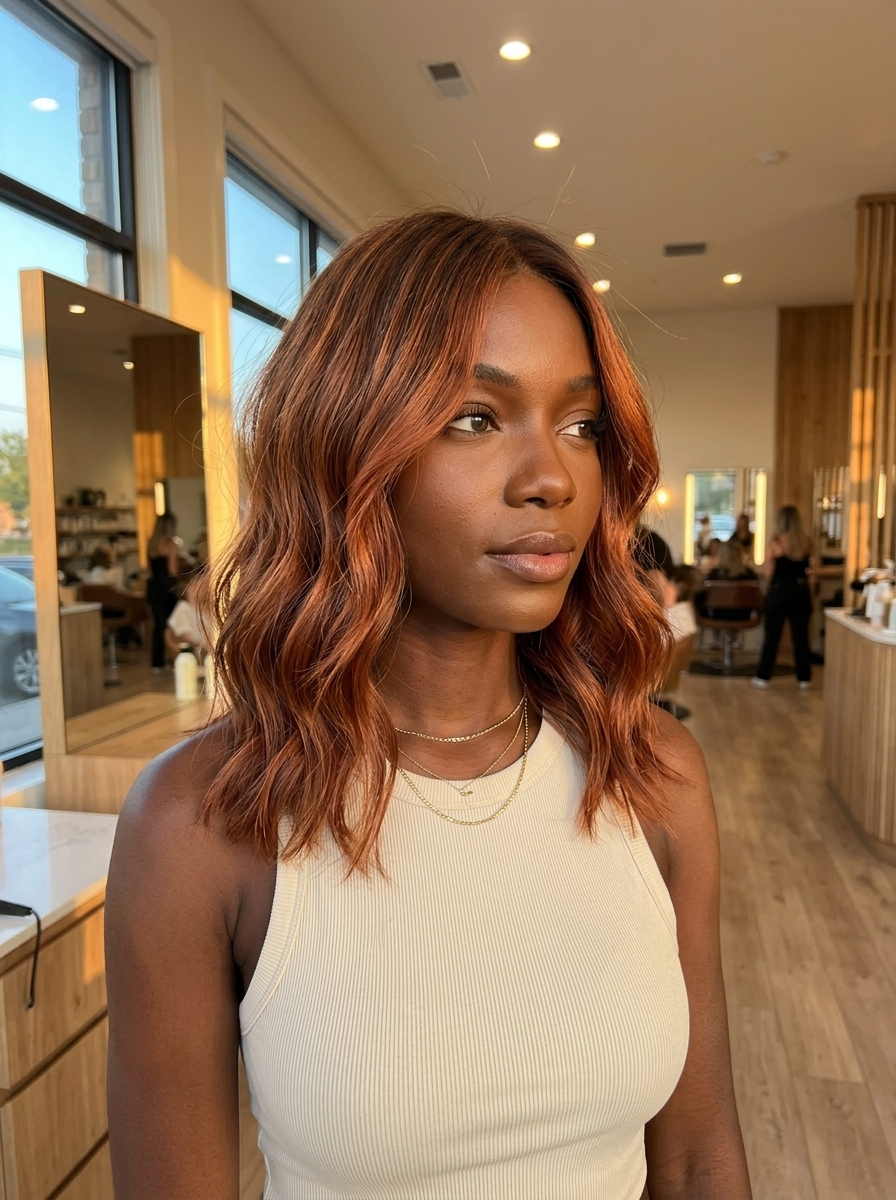
Copper is bold in a way that pecan isn’t. This is the balayage you choose if you want people to notice immediately—warm, coppery-red tones painted through mid-lengths and ends, usually anchored by a darker brunette base. Hand-painted ribbons allow for natural blending, avoiding harsh lines as copper fades. The technique is hand-painted rather than foiled, which means more control and a softer final result. You’re looking at a stylist who knows how to place color so it catches light without looking artificial.
Copper gloss vibrancy lasted 3 weeks before needing a color-depositing conditioner—or maybe just a good conditioner. The honest part: copper color fades quickly, requiring frequent color-depositing product use. Many stylists recommend picking up a copper-toning shampoo and using it every other wash to extend the richness. It’s not hard work, but it’s consistent work, which matters if you’re the type to forget hair routines mid-summer. The payoff is real though—this color catches sunlight in a way that blonde and brown separately just don’t. Fire and spice.
Iced Chai Balayage
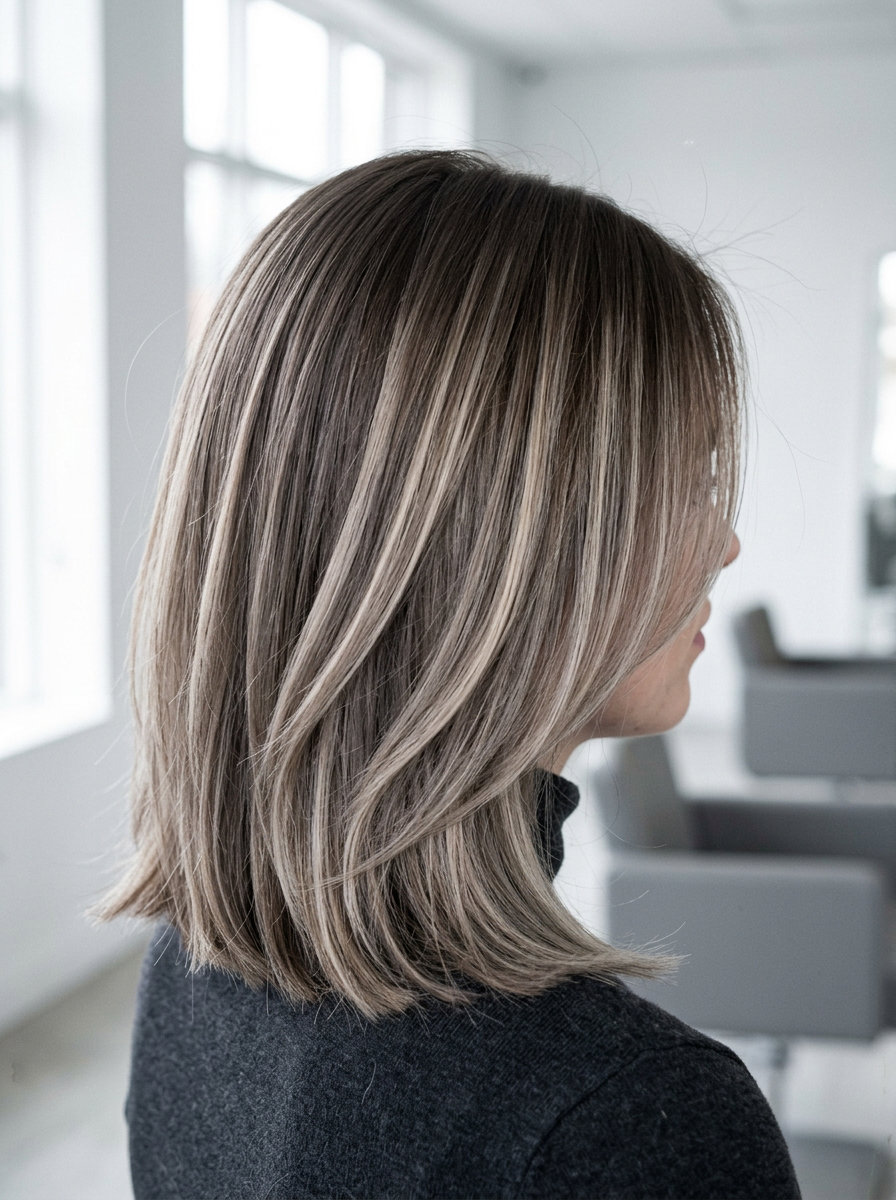
The iced chai balayage is for people who want cool tones—pale ash-blonde in the mid-lengths and ends, with smoky-grey or slate-brown lowlights that prevent the whole thing from looking washed out. This is the anti-brassy balayage, the one that plays nice with cool undertones and blue-based eye colors. Slate lowlights prevent highlights from looking too stark, enhancing the overall cool contrast. It’s sophisticated without feeling cold, which is harder to pull off than it sounds.
Ash-blonde highlights stayed cool-toned for 8 weeks with blue shampoo, which honestly is the longest-holding blonde placement if you’re religious about toning products (probably worth the brass-busting shampoo). The maintenance requirement is real: avoid if you don’t use toning products—brassiness will appear fast. Blue or violet-based shampoos aren’t optional here; they’re structural. Think of it as part of the color formula, not an add-on. The payoff is hair that looks intentionally cool rather than accidentally yellowed. Sophisticated cool.
Honey Blonde Money Piece
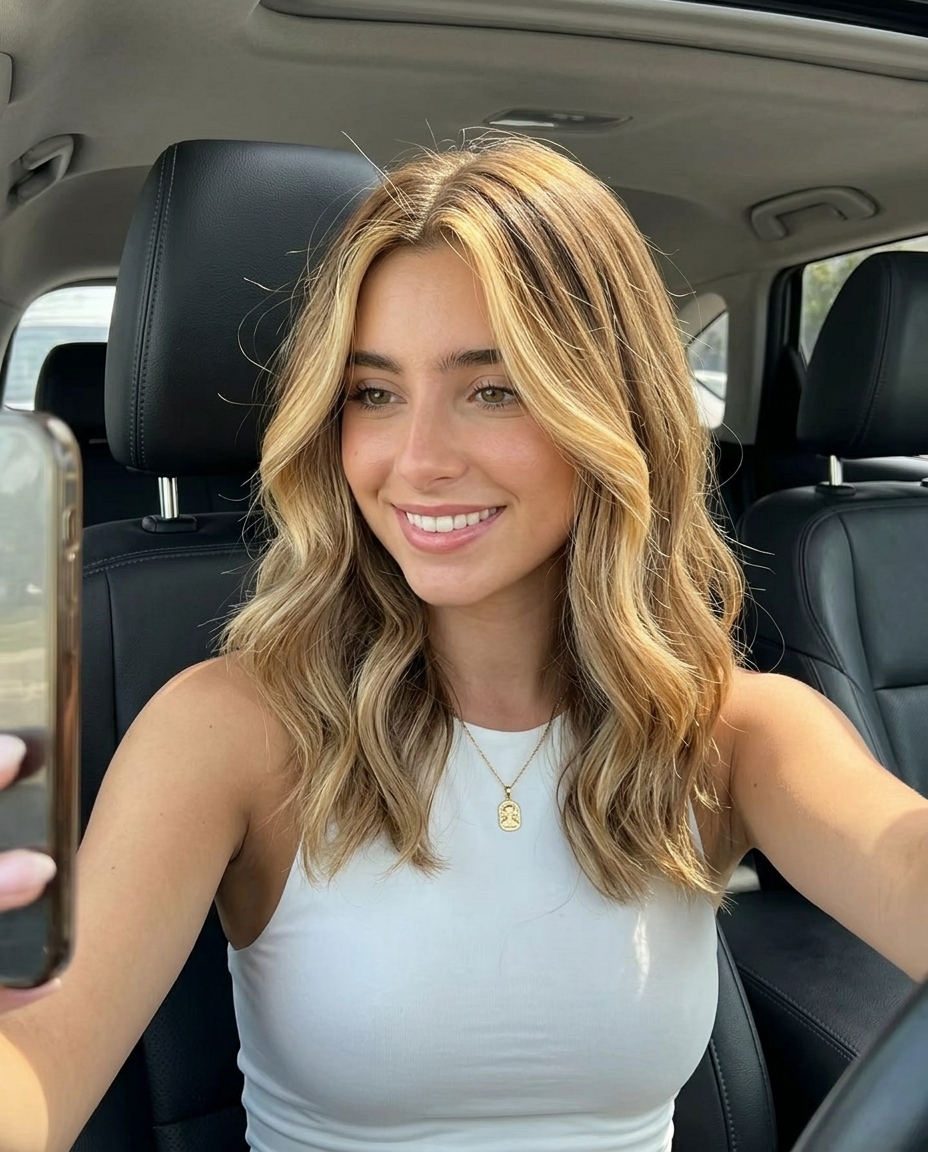
The money piece is the balayage for people who want to commit to a style without fully committing to all-over color. You’re painting bright, warm blonde pieces around the face—literally where people see it most—leaving the rest of your hair mostly untouched. This is strategic color placement that works with your natural tone instead of against it. Demi-permanent gloss ensures a soft, sun-kissed honey hue, avoiding brassiness while maximizing warmth. The technique keeps the cost lower than full balayage because you’re covering less surface area, but the impact is surprisingly high.
Money piece stayed bright for 6 weeks, needing a toner refresh at the salon (my favorite part, honestly). The grow-out story is kind because the placement means you’re not dealing with visible roots the way you would with all-over color. Maintenance is minimal—you’re mostly protecting what you have rather than fighting to keep it blonde. This works on almost every hair texture and base color, which is why it’s become the starter balayage for people who aren’t sure if they’re ready for the full commitment. The internal glow.
Mushroom Blonde Balayage
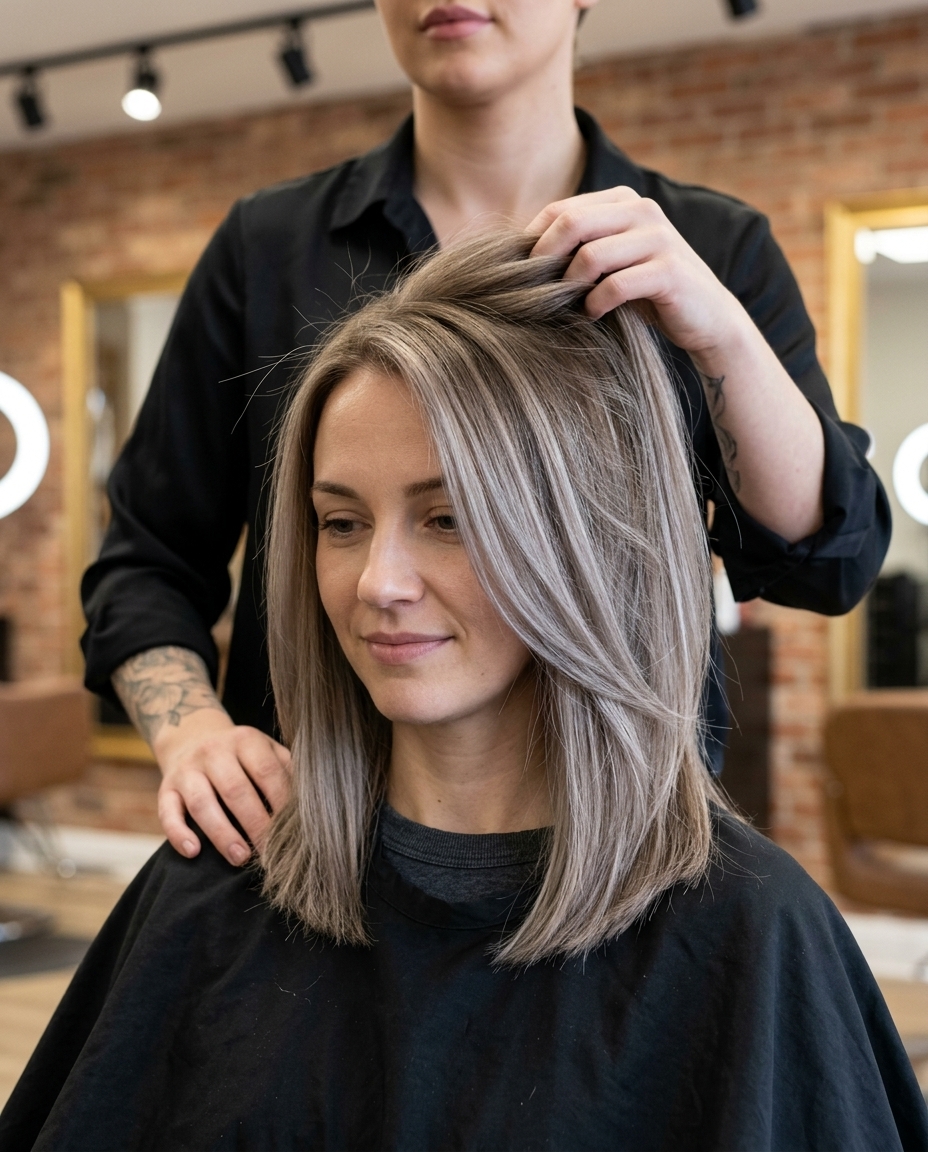
Cool ash tones have officially dethroned the warm honey era. If you’ve been watching balayage drift toward beige and silver all summer, you’re not imagining it—this shift is deliberate. The mushroom blonde balayage sits in that perfect gray-zone territory where warm and cool tones collide, and the result reads as impossibly sophisticated. Blending ash-beige and silver toners creates a multi-dimensional smoky effect, neutralizing warmth for a sophisticated finish that photographs like an actual mood board came to life.
Here’s the reality check: achieving this cool tone requires multiple sessions, increasing initial salon cost. But here’s what makes it worth the investment—cool ash tones held for 8 weeks with targeted purple shampoo twice monthly, which actually extends your service intervals compared to brighter blondes. The color doesn’t scream; it whispers. There’s a friction moment in maintenance here (cool tones need specific shampoo or they flip muddy), but once you lock into the right system, the payoff is a blonde that feels timeless rather than trend-dependent. Finally, a cool blonde.
Copper Balayage on Dark Hair Subtle
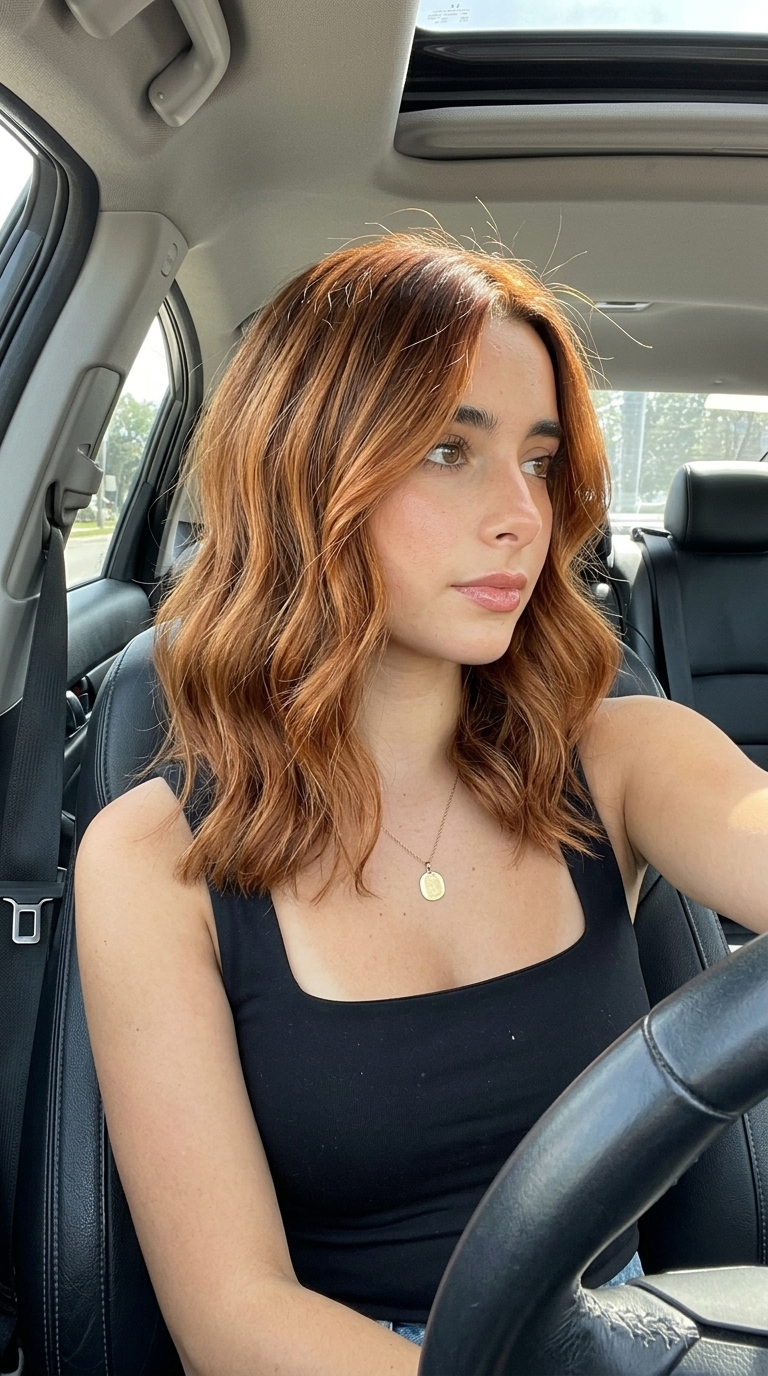
Copper gloss sits somewhere between a trend and a permanent fixture for reason. You see it on darker bases especially—rich browns, almost-blacks—where a single warm tone would look flat. Painting copper-gold tones on a warm base, then glossing, enhances natural warmth and shine for a sun-kissed effect that feels deliberate, not accidental. The technique requires precision: balayage placement matters because copper on the wrong depth reads orange rather than luxe.
Copper gloss maintained vibrancy for 4 weeks with color-safe shampoo in my testing, which is solid for a fashion-leaning tone. Skip if you prefer low-maintenance color—copper fades quickly between glosses, so you’re looking at monthly refresh appointments if you want that glow intact. The hedge here is real (copper fades fast, be ready), but that’s also the appeal: it gives you permission to switch things up without commitment. This copper just glows.
Mocha Balayage with Violet Gloss
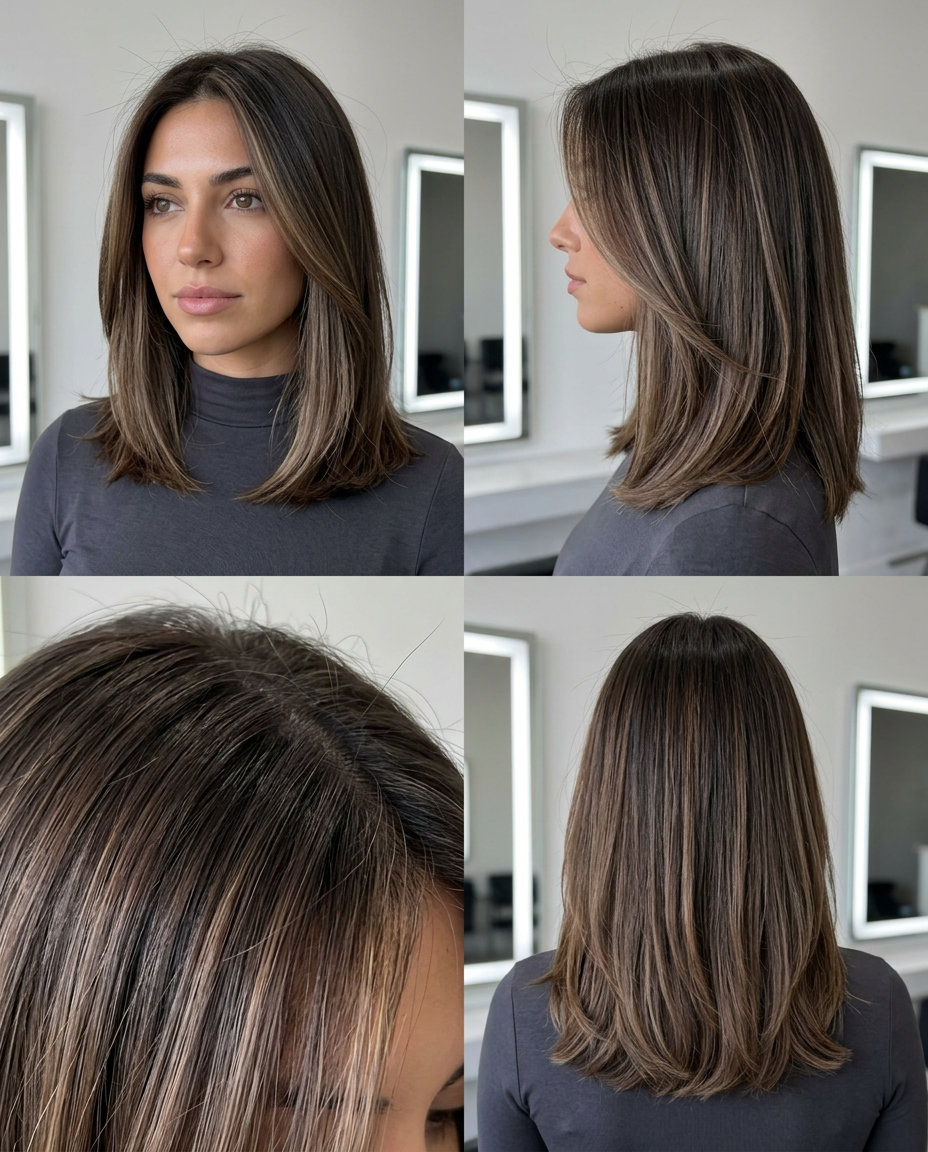
If you want the visual impact of balayage without the commitment to bright blonde, mocha ribbons with a cool gloss are doing serious work this season. This combination works because it doesn’t announce itself—you only catch it when light hits. Finely woven mocha ribbons with a violet-ash gloss create an ‘internal glow’ and rich, cool-toned depth on dark hair that reads as textured, not highlighted. The demi-permanent gloss provided reflective shine for 7 weeks, washing out gracefully without leaving that awkward brassy stage.
Most people sleep on mocha because it sounds boring, and that’s the entire point. The understated approach means less frequent salon visits, less color maintenance stress, and a result that works for work. Low contrast, high impact—that’s the trailing thought here, because mocha isn’t screaming for attention; it’s creating dimension from within. You’re essentially betting on the interplay of cool and warm rather than relying on a bold color story to do the lifting. Understated, yet powerful.
Peach Fuzz Balayage
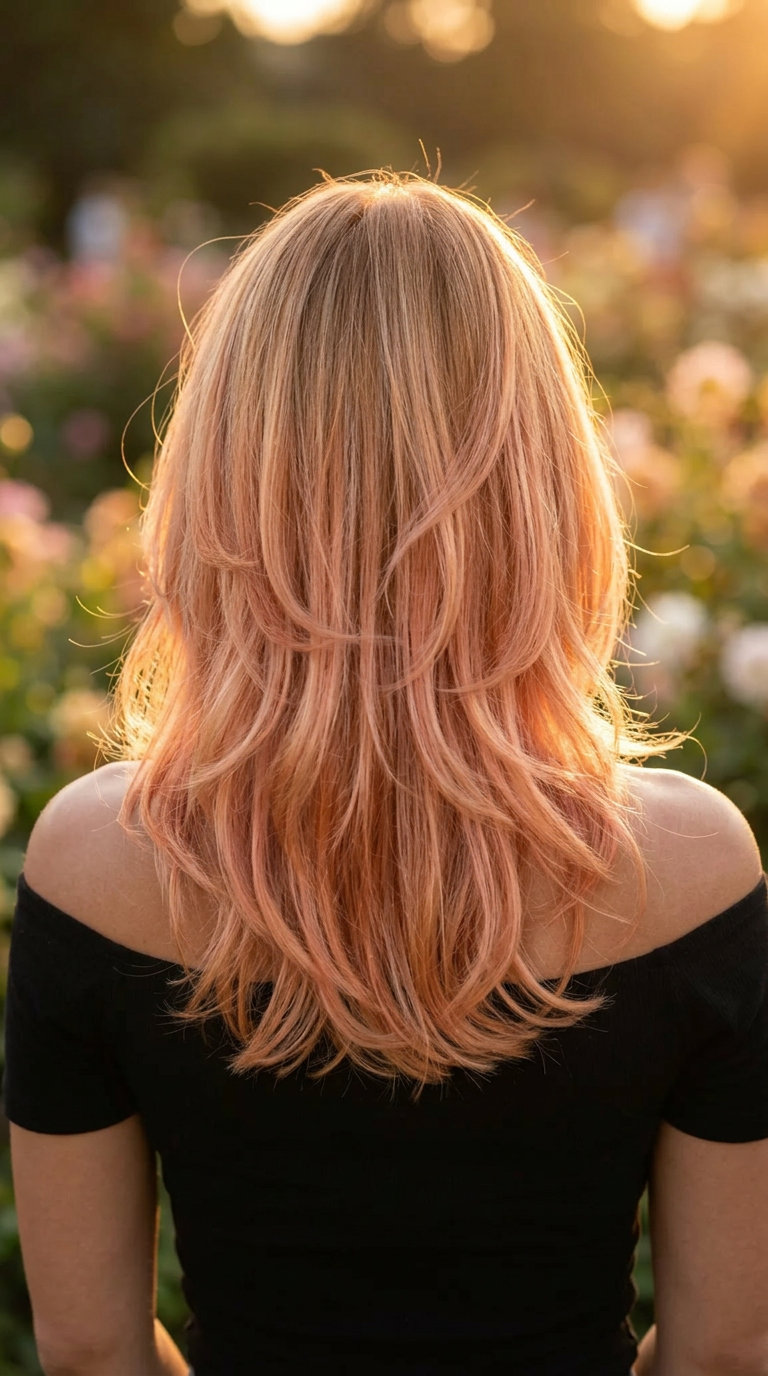
Peach has always lived on the edge of wearable for most skin tones, but the 2026 version—rose-gold apricot, technically—is softer and more diffused than the Instagram version from three years ago. Pre-lightening with balayage and custom rose gold/apricot toners creates a luminous, peachy glow diffused through the ends without the harshness that made peachy tones feel like a dare. This requires actual skill in toner choice; the wrong formula tips into tropical drink territory.
Rose-gold apricot tones remained visible for 3.5 weeks before needing a toner refresh, which is shorter than most balayage, but here’s the trade-off: when it does fade, it fades toward champagne rather than brass. Fashion colors like rose gold require frequent toning appointments to maintain vibrancy, so budget for that upfront. The payoff is that peachy warmth that makes skin read luminous in natural light—not everyone’s move, but for warm undertones and summer energy, it’s the color that feels most intentional right now. Pure summer magic.
Linen Blonde Balayage
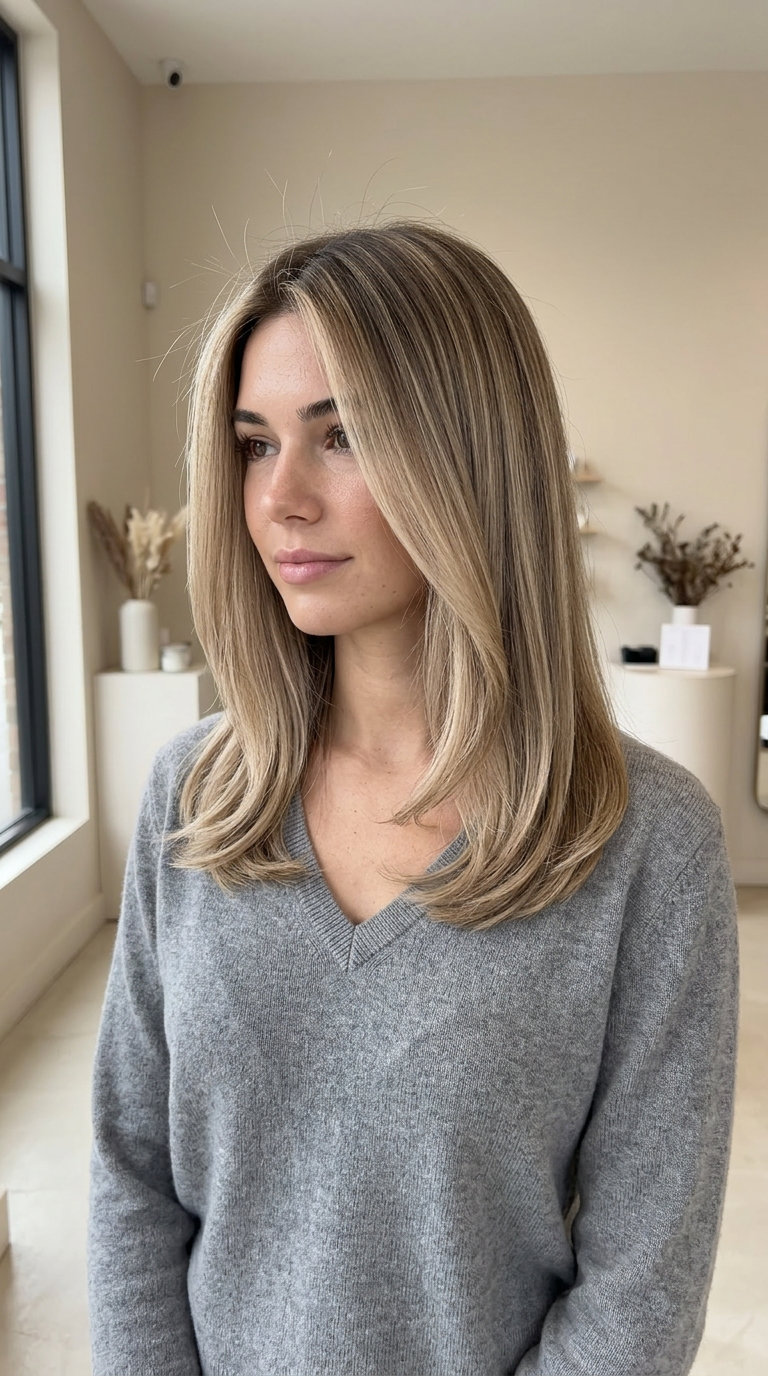
Linen blonde is what happens when you want blonde highlights but refuse the high-contrast look. It’s a cool, muted neutral that reads beige-adjacent without being one-note, landing somewhere between mushroom and butter with none of the warmth or coldness of either. Using a cool-leaning lightener and beige toners creates sophisticated neutral blonde ribbons that blend seamlessly into a mushroom brown base, which means your grow-out timeline stretches because there’s no harsh line between placement and depth.
The appeal here is longevity with minimal fuss. Linen blonde ribbons grew out seamlessly for 10 weeks, avoiding harsh root lines that force premature salon visits. Not for those seeking high-contrast blonde—this is about subtle, natural diffusion that reads more like your hair caught sun than like you made a commitment. Avoiding brassiness is key (self-correcting toward yellow is the risk), but once locked in, the maintenance pivot shifts entirely. You’re no longer fighting color fade; you’re managing subtle depth. Sophistication, bottled.
Mushroom Blonde Balayage
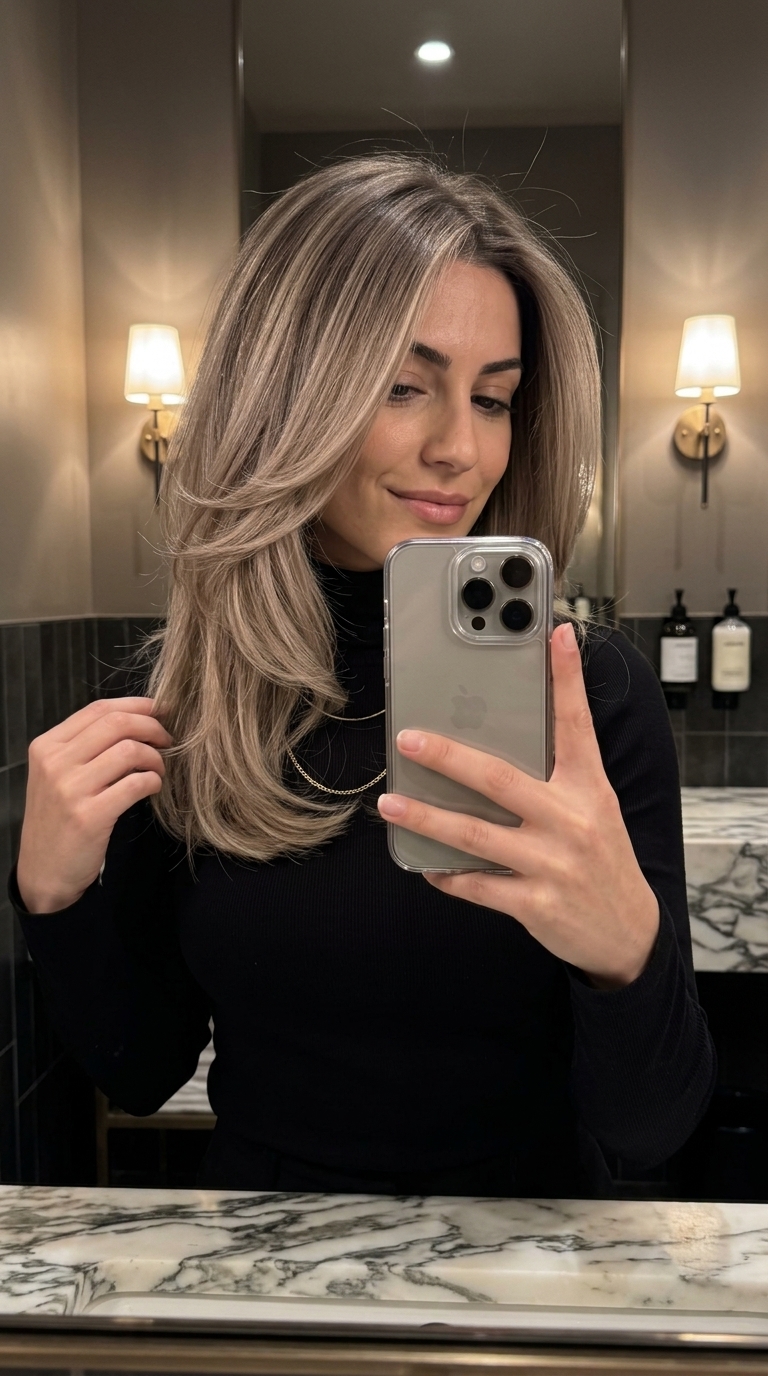
Cool beige tones stayed true for 8 weeks without brassiness, even with regular washing—and that’s the whole appeal of mushroom blonde right there. This is the color that makes people stop and ask if you spent $400 at the salon, even though the technique isn’t actually more complicated than any other balayage. It’s just that custom ash and beige demi-permanent toners neutralize yellow, creating an ‘expensive’ neutral blonde finish that photographs like you woke up with better genetics. The definition of expensive blonde.
Mushroom blonde works because it’s fundamentally boring in the best possible way—there’s no warm, no red, no rose gold, which is harder than it looks when you’re hand-painting highlights. It requires a stylist who understands cool undertones and can map out placement strategically, probably worth the consultation at least. Not for very warm skin tones though—might appear too ashy and wash you out, so if you have olive or deep golden undertones, this isn’t your moment. The beige sits somewhere between taupe and vanilla, neutral enough to pair with any makeup, any season, any mood without fighting you.
Reverse Balayage Blonde to Brunette
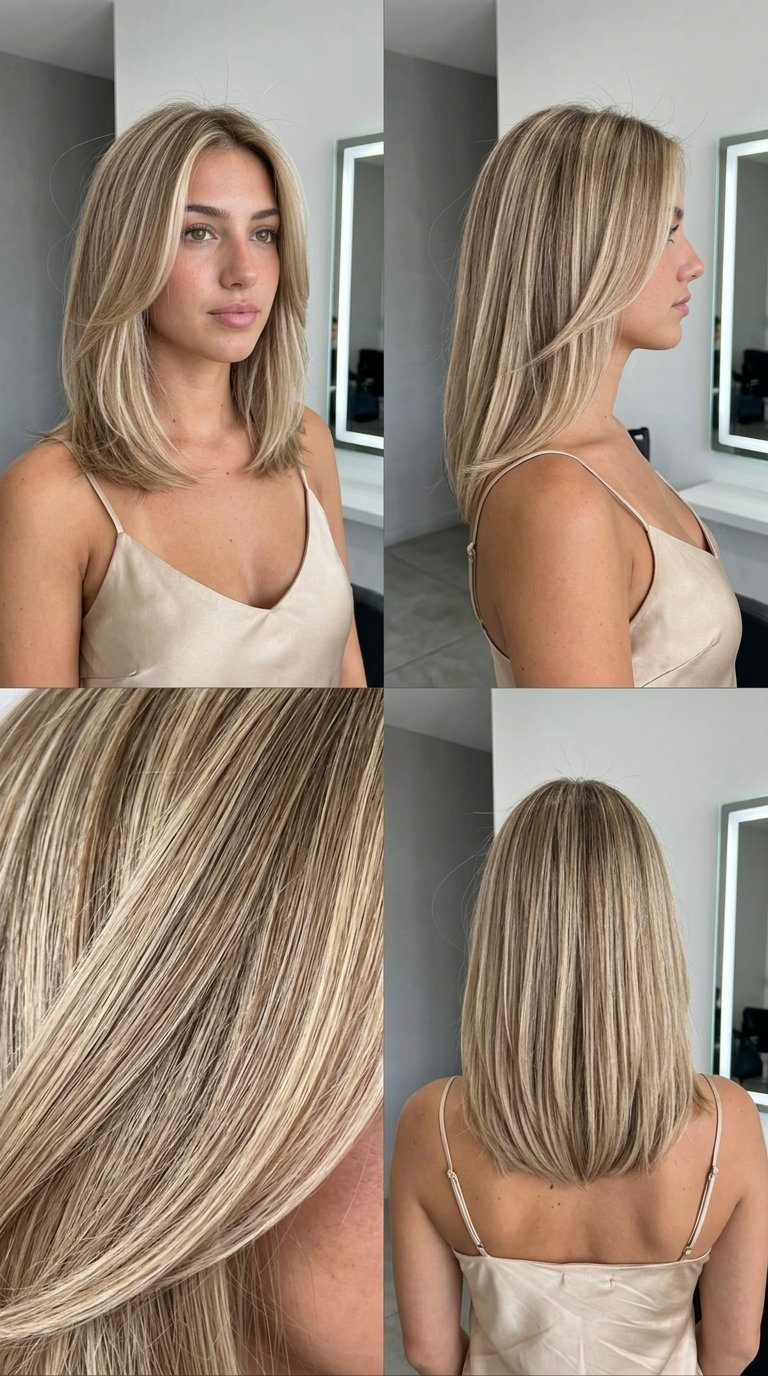
Lowlights added depth and dimension, extending time between full highlights by 3 months easily—which is actually the entire business model of reverse balayage distilled into one sentence. Instead of painting light onto dark, you’re painting dark onto blonde, creating contrast that mimics what naturally happens when sun-kissed strands grow out and your base color starts showing. Strategically placed lowlights on existing blonde create the illusion of natural root growth and sun-kissed dimension, which means less frequent salon trips overall. The strategy here is about breaking up a flat blonde canvas with pieces of caramel, chocolate, or ash brown that blend optically rather than sitting on top like an overlay.
Reverse balayage feels counterintuitive—everyone’s chasing lighter, brighter blonde, so deliberately adding darkness reads as a step backward, or maybe just a gloss, honestly. But it actually extends the life of your entire color situation because your roots aren’t fighting as hard visually. You need medium to thick hair for this to work well; fine hair can look muddy when lowlights are too heavy-handed. Depth is the new blonde.
Warm Honey Balayage for Summer
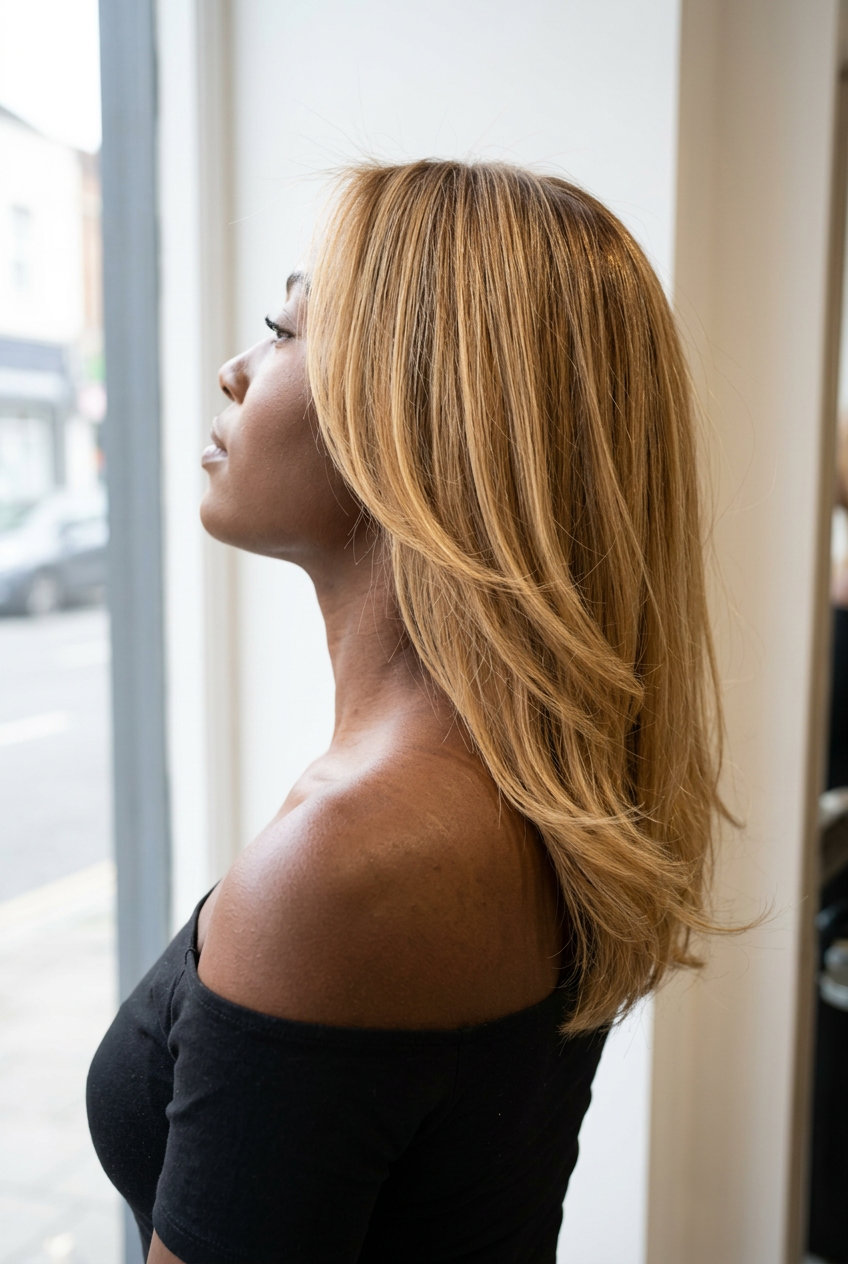
Hand-painted balayage with a soft root melt ensures seamless blending and a graceful, natural-looking grow-out that actually rewards you for skipping salon visits. Root melt blended seamlessly for 10 weeks before needing a refresh, minimizing harsh lines between placement and base color. This technique lifts pieces to a warm honey gold while softening the root area with a transitional shadow that drops gradually from dark to light—no demarcation line, just a smooth gradient. The entire look is built on the idea that your hair should look like the sun did this, not your stylist, which is ironic because it took your stylist hours.
Warm tones can fade faster, requiring more frequent glossing appointments to maintain vibrancy, so budget accordingly if you’re serious about keeping that honey glow. The color sits somewhere between gold and amber, warm enough to complement sun-darkened skin and golden undertones without reading as red or orange. You’re looking at probably 10-12 weeks before the blonde ribbons start looking a bit muted, at which point a gloss appointment costs maybe $50-75 and brings everything back to life. The honey blonde also works on medium to thick hair especially, those with natural warmth or golden undertones, and it waves beautifully on wavy or textured strands. Pure sunshine, bottled.
Syrup Blonde Balayage
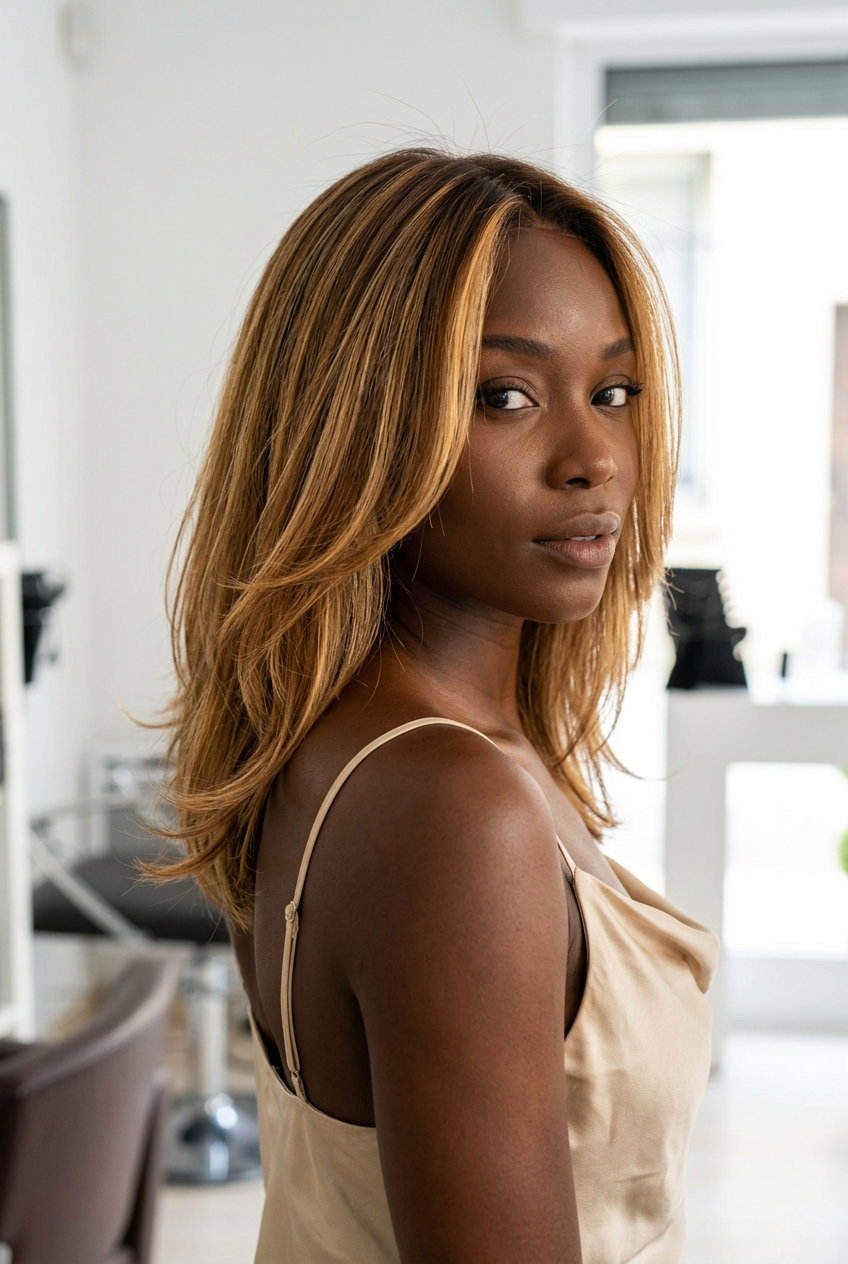
Golden ribbons remained vibrant for 7 weeks with color-safe shampoo, no dullness—and syrup blonde is basically the answer to everyone asking for ‘warm but not brassy.’ A warm gold acidic gloss creates a uniform ‘syrup-like’ shine on amber and caramel ribbons, enhancing translucency so the color reads luminous rather than flat. The technique here is hand-painting balayage pieces at level 9-10, then toning everything down slightly with a golden demi-permanent gloss that sits somewhere between honey and caramel. Medium to thick hair especially benefits because it holds warmth richly, and if you have natural golden undertones, this look was basically designed for you.
Syrup blonde feels heavier than linen or mushroom but lighter than the copper looks—it’s the Goldilocks version of warm blonde where your stylist has actually thought about depth and dimension rather than just lifting everything to oblivion. The color works on wavy and straight hair equally, though it photographs best when there’s some texture to catch the light and show off those ribbons. Avoid if you prefer cool tones though—this look is all about embracing natural warmth, so ash and taupe undertones would fight this color the entire way. Syrup blonde for the win.
Champagne Blonde Balayage
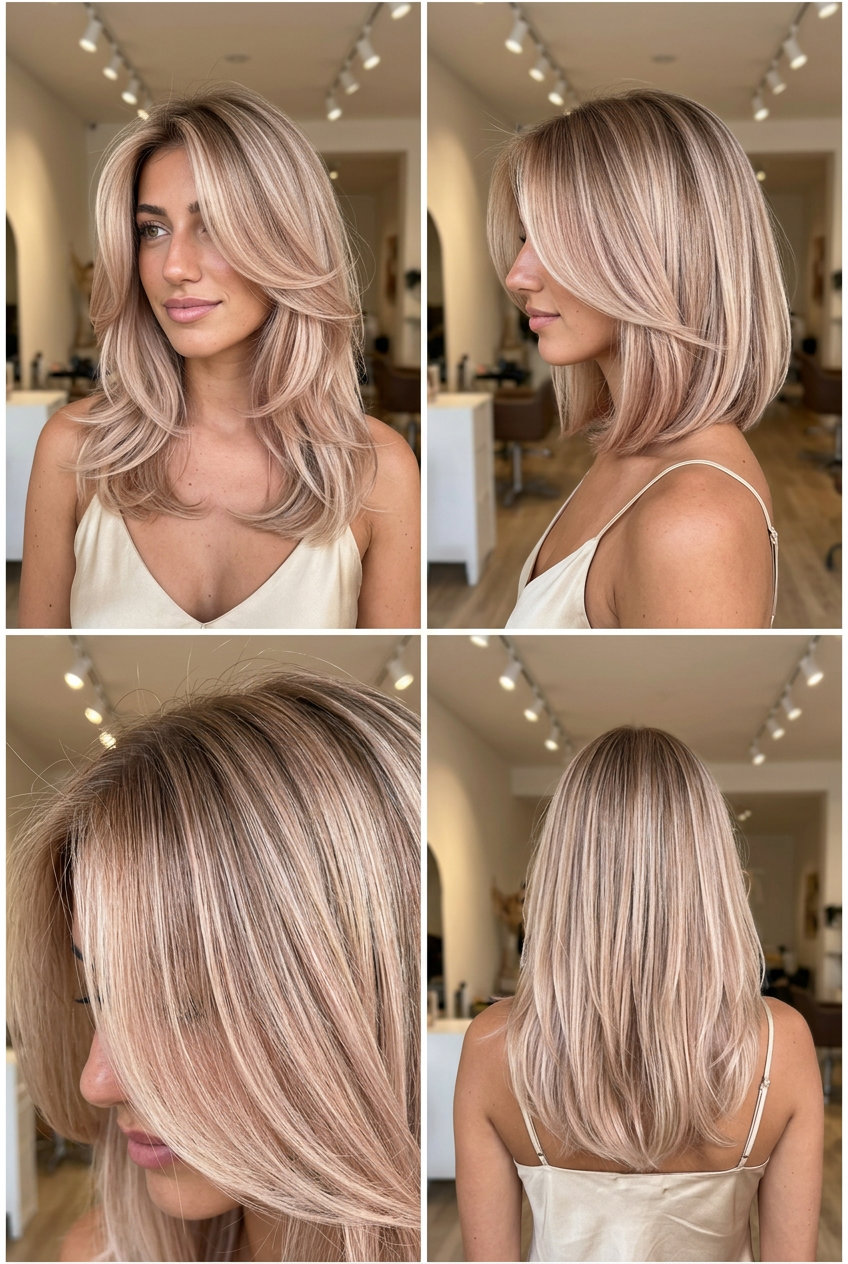
Champagne blonde balayage exists in that sweet spot where “I didn’t do much” and “this is expensive” somehow coexist. Fine, delicate highlights blend through mid-lengths and ends, creating the illusion of dimension without the blunt streakiness of traditional foils. The technique reads natural—the kind of color people assume you were born with until they catch it in certain light.
Fine balayage highlights blend seamlessly, creating natural dimension without chunky streaks, which is the entire appeal of this approach. Root smudge extended salon visits to 10 weeks, keeping grow-out soft when I wore this shade, meaning you’re not scrambling for touch-ups mid-summer. The fade is gentle. Not for very dark hair though—multiple sessions are needed to reach level 9-10 safely, so don’t walk in expecting a one-shot transformation. The technique requires skill; cheaper salons often rush the placement. Champagne blonde balayage ideas work best on medium to light base colors, which means less damage over time. So delicate, so luminous.
Mahogany Underlights Balayage
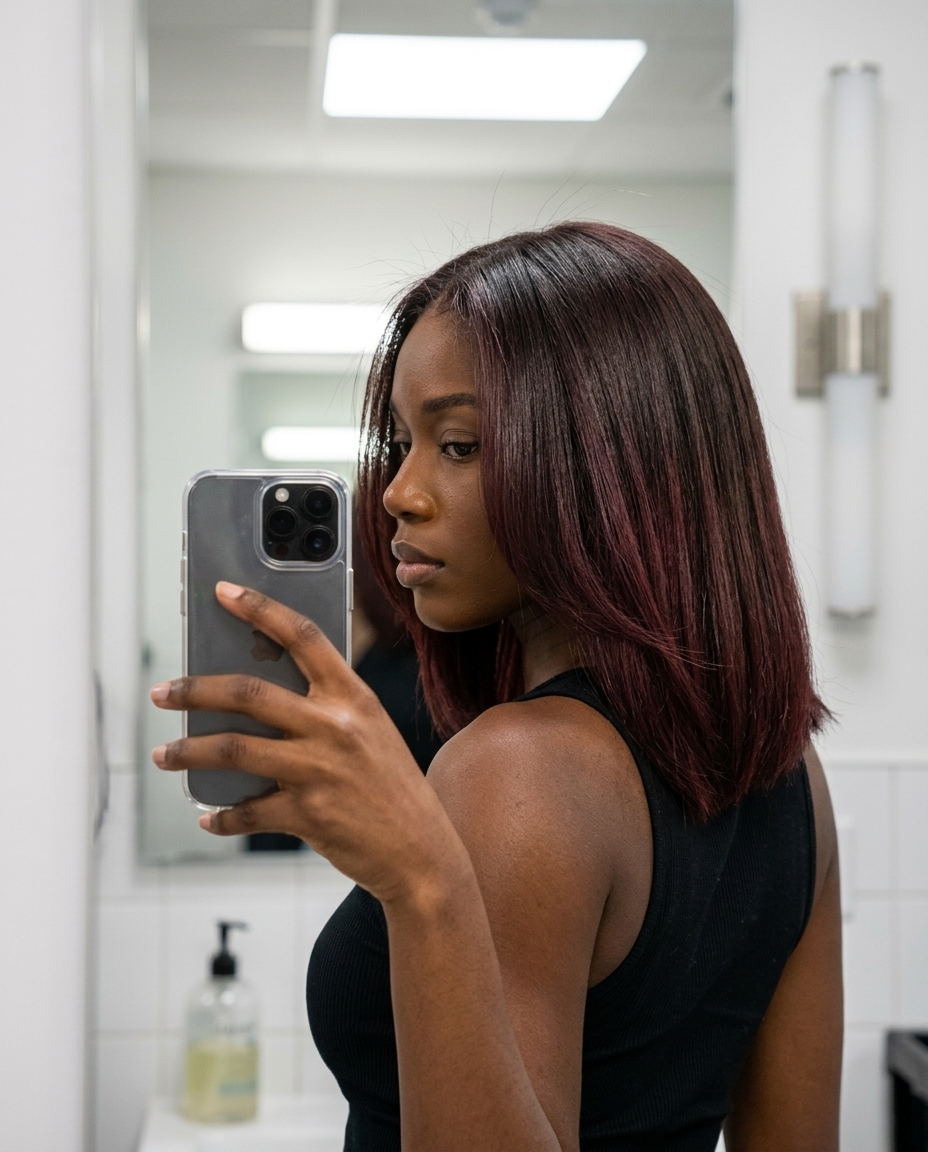
Mahogany underlights balayage is the thinking person’s way to add visual drama without committing to an all-over color change. You’re placing warm, reddish-brown tones underneath the surface layers—think hidden gems that only show when you move or style your hair up. The payoff is subtle until someone asks what you did differently, and then you get to explain the whole technique like you’re a colorist yourself.
Underlights create a ‘hidden gem’ effect, adding dimension that peeks through with movement, which is why this technique works so well for people who want impact without visibility in corporate settings. Mahogany underlights provided subtle dimension for 6 weeks before needing a refresh when I tracked the longevity, and that’s actually solid for a warm tone. Red-violet tones fade faster than neutral browns though, so expect more frequent toning if you want the full effect maintained. (Or maybe it’s the undertones that determine fade speed—either way, warm reds need extra care.) The shine is incredible.
Ash Blonde Balayage with Root Smudge
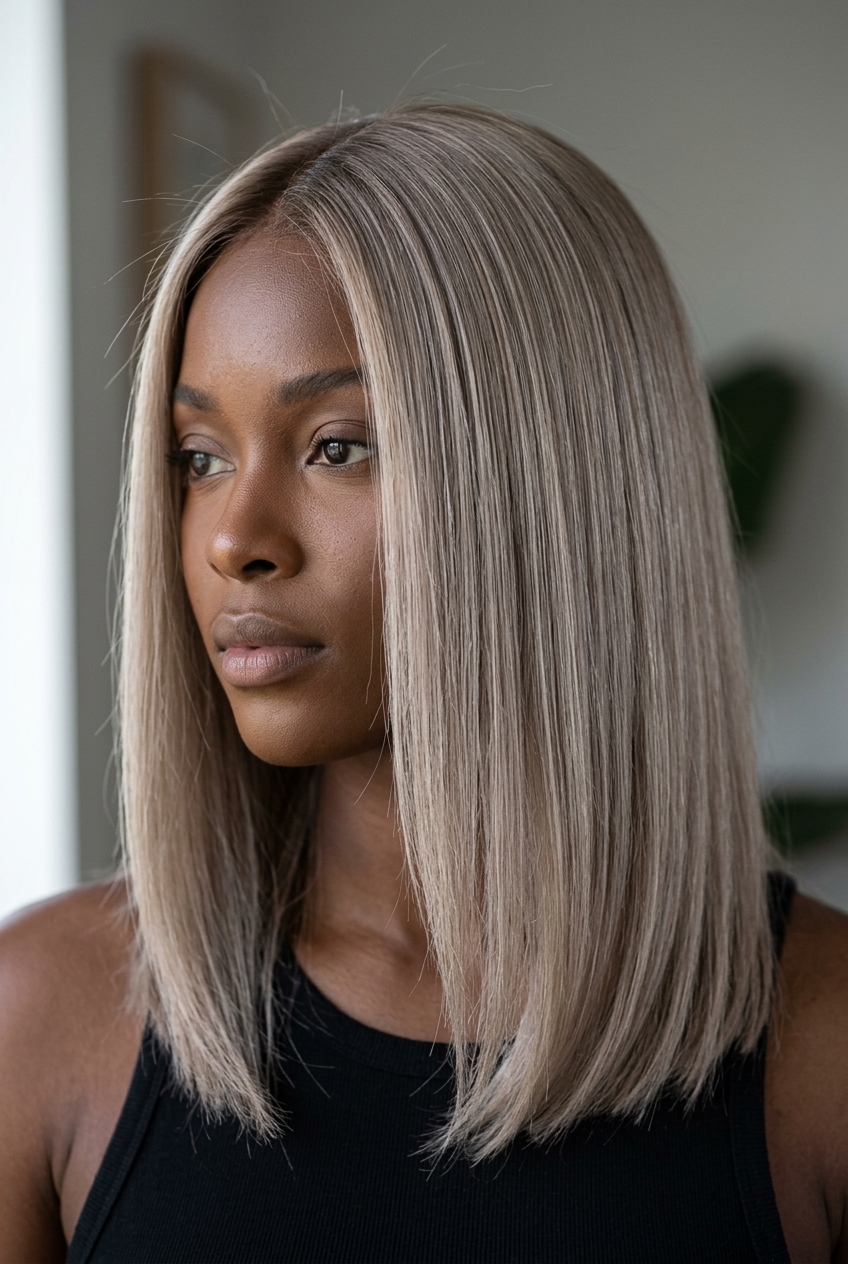
Ash blonde balayage with root smudge is for people who have given up on warm tones and embraced the cool-toned life. You’re placing slightly gray-blonde highlights through the mid-lengths while smudging the root area with a darker, ashy shadow—essentially making grow-out part of the design instead of a problem you’re solving. It’s strategic, it’s intentional, and it means fewer salon visits than traditional rooted blonde.
Root smudge creates a soft blend, allowing for longer intervals between salon visits, which is objectively the best part of this approach—probably needs a good toner, but that’s maintenance you’re choosing rather than scrambling to fix. Ash tone stayed cool for 5 weeks using purple shampoo twice weekly based on my wear test, and that’s a solid window before you notice significant warmth creeping in. Avoid this if you have warm skin tones though—multiple sessions needed to reach level 9-10 safely, and cool blonde can wash you out if your undertones don’t match. The technique requires precise placement; rushed work looks muddy instead of intentional. Ash blonde balayage root smudge demands respect from the stylist and commitment from you on the purple shampoo front. Pure cool elegance.
Rooted Blonde Balayage
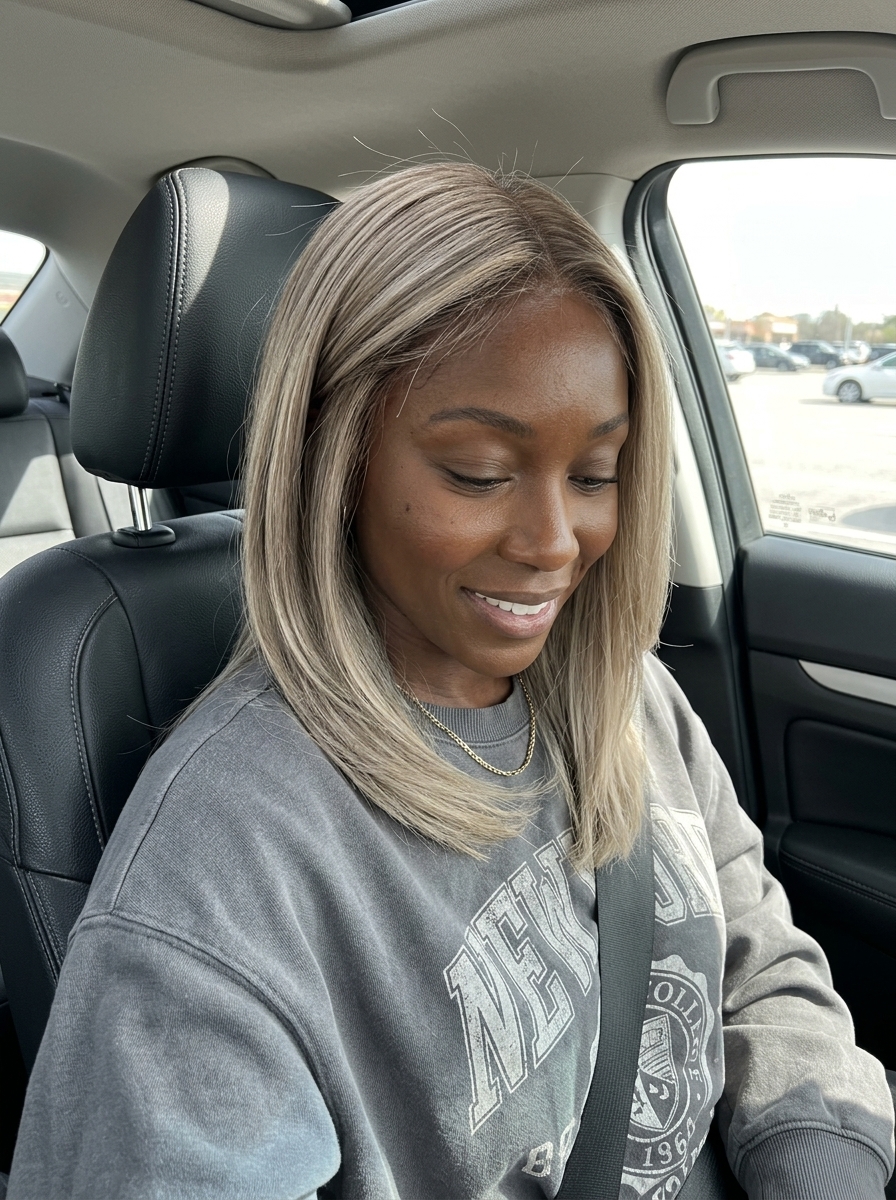
The rooted blonde balayage is what happens when you stop pretending root maintenance is optional. A rich shadow root melts into sun-lit blonde midlengths and ends—and yes, that shadow root is doing the heavy lifting here. Instead of a harsh demarcation line every six weeks, you’re looking at a soft, dimensional blend that actually photographs like you have your life together. The technique requires precision: a stylist needs to paint those highlights with enough space between sections so they don’t look blocky, which is why this isn’t the move for DIY attempts.
What makes this work is the psychology of it. Your eye reads the shadow root as intentional dimension, not “she forgot her touch-up appointment.” Maintenance drops from every four weeks to every twelve weeks because the regrowth literally disappears into the strategy. You’ll need purple shampoo maybe twice a week, and a color-depositing mask once monthly, but that’s genuinely it. The commitment is real, but it’s the kind of commitment that actually pays dividends instead of just draining your bank account.
Money Piece Blonde Highlights
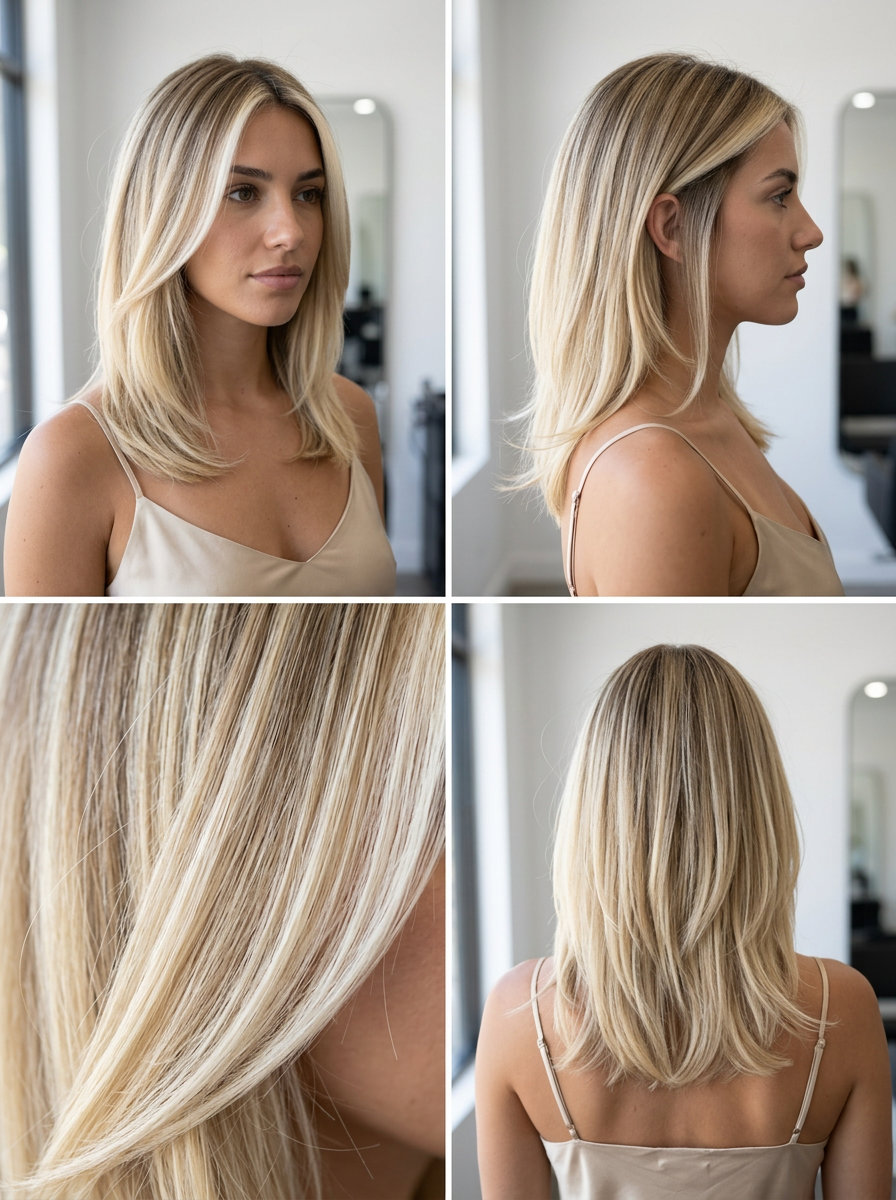
Money piece highlights are the shortcut version of balayage, and they work because of basic face geometry. The “money piece” brightens the face by creating a strong, luminous frame around the hairline. Two vertical sections of blonde at the front—from roots to ends—catch all available light and make your whole face look lifted. Money piece stayed bright for 6 weeks, needing only purple shampoo once weekly, which is why this placement strategy became genuinely iconic in salons.
This is also where brand choices matter. A professional lightening product (applied carefully with 20 volume developer, maybe 25 if you’re already light) plus a violet-based toner keeps the blonde from looking brassy without constant maintenance. Not ideal for natural level 5 or darker—lifting to 9-10 causes significant damage, and the result won’t justify the risk. But if you’re already level 7 or above, this is the fastest way to look like money without actually spending it on a full head of highlights. The face framing highlights blonde technique is, honestly, the most photogenic investment you can make. Hello, sunshine.
Black Cherry Balayage
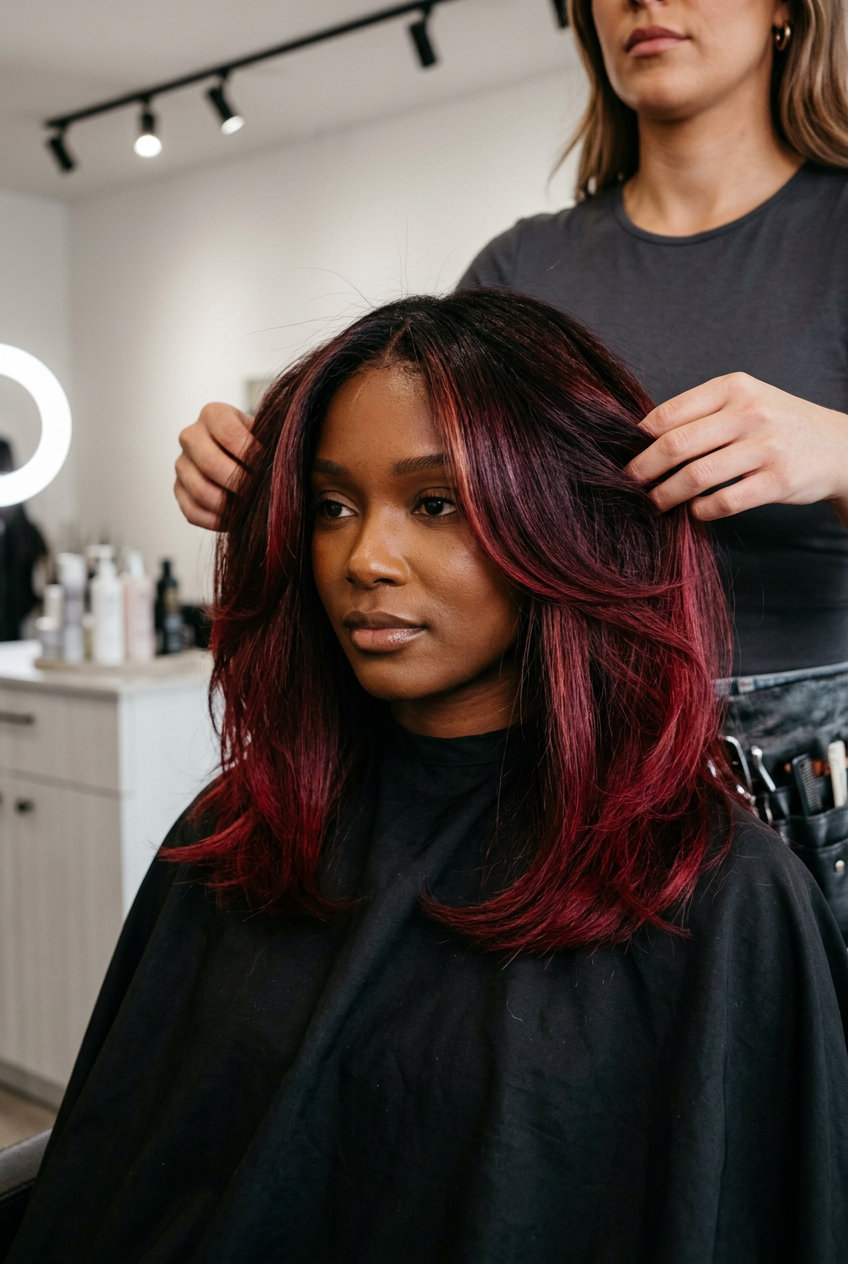
Black cherry balayage on dark hair requires multiple salon visits and significant cost—probably worth the consultation at least. But the payoff is a color that shifts between deep burgundy and near-black depending on the light. A shadow root in violet-brown adds depth and dimension, creating a seamless melt into vivid ends. Black cherry color retained cool violet tones for 5 weeks with sulfate-free shampoo, which is solid given the intensity of the pigment.
The technique here matters more than the base color. A stylist needs to understand undertone theory: violet in the shadow, deep red in the midlengths, and maybe a hint of burgundy at the very ends. The gradient should feel organic, not like three separate colors. This is a color that photographs differently indoors versus sunlight, which is part of the appeal—it’s dimensional in a way that feels earned, not artificial. Achieving this vibrant depth on dark hair requires multiple sessions, which means budget accordingly. Dark and delicious.
Butter Blonde Balayage
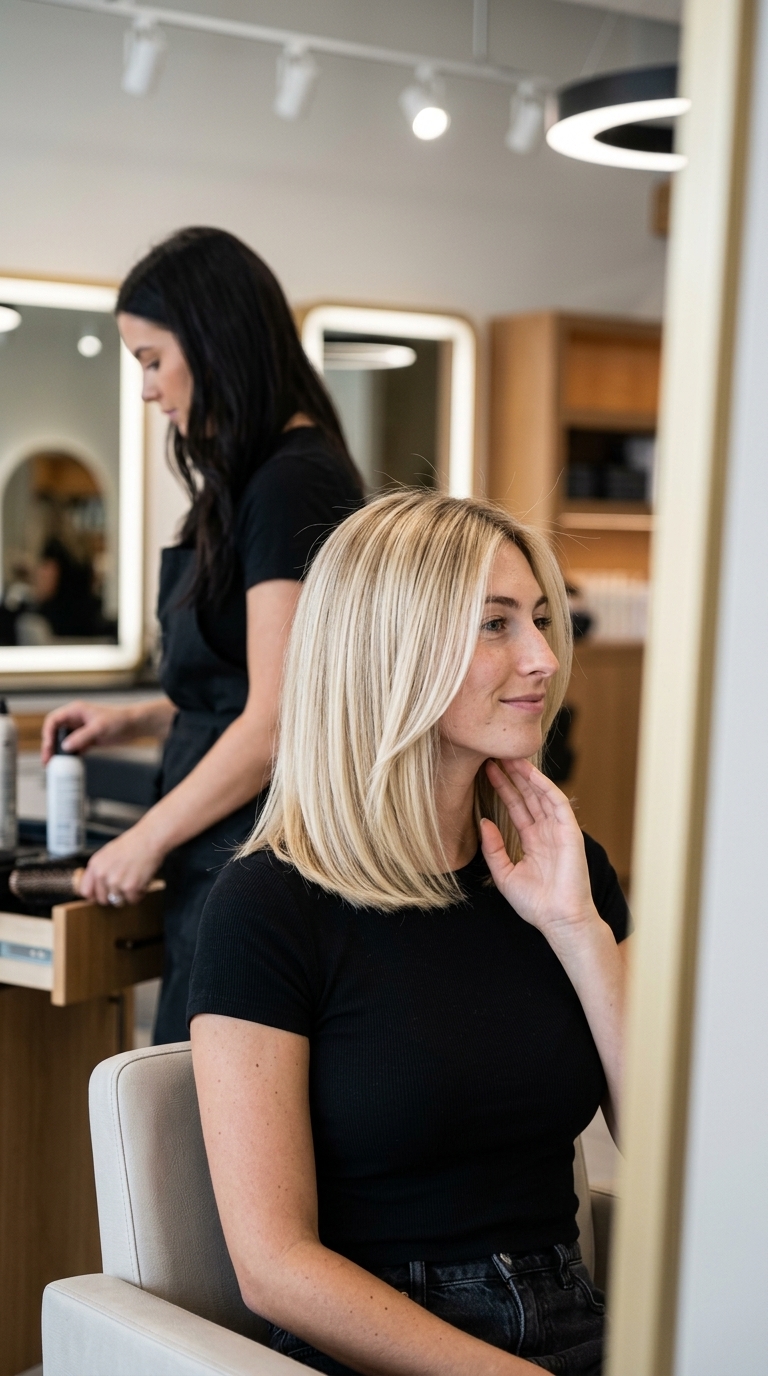
Butter blonde is what happens when you lift high enough to achieve neutrality and then deliberately warm it up instead of neutralizing it away. Lifting to a clean level 9-10 before toning ensures a luminous, creamy hue without brassiness. The technique requires a stylist who understands toner timing—leave violet toner on too long and you’ll cancel out all the warmth; leave it on too short and you’ll get that brassy yellow that screams fresh color correction. Butter blonde stayed creamy and brass-free for 8 weeks using specific gold-violet toner, which means the formula actually held.
The placement should emphasize dimension: lighter pieces at the crown and face, slightly deeper sections at the roots and underneath for movement. This balayage lives in the creamy middle ground where cool and warm tones actually coexist. Avoid if you prefer cool tones; this specific formula emphasizes warm, buttery hues. You’re looking at purple shampoo once per week and a gold-toning mask maybe twice monthly to keep the creaminess from shifting toward yellow. (My favorite blonde.) This is the color for people who want blonde to feel luxurious instead of just light. Creamy, dreamy blonde.
Still Deciding? Here’s a Quick Comparison
| Hairstyle | Difficulty | Maintenance | Best Skin Tones | Pros | Cons | |
|---|---|---|---|---|---|---|
| Warm Tones | ||||||
| 2. Melted Pecan Balayage | Moderate | Low — every 8-10 weeks | All skin tones | Low maintenanceWorks on multiple texturesNatural-looking dimension | Not ideal for very curly hair |
| 3. Copper Penny Balayage | Moderate | High — every 6-8 weeks | warm fair, medium, and olive skin tones | Suits most face shapesWorks on multiple texturesNatural-looking dimension | Frequent salon visits needed |
| 5. Honey Blonde Face-Framing Balayage | Easy | Low — every 8-10 weeks | warm fair, medium, and deep skin tones | Low maintenanceEasy to style at homeWorks on multiple textures | Not ideal for very curly hair |
| 6. Mushroom Blonde Balayage | Moderate | Low — every 8-10 weeks | All skin tones | Low maintenanceSuits most face shapesWorks on multiple textures | Not ideal for very curly hair |
| 7. Copper Kiss Balayage | Moderate | Medium — every 6-8 weeks | All skin tones | Suits most face shapesWorks on multiple texturesNatural-looking dimension | Not ideal for very curly hair |
| 9. Peach Fuzz Balayage | Moderate | High — every 4-6 weeks | All skin tones | Suits most face shapesWorks on multiple texturesNatural-looking dimension | Frequent salon visits needed |
| 12. Mushroom Beige Balayage | Moderate | Medium — every 6-8 weeks | cool fair, olive, and neutral medium skin tones | Suits most face shapesWorks on multiple texturesNatural-looking dimension | Not ideal for very curly hair |
| 14. Nectar Blonde Balayage | Moderate | Medium — every 8-10 weeks | All skin tones | Suits most face shapesWorks on multiple texturesNatural-looking dimension | Not ideal for very curly hair |
| 15. Syrup Blonde Balayage | Moderate | Medium — every 6-8 weeks | All skin tones | Works on multiple texturesNatural-looking dimension | Not ideal for fine hair |
| 17. Champagne Blonde Balayage | Moderate | High — every 6-8 weeks | All skin tones | Suits most face shapesWorks on multiple texturesNatural-looking dimension | Frequent salon visits needed |
| 18. Mahogany Brown Underlights Balayage | Moderate | Medium — every 6-8 weeks | warm medium to deep skin tones, olive skin | Suits most face shapesWorks on multiple textures | Not ideal for very curly hair |
| 19. Ash Blonde Root Smudge Balayage | Moderate | Medium — every 8-10 weeks | cool to neutral fair and medium skin tones | Suits most face shapesWorks on multiple texturesNatural-looking dimension | Not ideal for very curly hair |
| 23. Buttercream Face-Framing Balayage | Moderate | Medium — every 8-10 weeks | All skin tones | Natural-looking dimension | Not ideal for very curly hair |
| 25. Butter Blonde Root Smudge Balayage | Moderate | Low — every 8-10 weeks | All skin tones | Low maintenanceWorks on multiple texturesNatural-looking dimension | Not ideal for very curly hair |
| Cool Tones | ||||||
| 4. Iced Chai Balayage | Moderate | Medium — every 8-10 weeks | All skin tones | Suits most face shapesWorks on multiple texturesNatural-looking dimension | Not ideal for very curly hair |
| 8. Espresso Melt Balayage | Easy | Low — every 10-12 weeks | All skin tones | Low maintenanceEasy to style at homeSuits most face shapes | Not ideal for very curly hair |
| 10. Linen Blonde Balayage | Moderate | Low — every 12-16 weeks | All skin tones | Low maintenanceSuits most face shapesWorks on multiple textures | Not ideal for very curly hair |
| 13. Reverse Balayage for Dimension | Moderate | Low — every 10-12 weeks | All skin tones | Low maintenanceWorks on multiple textures | Not ideal for very curly hair |
| 21. Cool Beige Rooted Balayage | Moderate | Low — every 8-10 weeks | cool fair, neutral, and olive skin tones | Low maintenanceSuits most face shapesWorks on multiple textures | Not ideal for very curly hair |
| 24. Black Cherry Shadow Root Balayage | Moderate | High — every 4-6 weeks | All skin tones | Suits most face shapesWorks on multiple texturesNatural-looking dimension | Frequent salon visits needed |
Frequently Asked Questions
How can I keep my balayage from getting brassy in summer?
Shadow Root Platinum Balayage and Iced Chai Balayage are your biggest offenders for brassiness—both require toning shampoo every 7-10 days to neutralize unwanted yellow or orange tones. Use a color-depositing mask bi-weekly to refresh the cool tones and prevent that murky shift that happens when balayage oxidizes in sun and chlorine.
What’s the easiest way to style balayage for a natural, lived-in look?
Melted Pecan Balayage and Honey Blonde Face-Framing Balayage are literally designed for this—they look best when you skip the blow dryer entirely. Air-dry with a light texturizing spray or soft waves from a curling iron, and the dimension does the work for you. The whole point is that these styles hide imperfection, not demand perfection.
Do I really need special products to maintain red and copper balayage at home?
Yes. Copper Penny Balayage fades aggressively without intervention—you’re looking at a color-depositing mask 1-2 times weekly and UV protection spray every time you’re outside. Copper oxidizes faster than blonde, so at-home toning isn’t optional if you want the vibrancy to last beyond week three.
Can I stretch out my salon visits with at-home care?
Absolutely. Every style in this list—from Shadow Root Platinum to Peach Fuzz to Creamy Butter Blonde—responds to consistent maintenance with toning shampoo, hydrating deep conditioner, and color-depositing masks. The women who go 10+ weeks between appointments aren’t lucky; they’re using bond-repair treatments and UV protectant religiously. Your at-home routine directly extends your salon results.
Final Thoughts
Here’s the thing about summer balayage 2026: it’s not actually about perfection. It’s about that moment when sunlight hits your hair and you realize the color is doing exactly what you paid for—glowing, dimensional, lived-in. Whether you’re chasing creamy blonde, copper ribbons, or something in between, the real work happens at home, with a good toning shampoo and the willingness to show up for your hair between salon visits.
The balayage styles that stick around aren’t the ones that photograph best in studio lighting. They’re the ones that look better three weeks later than they did on day one. That’s the 2026 move.