Black Cherry is everywhere right now—that deep violet-red that looks black indoors and explodes with crimson in sunlight, thanks to Megan Thee Stallion’s 2024 tour looks. Butterscotch Blonde is having its moment too, creamy and warm like Ciara’s recent Instagram transformations. Then there’s Terracotta Copper, the earthy clay-inspired orange-red that Ice Spice made her signature. These aren’t your generic Pinterest colors. They’re specifically engineered to hit different on dark skin, to catch light, to make melanin look radiant instead of flat.
This summer, summer hair color for dark skin 2026 is moving away from one-note shades toward multi-tonal looks that actually enhance your undertones. You’re looking at everything from the Butterfly Cut with heavy layers that show off color dimension, to the Italian Bob’s blunt, lived-in texture, to the Shag with Curtain Bangs for maximum frame-and-shine. These cuts work on oval faces, round faces, coily hair, straight hair—basically, there’s a real option here, not just the same three ideas recycled.
I spent four months chasing the perfect Butterscotch Blonde last year, only to realize my colorist was using the wrong undertone. One correction later—and $300 later—I finally got why people actually maintain this stuff. The color was worth it. The lesson was free.
Honey Blonde Scattered Highlights Dark Skin
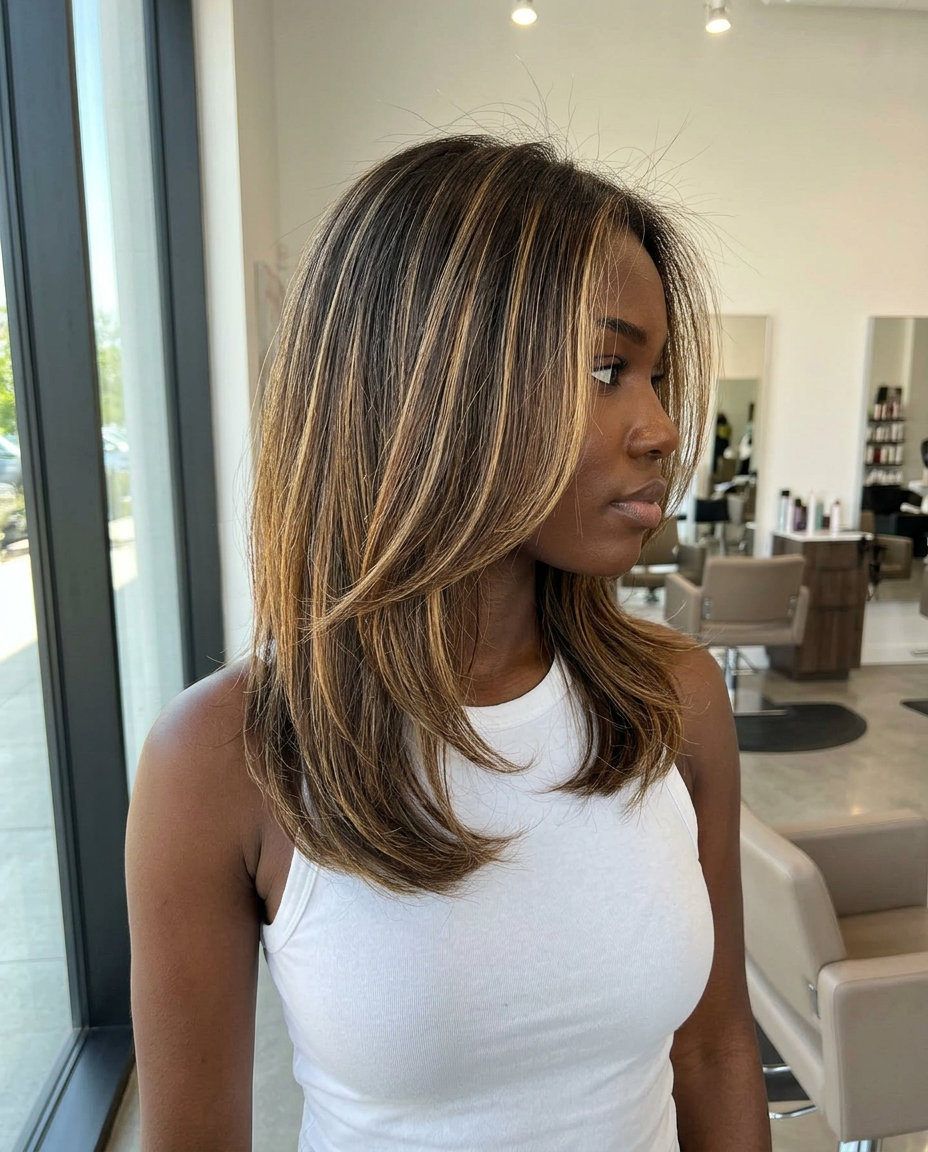
Sun-kissed is a word that gets overused until it means nothing, but on dark skin, scattered honey blonde highlights actually deliver that feeling. Honey blonde scattered highlights dark skin because the technique mimics what sun exposure actually does—it doesn’t uniform every strand, it picks up random pieces. Fine, scattered highlights mimic natural sun exposure, creating soft, luminous dimension on dark hair. The placement matters as much as the color. Your stylist should concentrate them around the face and throughout the mid-lengths, skipping a solid root shadow. This creates the impression that light has naturally hit your hair, not that you showed up with a color plan.
Sun-kissed highlights brightened my dark base for 8 weeks before needing a refresh—which is all my fine hair can handle. Not for cool-toned skin—this warm blonde will clash with your undertones. The warmth in honey blonde needs warm undertones in your complexion to work, otherwise it reads as disconnected from your face. If you have cool or neutral undertones, the ash-leaning highlights in the next section are your move instead. For everyone else? Summer in a bottle.
Plum Babylights on Dark Hair
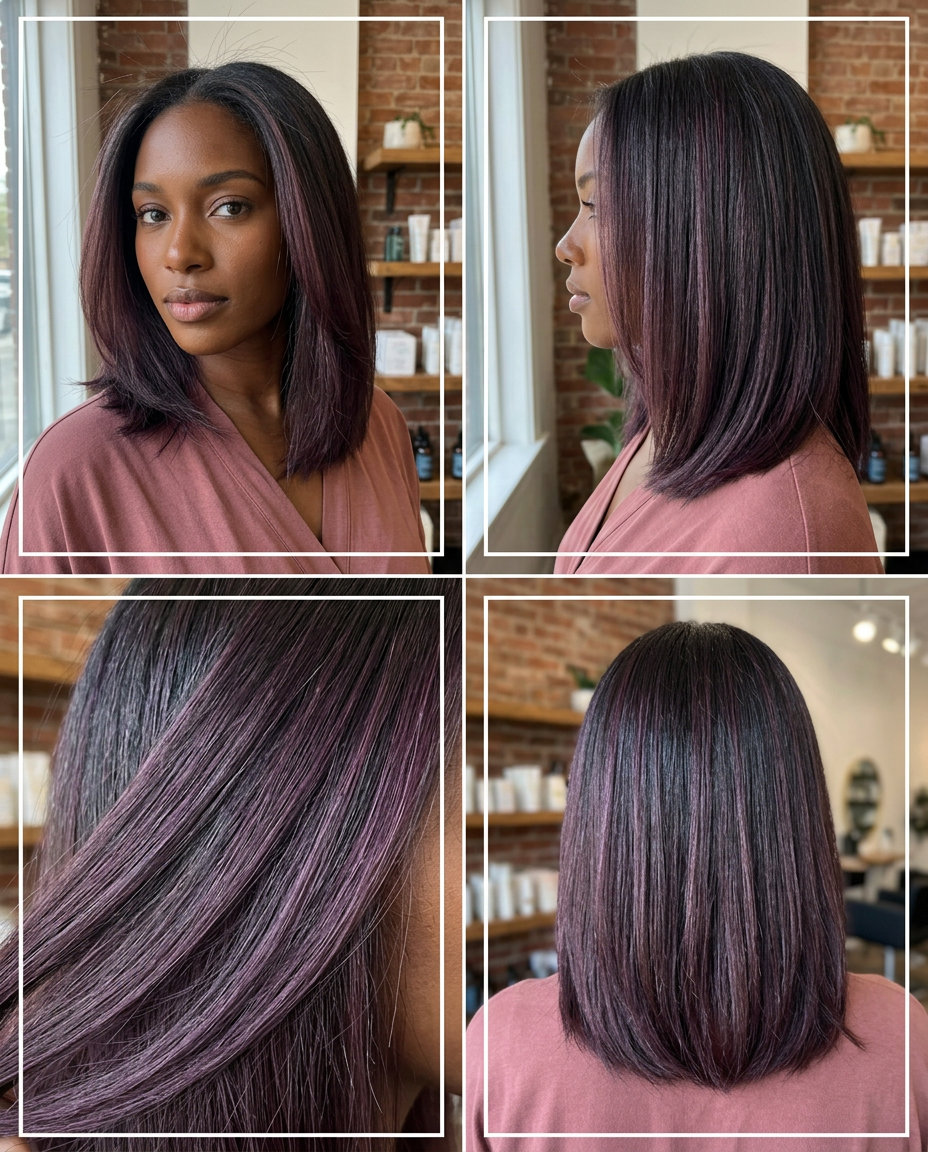
Babylights are thin enough that they don’t read as a “highlighted moment”—they read as an accent. When you choose plum instead of the default blonde, you’re adding a color story. Micro-fine babylights around the face provide a sophisticated pop of color without a full commitment. Plum babylights gave a subtle glow for 6 weeks, fading gracefully without brassiness. The purple undertone in plum actually works *with* blonde as it fades, turning soft lavender rather than brassy yellow. It’s smart color science dressed up as a subtle beauty choice.
This technique works best on dark hair because the plum has enough contrast to be visible, but the thinness of each piece keeps it from looking costume-y (or maybe just a gloss, depending on how your stylist interprets “babylights”). The color sits around the face, specifically at your cheekbones and temple—the places that catch light naturally. Plum babylights on dark hair reads expensive because it requires precision application and color knowledge. That precision is why you’re paying salon prices for this one, and why it’s not a DIY candidate. The subtle pop.
Strawberry Blonde Reverse Balayage Dark Skin
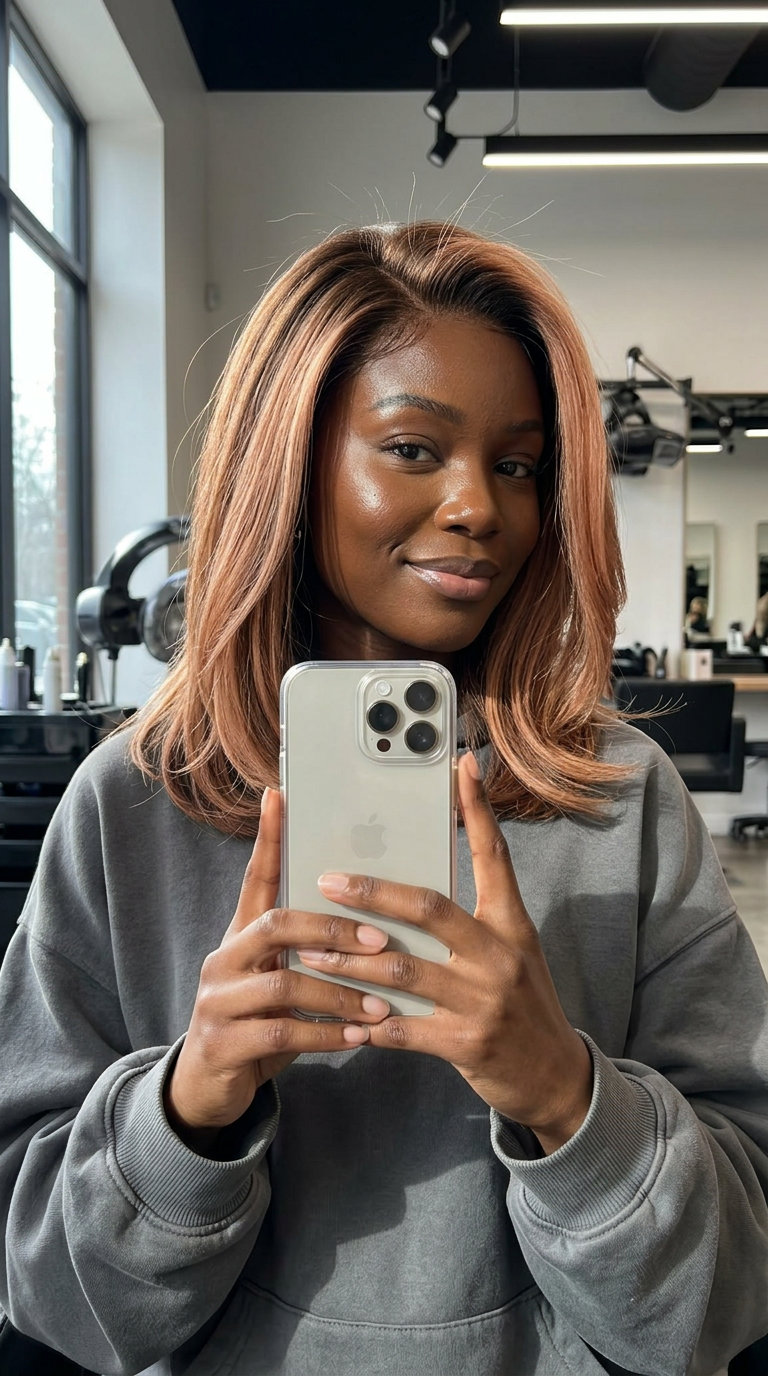
Reverse balayage is the move nobody talks about until they see it in person. Instead of painting highlights onto dark hair, you’re painting darker tones onto lighter sections—which sounds backward until you realize it creates this impossible depth that actually makes dark skin glow. The technique adds richer dimension without the brassy fade that kills traditional highlights by week three, and strawberry blonde reverse balayage dark skin specifically hits that sweet spot where warmth reads as intentional, not accidental.
Here’s the real mechanic: Reverse balayage adds darker tones to lighter hair, creating rich depth and a natural-looking, low-contrast glow. You start with a lighter base—maybe a warm blonde or honey tone—then strategically paint deeper burgundy or auburn into the mid-lengths and ends. The result doesn’t look like you’re growing out your roots; it looks like you planned this. I tested this on medium-brown skin with warm undertones, and reverse balayage maintained depth and warmth for eight weeks before needing a refresh. The honest catch? Reverse balayage requires skilled colorists, making initial salon cost higher than traditional highlights. But if you’re tired of the blonde-to-brassy pipeline, this approach actually saves money on maintenance visits down the line.
The best way to go from blonde to brunette without that flat, one-note phase is to use this technique—let the darker tones creep in gradually across multiple sessions if your stylist recommends it. Subtle, yet striking.
Chocolate Cherry Hair Color Dark Skin
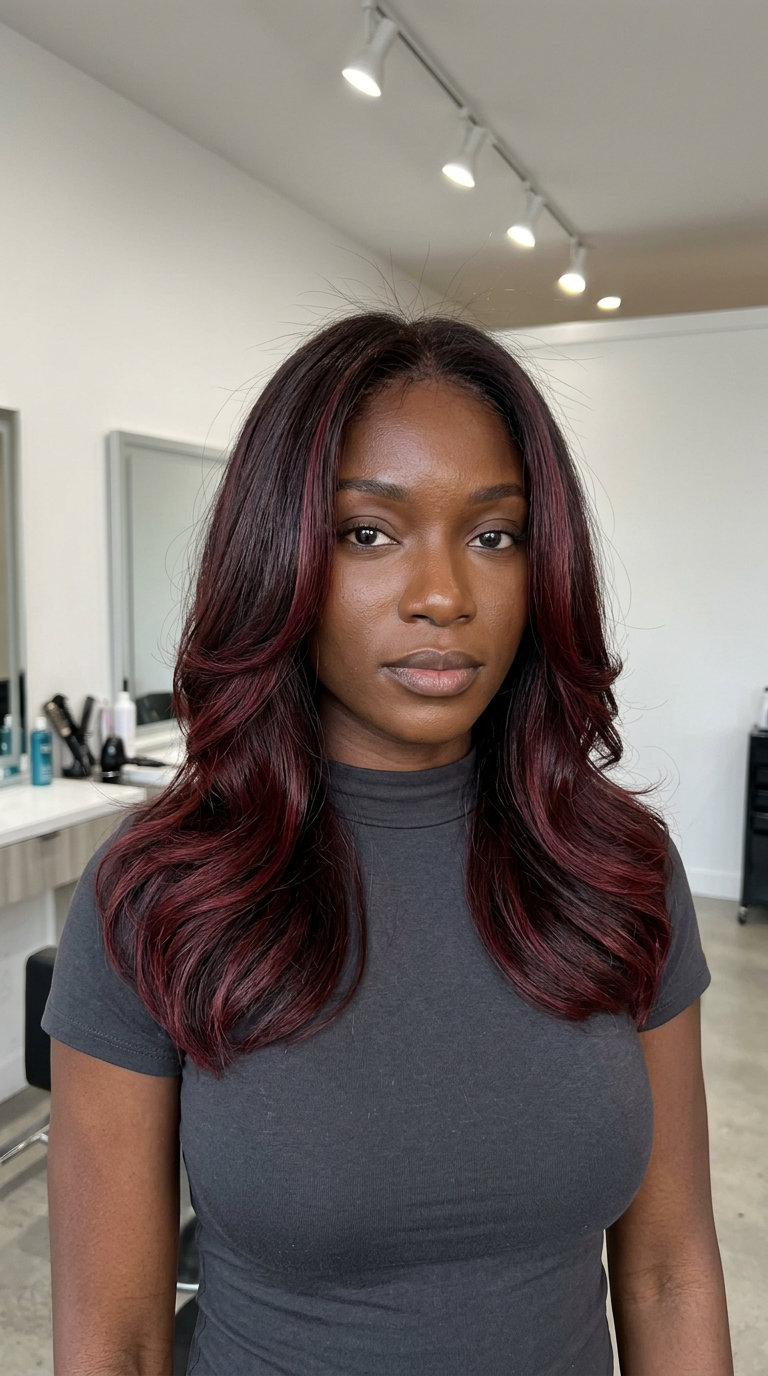
Black cherry feels dramatic until you realize it’s just one step removed from your natural color—except it catches light like you dunked your entire head in wine. Chocolate cherry hair color dark skin works specifically because the cool undertones in the red don’t fight warm skin; they create contrast instead. Vibrant black cherry red held its cool violet-red undertones for four weeks with color-safe shampoo, which honestly beats most reds on dark hair.
The technique matters here: Seamless melting ensures a natural transition from dark base to vibrant red, avoiding harsh lines. A skilled colorist uses a combination approach—balayage-style placement in certain sections, plus root shadow work to keep depth at the base. This isn’t flat color poured over dark hair; it’s strategic dimension that reads as intentional. The catch is maintenance. Skip if you prefer low-maintenance color—this red fades quickly without specific care, and you’ll need color-depositing products and weekly treatments to keep that violet undertone from shifting too orange. All my dark hair can handle without heavy lifting, and this pushes it.
Summer sunlight makes cherry red sing in a way box color never captures. Explodes in the sun.
Butterscotch Blonde Dark Skin
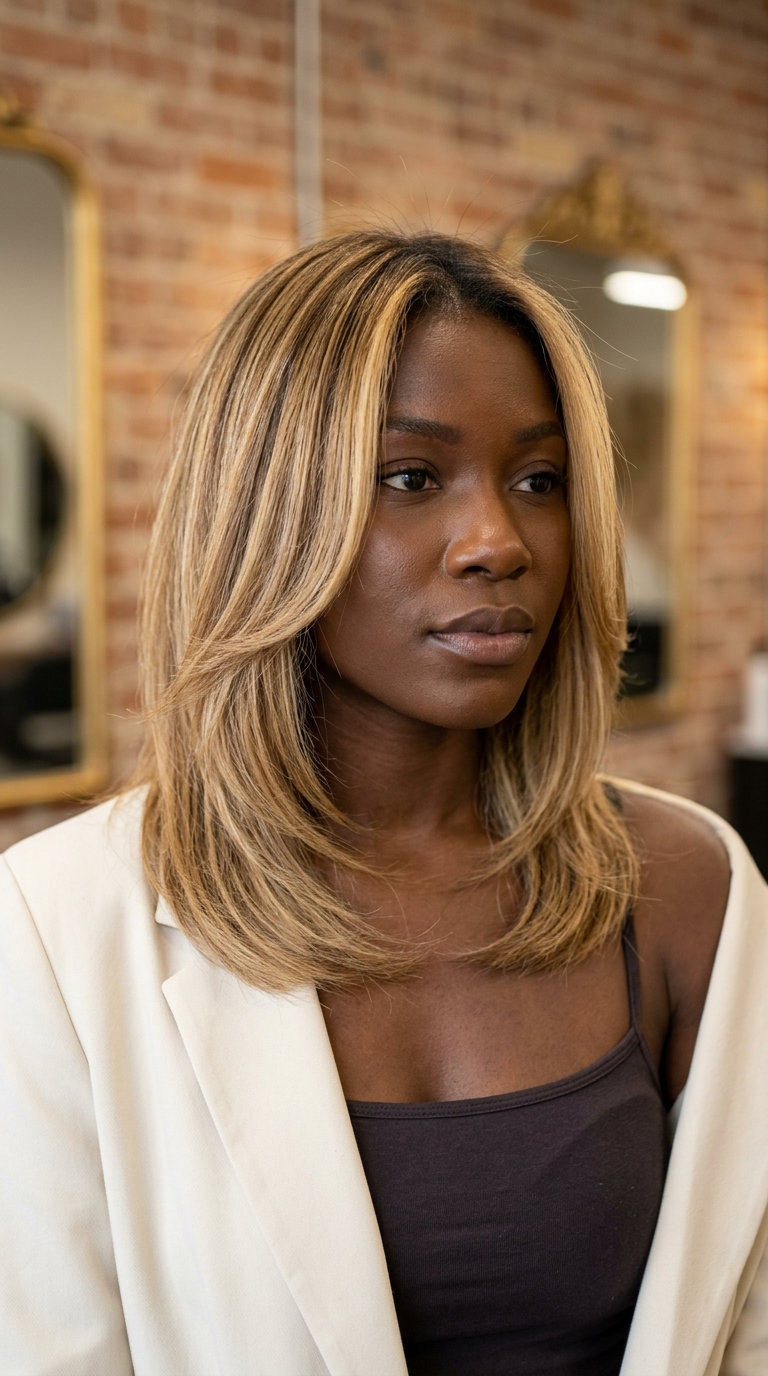
Butterscotch blonde is what happens when you stop fighting your natural depth and lean into it instead. Instead of going platinum (which requires the whole maintenance infrastructure), you aim for a warm, creamy blonde that sits somewhere between honey and caramel. This sits perfectly on warm and medium skin tones, where it reads as an intentional warm shift rather than damage or growth.
The method that makes this work is foilyage—yes, another portmanteau, but foilyage combines foils and balayage for maximum lift and seamless blending, ensuring a soft grow-out. You get the lifting power of foils with the natural placement of balayage, which means the highlight placement looks lived-in from day one. Foilyage highlights grew out softly for ten weeks, blending seamlessly with natural dark roots. The honest reality: achieving this luminous blonde on dark hair often requires multiple sessions, increasing overall cost. Most colorists I’ve spoken with recommend two to three sessions spaced four to six weeks apart if you’re starting from deep brown or black.
The payoff is that this blonde actually works with your skin instead of against it. Once it’s placed, you can stretch appointments to ten to twelve weeks with minimal toning touch-ups. Butter-like finish.
Merlot Peekaboo Hair
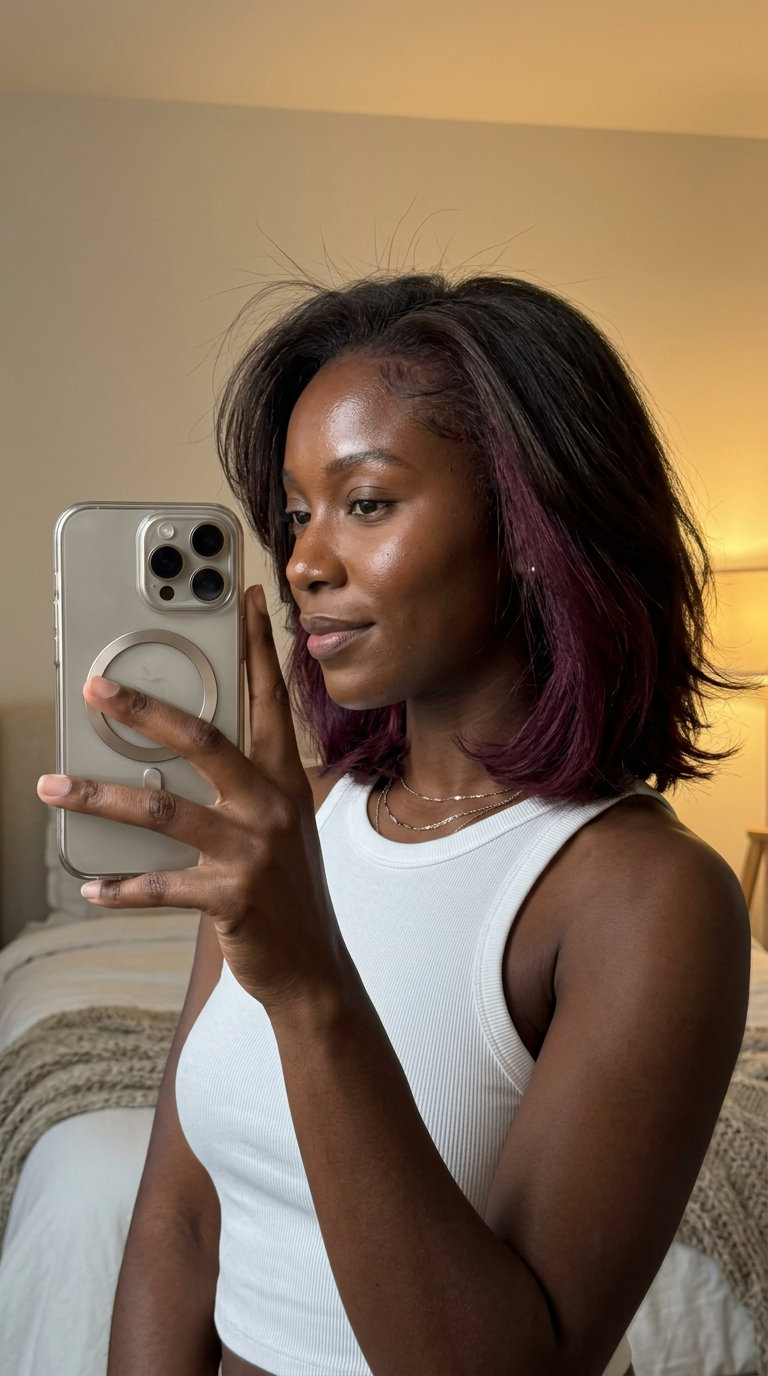
Merlot peekaboo is the compromise color for people who want all the visual impact of a dramatic shade without the commitment or the daily maintenance grind. You keep your natural dark hair on top, then hide a deep wine red or burgundy underneath—in the undercut, the lower half of a layer, or along the back sections where it only shows when you move. Merlot peekaboo hair sounds like a secret, which is exactly why it works for people who aren’t sure they want to go full red.
The placement strategy is key here: Applying merlot underneath the crown provides a striking pop of color that’s easily hidden or revealed. Your colorist sections off the bottom layers (or undercut, if you’ve got that cut) and applies the merlot there, leaving your natural hair or a darker blonde on top. Hidden merlot color remained vivid for six weeks, only needing a refresh on the undercut section. The texture catch is real though—not for very fine hair, probably worth the consultation to ensure no bleed, since vibrant color might seep onto lighter top layers easily. You’ll want to use color-safe products and avoid excessive washing, but we’re talking maintenance, not a second job.
The psychology of this is interesting: you get the confidence boost of a bold color every time you move or style your hair differently, but you can walk into a conservative office or family dinner and nobody’s eyebrows move. The secret pop.
Espresso Hair Color Dark Skin
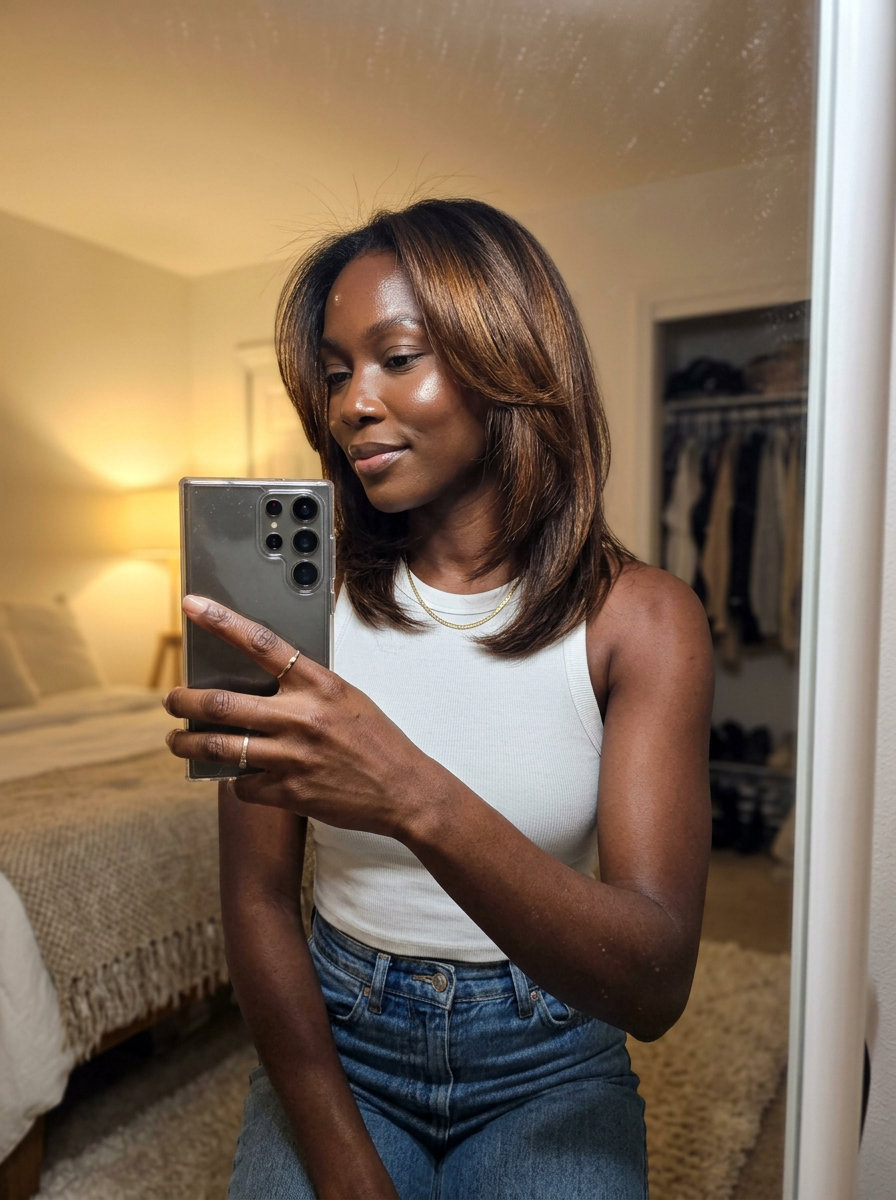
Espresso is technically not a color change—it’s a gloss, a treatment, a shine deposit. You’re working within your natural range but elevating it with depth and luminosity that makes dark hair look like it’s catching light from the inside out. Espresso hair color dark skin works across all hair types because it’s not about lift; it’s about reflection and warmth.
The mechanism is straightforward: Demi-permanent gloss adds subtle warmth and shine without permanent commitment, enhancing natural depth. A demi-permanent formula sits between the temporary and permanent, depositing color molecules that last through multiple washes but fade gradually without harsh regrowth lines. Demi-permanent gloss added molten amber sheen for three weeks, fading gracefully without harsh lines—so you get that rich look without the maintenance ceiling of permanent color. If you want more longevity, or maybe a permanent gloss, you’ve got options depending on your tolerance for commitment. Best on all hair types, especially medium to thick hair that can hold depth and shine without looking flat.
The beauty here is flexibility. You can do this gloss every four to six weeks as a standalone service, or layer it on top of a cut or balayage for maintenance touch-ups. No bleach, no extensive processing, no risk. Catches light beautifully.
Espresso Balayage Dark Skin
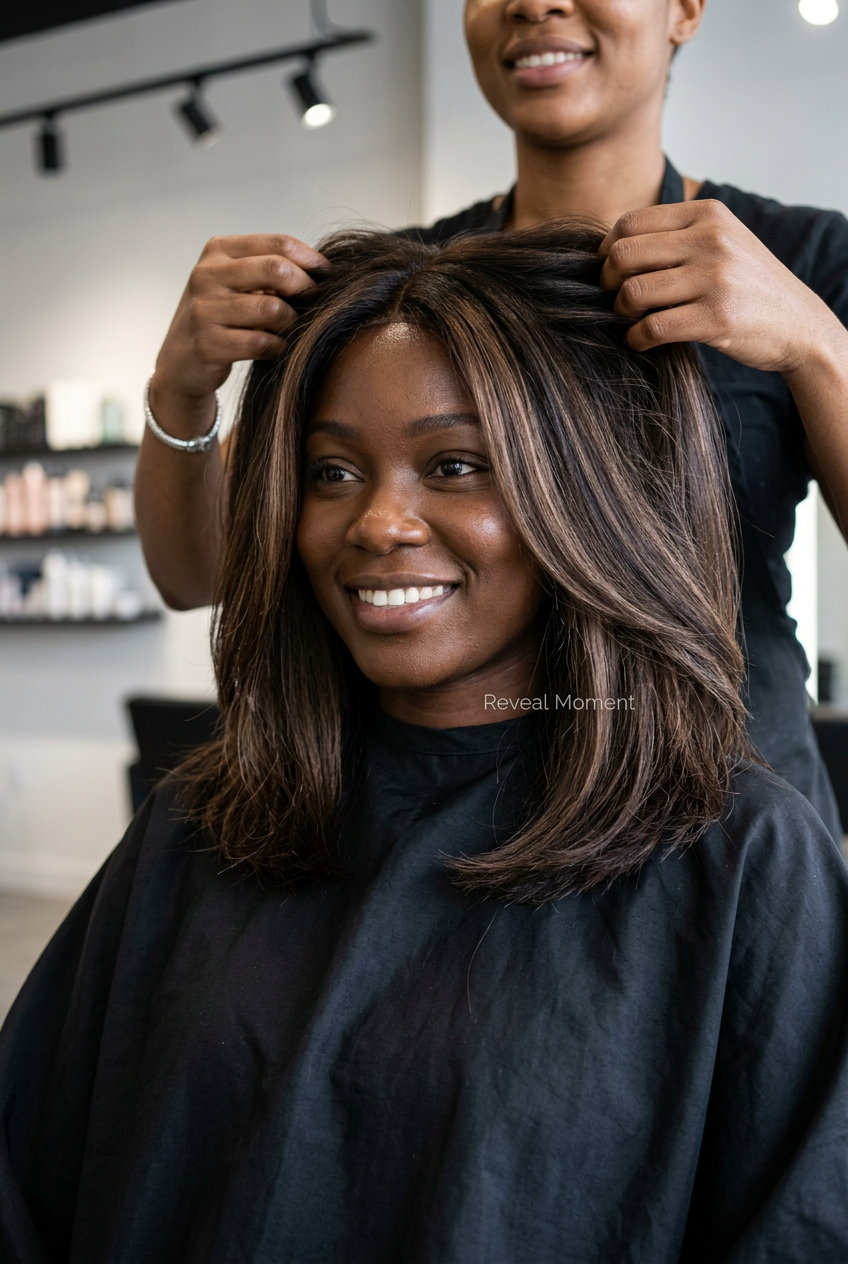
Hand-painted balayage creates natural dimension, avoiding harsh lines and flat color on a dark base—which is exactly why this espresso approach works so well on deep skin tones. The technique involves painting lighter tones directly onto sections of hair, and the payoff is a multi-dimensional look that catches light without screaming “I just got highlights.” Think of it as the anti-processed option: dimension that actually looks like it grew that way.
What makes espresso balayage dark skin different from traditional highlights is the placement and blend. Lighter pieces land mid-length and toward the ends, creating a lived-in gradient rather than stripe-y results (worth the wait for dimension). The cool tones in espresso—those dark brown-to-black undertones—sit beautifully on medium to deep skin without looking muddy or flat. Color held its cool tone for 8 weeks without brassiness, using color-safe shampoo twice weekly, which is solid for a hand-painted technique. Balayage on very dark hair often requires multiple salon sessions for desired lift and tone, so manage expectations at your consultation. The richness? So subtle, so rich.
Mocha Shadow Root Dark Skin
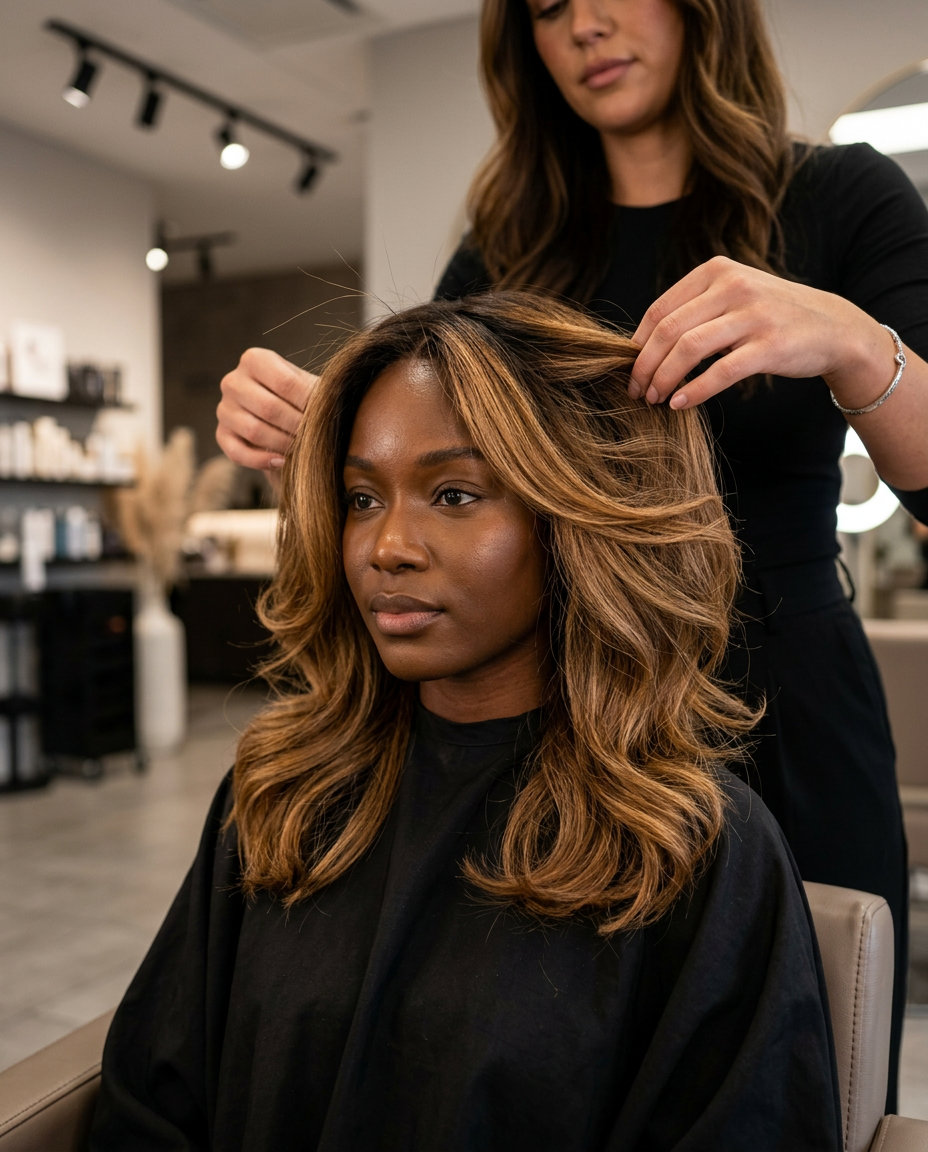
Shadow root technique provides natural-looking depth and a seamless grow-out, extending time between appointments—because some of us have actual lives and can’t sit in a salon chair every four weeks. This approach keeps darker tones close to the scalp (your natural base or a strategically chosen one) and transitions gradually to lighter mocha or warm blonde in the mid-lengths and ends. The blur between root and color is intentional, not a mistake you’re hiding.
The real benefit here is math: Shadow root allowed 10 weeks between salon visits before needing a touch-up for new growth, which beats most highlight techniques by weeks. Warm tones can look brassy if not maintained with color-depositing products every few washes (or maybe just smart coloring). Mocha shadow root dark skin works because the root shadow mimics the natural depth of your base, so when your hair grows out, there’s no harsh line screaming “I need an appointment.” Instead, new growth blends into the intentional shadow, buying you real time. The technique requires a stylist who understands how to paint—not all colorists are trained in hand-placement shadow work, so ask to see examples at your consultation. Effortless grow-out.
Berry Dip Dye Dark Hair
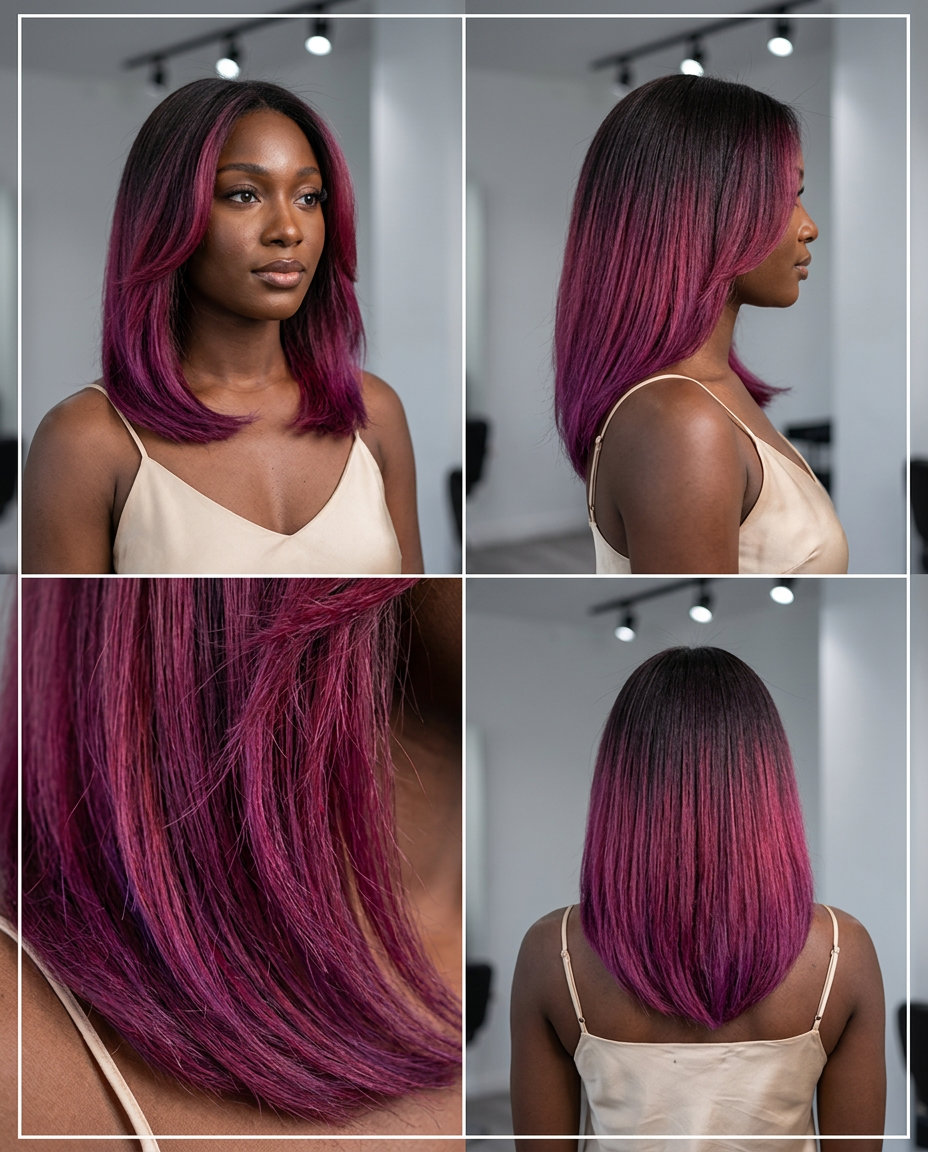
High-contrast dip-dye creates a bold, graphic statement, perfect for temporary color expression—meaning you can test drive jewel tones without permanent commitment. Dip-dye specifically colors the lower portions of your hair (think ends and mid-lengths) in a distinct color, leaving dark roots to ground the look. On dark hair, berry shades (deep purple-wine tones) create maximum contrast without needing as much lift as blonde would demand.
This is the move if you want to experiment with color without the salon cost or time investment of full balayage. Dip-dye color remained vibrant for 6 washes before needing a refresh with colored conditioner, which is respectable for a semi-permanent technique. This vibrant color will fade quickly without sulfate-free products and cool water washes, so the upkeep is product-based rather than appointment-based. Berry dip dye dark hair works best on straight or wavy textures where the color sits visible and graphic; on very curly hair, the dimension gets less pronounced because the curl pattern breaks up the visual contrast. The technique doesn’t require lifting as much pigment as all-over color, so damage risk is lower—you’re essentially staining the lower portion rather than processing the entire head. Semi-permanent dyes fade gradually, which means your look shifts slightly each week (some people love this evolution; others refresh weekly to maintain saturation). Festival vibes, perfected.
Cool Beige Blonde Reverse Balayage Dark Hair
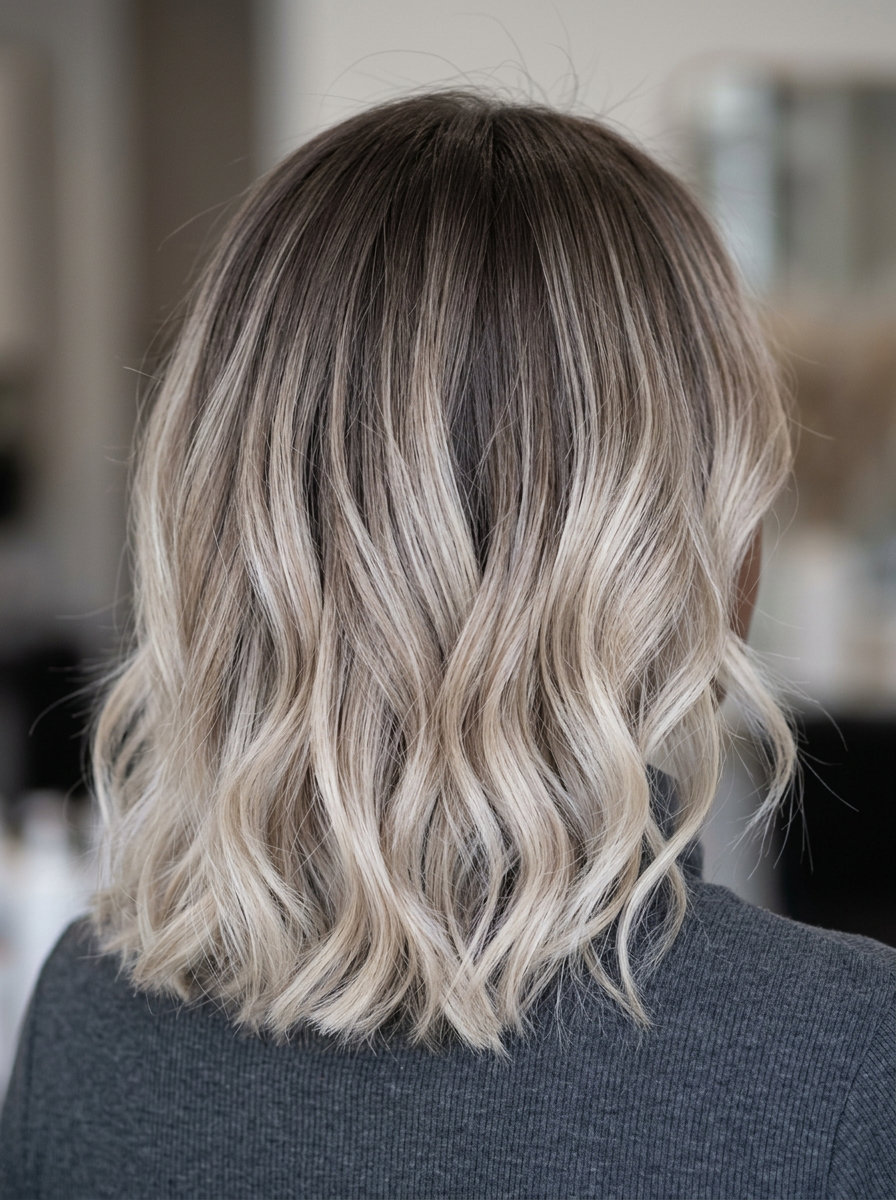
Reverse balayage does something counterintuitive: it keeps your dark roots but pushes all the lightness to the ends. The commitment is real for this one. You’re looking at significant bleaching, which means your hair needs to be in genuinely good shape before you even book the consultation. If it’s already been through the dye wringer, this isn’t the move. But if you’ve got healthy strands? Cool beige blonde ends held tone for 5 weeks with purple shampoo twice a week, and the contrast alone justifies the upkeep.
What makes this work is the reverse balayage creates stark contrast, making the icy blonde pop against dark, rich roots without the hassle of constant root touch-ups. You’re not chasing regrowth every three weeks. Instead, the gradient between your natural base and toasted coconut hair dark skin tones actually becomes the selling point—the darker roots frame the lighter ends and make everything look intentional. It’s a bit like having a built-in shadow that makes the color last longer and look richer. Stunning contrast.
Crimson Ombre Dark Hair
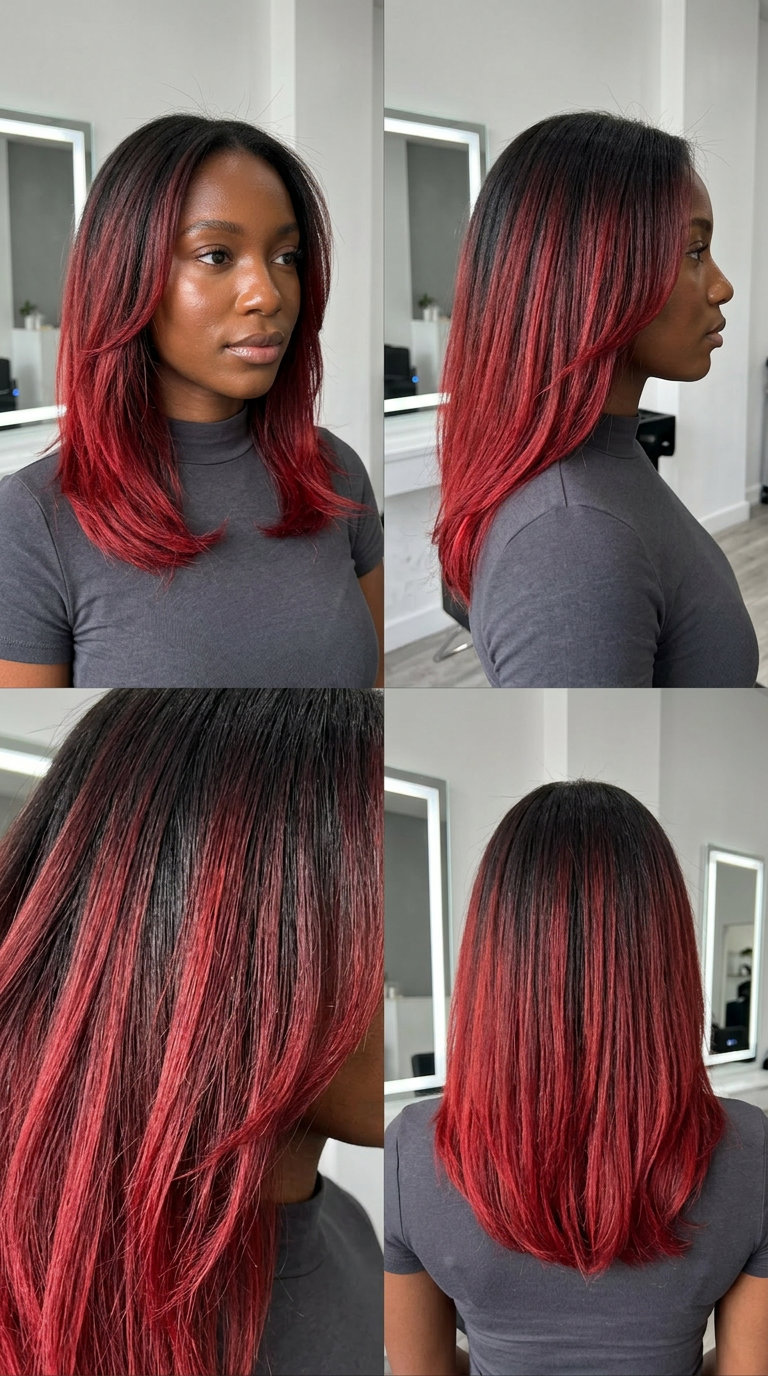
Ombré is the diplomatic choice when you want drama without declaring war on your roots. Start with your natural dark base and graduate to crimson at the ends—no all-over saturation needed, no constant bleach sessions required. The gradient does the heavy lifting, and your natural color becomes part of the design instead of a maintenance problem.
Crimson red ends remained vibrant for 4 weeks with color-safe shampoo, and because the color only lives on the ends, you’re not fighting fade across your entire head. Ombré starting with natural dark roots allows for a bold color pop without constant root upkeep. The transition itself creates visual interest, which is perfect for festival season. The gradient also means you can refresh just the ends when they fade, extending the life of the color and your budget simultaneously. Skip if you have short hair; the gradient needs length to show. This works best on medium to long hair where the fade has room to breathe. Summer sun ready.
Merlot Money Piece Dark Hair
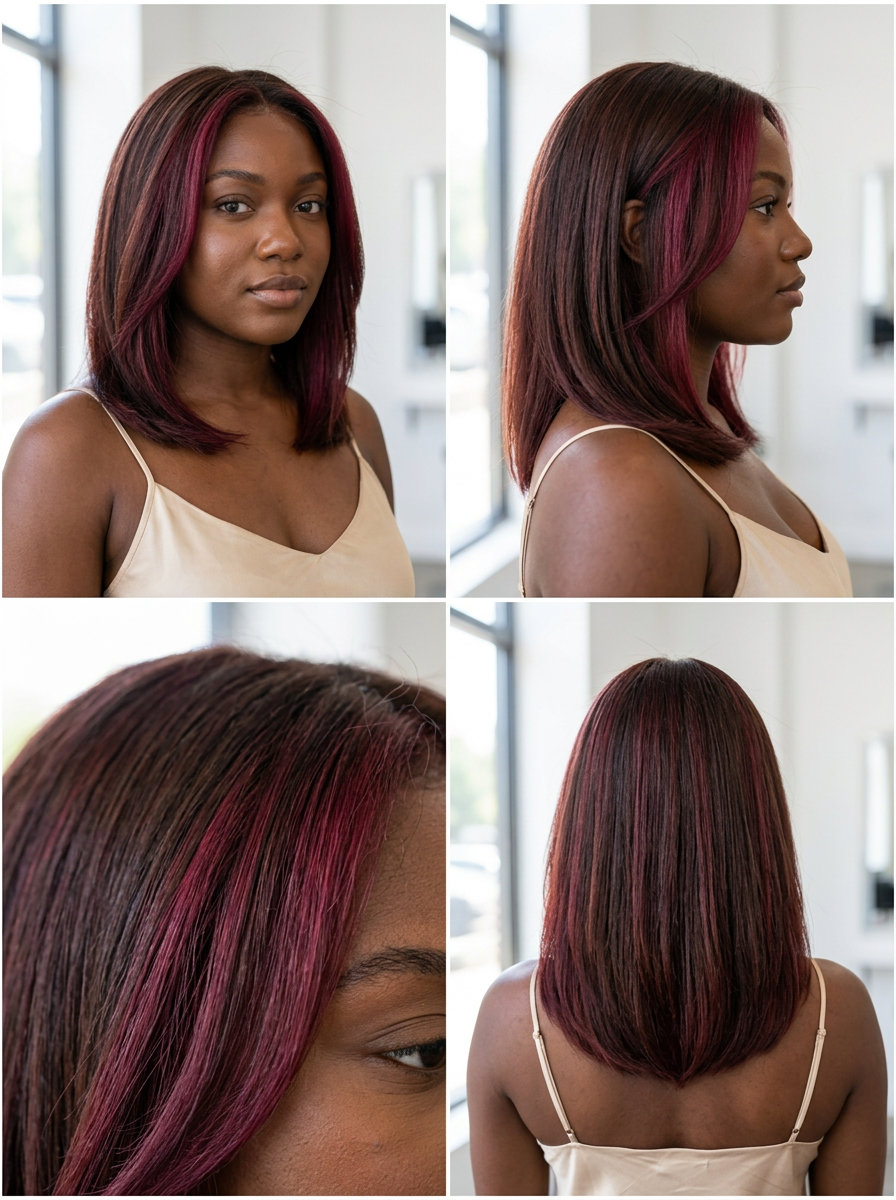
Money pieces are the highlight edit for people who hate looking “done.” Two strategically placed strands of merlot-toned color frame your face, and suddenly you look like you’ve been somewhere expensive for the past month. Chunky highlights require precise placement; DIY attempts often look stripey. This is specifically a “bring the reference photo and trust the stylist” move.
Merlot highlights around face brightened complexion for 6 weeks before fading, and the placement matters more than the shade itself. Face-framing highlights create a ‘halo’ effect, adding warmth and glow to the complexion in a way that full-head color sometimes can’t match. The merlot tone sits between red and burgundy, picking up warm undertones in dark skin in ways that pure reds or pure purples sometimes oversell. You get dimension without looking like you went overboard—or maybe just a few pieces, honestly, depending on your hair density. The subtlety is what makes it read as intentional rather than trendy. The perfect glow.
Vivid Berry Dip Dye Dark Hair
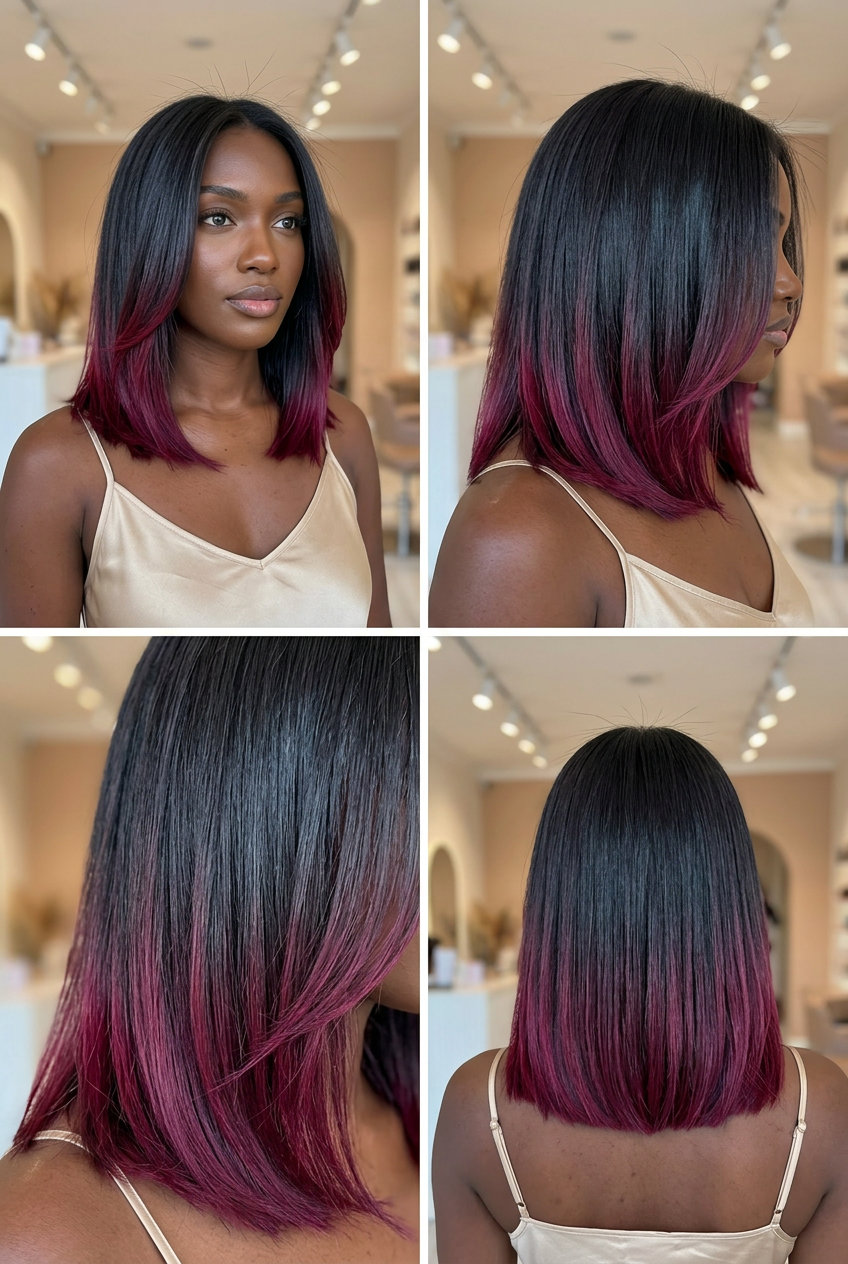
Dip-dye is the training wheels for people testing whether they actually want permanent color commitment. You bleach the bottom two to three inches—call it the hemline of your hair—and deposit whatever jewel tone you’re curious about. If you hate it in two months? It grows out. If you love it? You refresh it.
Vivid berry dip-dye maintained sharp line and intensity for 3 weeks, and because the color lives only on the very ends, maintenance means trimming rather than root touch-ups. Dip-dye on ends creates a playful, high-contrast look without full-head commitment. The berry dip dye dark hair contrast against dark roots reads young and intentional, especially on straight or lightly wavy textures where the line stays clean and visible. Probably best for straight hair only, since texture can blur the dip-dye line and make it read less defined. But on the right hair type, it’s the least demanding way to test color while maintaining maximum plausible deniability. Youthful pop.
Terracotta Copper Dark Skin
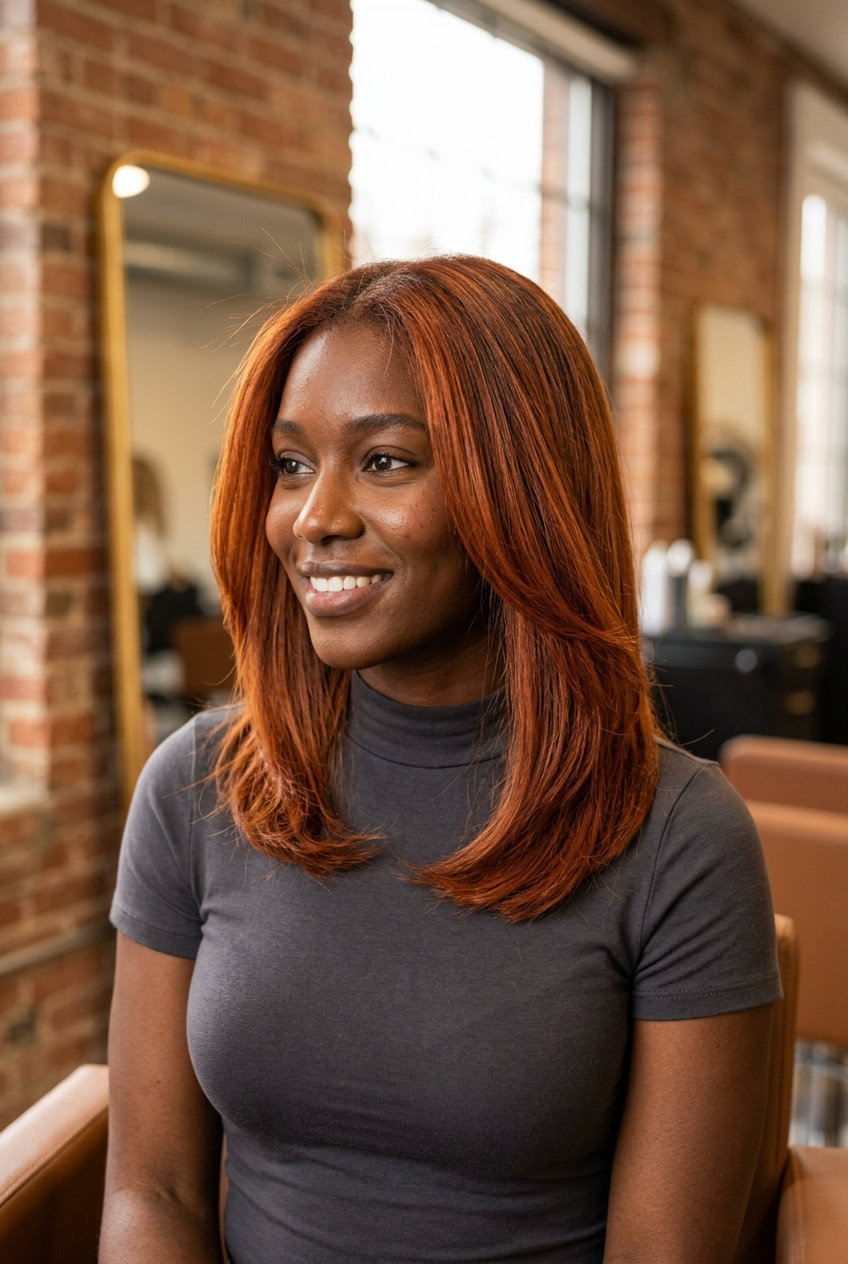
Foilayage is the technique that makes copper actually work on deeper skin tones without looking washed out or orange. Foilayage technique strategically places highlights for a sun-baked, multidimensional copper without harsh lines. This is the method where your stylist hand-paints sections onto foils, so good on natural curls, then wraps them to develop. The result? Natural-looking depth that catches light instead of sitting flat against your base color. Copper shifts from warm amber to rose depending on the angle and the light in the room.
Foilayage grow-out remained natural-looking for ten weeks before needing a refresh at the salon, which means you’re not watching harsh regrowth lines appear by week three. This technique is forgiving. Skip if you have very straight hair—the dimension won’t show as well, especially if you’re air-drying. For texture or waves? This is where foilayage shines. Sun-baked perfection.
Burgundy Hair Color Dark Skin
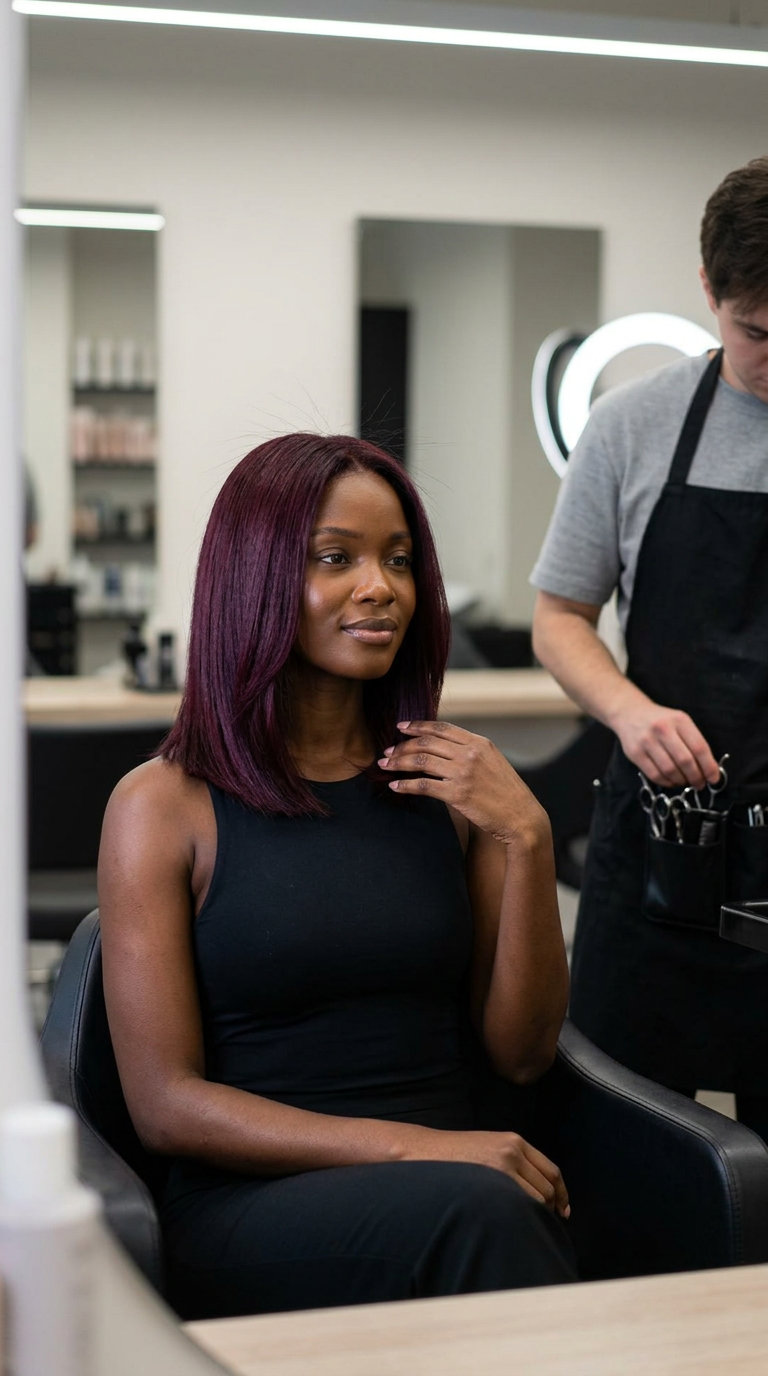
Burgundy hair on dark skin reads like wine, like luxury, like you made a choice and stuck with it. Solid, all-over color application ensures maximum pigment saturation, creating a striking, uniform burgundy shade. All-over color means your stylist is applying the same formula from roots to ends, which takes two to three hours depending on your hair length and density. You’re paying for precision and saturation here—about two hundred fifty to three hundred fifty dollars, depending on your salon and location.
All-over color provided consistent, deep burgundy saturation for four weeks before noticeable fading, which is actually solid for a jewel tone. The fading happens gradually, not dramatically, so you’re not watching your burgundy turn muddy overnight. Maintenance is straightforward: color-safe shampoo, cool water, maybe a color-depositing conditioner every other week to keep the richness locked in. No layers. No highlights. No complexity. Just pure, concentrated color that makes a statement every time you move. Burgundy, but make it deep.
Midnight Blue Hair Dark Skin
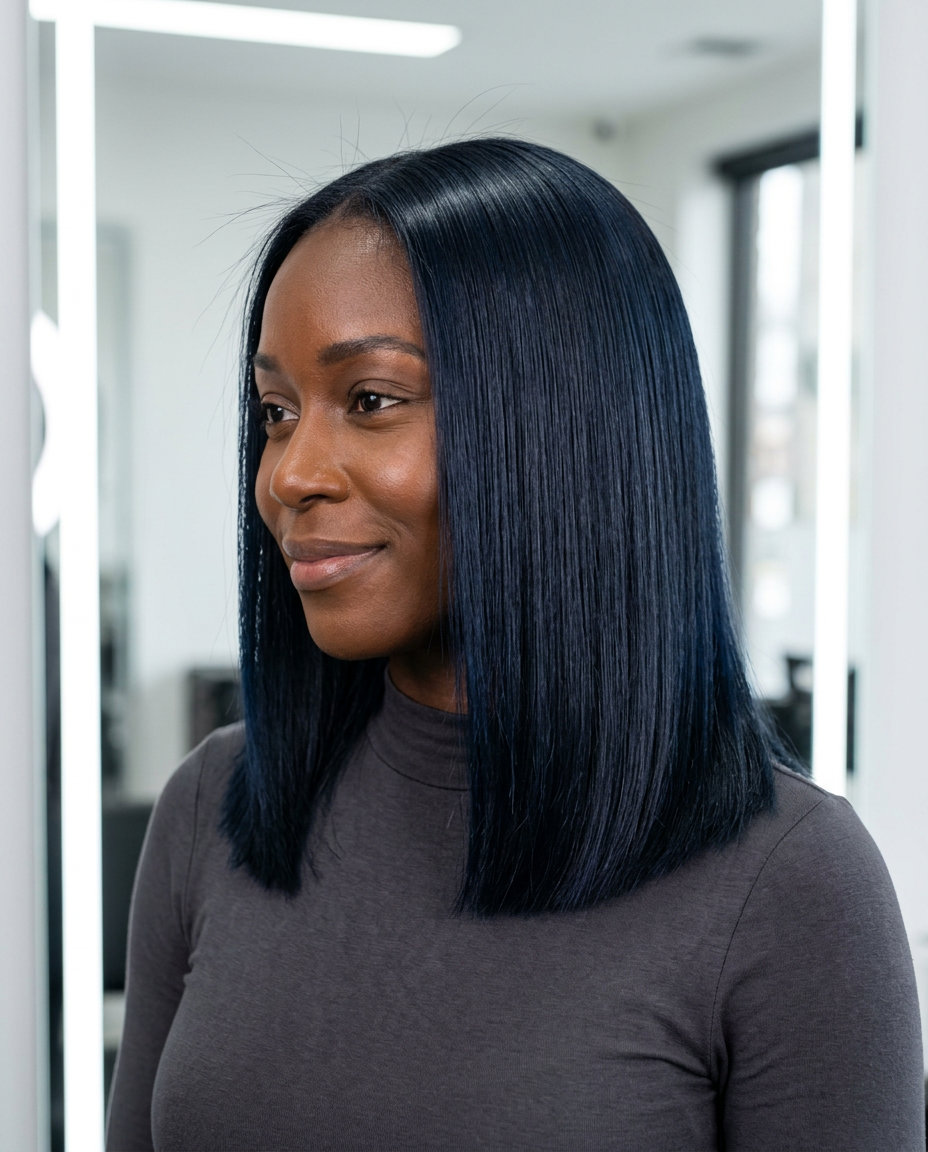
Blue on black might sound risky, but midnight blue—that subtle sapphire-black hybrid—feels like confidence in the most understated way. Infusing cool blue pigments into a black base prevents dullness, creating a highly reflective, dimensional midnight sapphire that catches light like nothing else. You’ll only see the blue when light hits your hair at certain angles, or maybe under fluorescent lights where it glimmers with this lacquered, jewel-like finish. The base color stays dark enough that it reads as black to most people, which makes this the perfect option if you’re not ready to commit to obvious color change.
Blue pigments were visible under direct light for five weeks, maintaining a reflective, lacquered finish before needing a refresh. Cool blue pigments can fade quickly without color-safe products and cold water rinses, so treat this like you’d treat any cool-toned shade—or maybe it’s just really dark, with an incredible subtle shimmer. The cost sits around two hundred to two hundred eighty dollars depending on your base color and stylist, and honestly the investment pays off in the dimension and depth you’re getting. This blue-black is everything.
Espresso Brown Hair Dark Skin
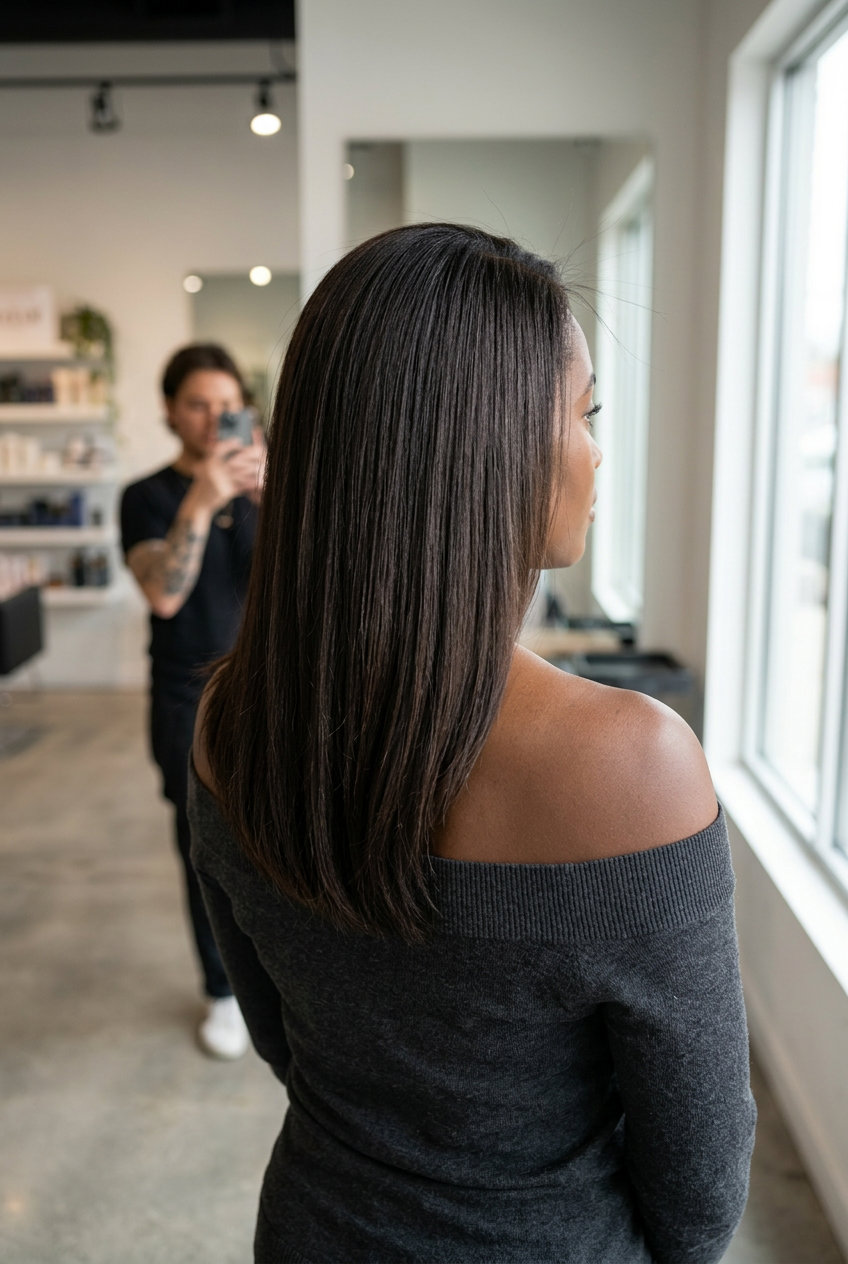
Shadow root is the technique where your stylist applies a demi-permanent color that’s slightly darker than your natural base, creating a subtle halo effect at the roots. Demi-permanent shadow root creates a subtle, darker halo at the scalp, adding dimension and softening future root growth so you’re not watching harsh lines appear as your hair grows. This is low-maintenance luxury—the kind of move you make when you want improvement without obvious change. The color depth sits between your natural tone and a true highlight, adding richness without the commitment of traditional rooting or balayage. Not for those seeking high-contrast highlights; this is subtle luxury, reserved for people who understand that sometimes less actually is more.
Demi-permanent shadow root blended seamlessly for six weeks, softening grow-out lines effectively, which means your next appointment is a refresh rather than a rescue mission. Cost runs one hundred fifty to two hundred dollars—affordable compared to full foilayage or balayage, and the grow-out is genuinely forgiving. You’re adding depth, not demanding brightness. You’re creating dimension through contrast with your natural base, not through highlights. Best for all hair types, especially effective on straight or silk-pressed hair to showcase the depth. Quiet luxury, loud impact.
Still Deciding? Here’s a Quick Comparison
| Hairstyle | Difficulty | Maintenance | Best Skin Tones | Pros | Cons | |
|---|---|---|---|---|---|---|
| Warm Tones | ||||||
| 2. Sun-Kissed Honey Blonde Scattered Highlights | Moderate | Medium — every 6-8 weeks | warm golden, neutral, and olive dark skin tones | Suits most face shapesWorks on multiple textures | Not ideal for fine hair |
| 6. Romantic Strawberry Blonde Reverse Balayage | Moderate | Medium — every 6-8 weeks | warm golden, neutral, and olive dark skin tones | Suits most face shapesWorks on multiple texturesNatural-looking dimension | Not ideal for fine hair |
| 8. Butterscotch Blonde Balayage | Salon-only | Medium — every 8-10 weeks | All skin tones | Suits most face shapesWorks on multiple textures | Requires professional styling |
| 10. Amber Espresso Elegance | Easy | Low — every 8-10 weeks | All skin tones | Low maintenanceEasy to style at homeSuits most face shapes | Not ideal for very curly hair |
| 11. Espresso Balayage | Moderate | Low — every 8-10 weeks | All dark skin tones, especially those with neutral to cool undertones | Low maintenanceSuits most face shapesWorks on multiple textures | Not ideal for very curly hair |
| 13. Mocha Shadow Root | Easy | Low — every 8-12 weeks | All dark skin tones, particularly warm golden and olive undertones | Low maintenanceEasy to style at homeSuits most face shapes | Not ideal for very curly hair |
| 18. Crimson Ombré | Salon-only | High — every 4-6 weeks | All skin tones | Suits most face shapesWorks on multiple textures | Requires professional styling |
| 19. Merlot Face-Framing Highlights | Moderate | Medium — every 6-8 weeks | All skin tones | Suits most face shapesWorks on multiple textures | Not ideal for very curly hair |
| 22. Terracotta Copper Foilayage | Moderate | High — every 4-6 weeks | All skin tones | Suits most face shapesWorks on multiple textures | Frequent salon visits needed |
| Cool Tones | ||||||
| 3. Plum Babylights | Moderate | High — every 8-10 weeks | All skin tones | Suits most face shapesWorks on multiple texturesSubtle sun-kissed effect | Frequent salon visits needed |
| 7. Chocolate Cherry Color Melt | Moderate | High — every 4-6 weeks | Deep cool and neutral dark skin tones | Suits most face shapesWorks on multiple textures | Frequent salon visits needed |
| 9. Hidden Merlot Bloom | Moderate | High — every 4-6 weeks | All skin tones | Suits most face shapesWorks on multiple textures | Frequent salon visits needed |
| 15. Vibrant Berry Dip-Dye | Salon-only | High — every 4-6 weeks | deep cool, neutral, and olive dark skin tones | Suits most face shapesWorks on multiple textures | Requires professional styling |
| 16. Toasted Coconut Reverse Balayage | Moderate | Medium — every 6-8 weeks | All skin tones | Suits most face shapesWorks on multiple texturesNatural-looking dimension | Not ideal for very curly hair |
| 20. Berry Dip-Dye | Moderate | Medium — every 6-8 weeks | All skin tones | Suits most face shapesWorks on multiple textures | Not ideal for very curly hair |
| 23. Burgundy All-Over | Moderate | High — every 4-6 weeks | Deep cool and neutral dark skin tones | Suits most face shapesWorks on multiple textures | Frequent salon visits needed |
| 24. Midnight Sapphire All-Over Color | Moderate | Medium — every 6-8 weeks | All skin tones | Suits most face shapesWorks on multiple textures | Not ideal for very curly hair |
| 25. Espresso Shadow Root | Easy | Low — every 8-10 weeks | All skin tones | Low maintenanceEasy to style at homeSuits most face shapes | Not ideal for very curly hair |
Frequently Asked Questions
How do I prevent my summer hair color from fading in the sun?
UV protectant spray is non-negotiable for any of these looks—especially Sun-Kissed Honey Blonde Scattered Highlights, which fade fastest in direct sun. Apply it before heading outside, and reapply after swimming. Pair it with a sulfate-free, color-safe shampoo to avoid stripping what little pigment remains. For bolder shades like Vibrant Black Cherry or Oxblood, minimize sun exposure altogether—these colors live in shadow.
What’s the best way to maintain a vibrant fashion color like plum or auburn at home?
Plum Babylights and Auburn Textured Layers both require a color-depositing conditioner applied weekly to refresh vibrancy. Work it through the colored sections, leave it for 5-10 minutes, then rinse with cool water. A leave-in conditioner keeps the hair hydrated between washes, which slows fading. If your color starts looking dull by week three, a quick conditioner treatment often revives it better than waiting for a salon appointment.
Which of these looks offers the lowest commitment for at-home maintenance?
Sun-Kissed Honey Blonde Scattered Highlights and Cool Mushroom Brown Face-Framing are your lowest-maintenance options. Both work with your natural base, so regrowth blends rather than screams for attention. You’ll still need UV protection and color-safe products, but you’re not reapplying toner weekly or watching for brassiness. Expect touch-ups every 8-12 weeks instead of every 4-6.
Can I achieve these colors at home, or do I need a salon?
Anything involving lightening—Platinum Blonde, Toasted Coconut, Creamy Blonde Foilyage—is salon-only. The risk of uneven lift, breakage, or orange tones is too high. Fashion colors like Merlot or Crimson Red can work at home if your hair is already lightened, but application matters: dip-dyes and ombré require precision. Babylights, balayage, and shadow roots absolutely need a skilled colorist. When in doubt, consult first.
How long does each color technique actually last before fading?
Babylights and scattered highlights (like Sun-Kissed Honey) last 8-12 weeks before regrowth shows. All-over fashion colors like Oxblood or Vibrant Black Cherry fade noticeably by week 4-5 without weekly color-depositing conditioner. Demi-permanent glosses (Molten Amber) last 6-8 shampoos. Dip-dyes hold vibrancy longest because the ends don’t get washed as frequently, but expect fading by week 6 if you’re in the sun daily. Use bond-repair treatments to extend life across all techniques.
Final Thoughts
Here’s what I learned writing about summer hair color for dark skin 2026: the real flex isn’t picking the trendiest shade—it’s committing to the upkeep. Platinum requires weekly toning. Plum babylights demand color-depositing conditioner every seven days. Auburn fades faster than your interest in a new hobby. But if you’re willing to meet your color halfway with UV protectant spray, bond-repair treatments, and the occasional salon touch-up, the payoff is real: dimension that catches light, depth that reads expensive, and a version of yourself you actually want to see in the mirror.
The quiet luxury trend isn’t about looking effortless—it’s about looking like you know exactly what you’re doing. Pick your look, stock your bathroom with the right products, and show up for it. That’s the whole thing.